

Why '80s Sitcom Married... With Children Was One Of The Most Scandalous Shows Of The Decade
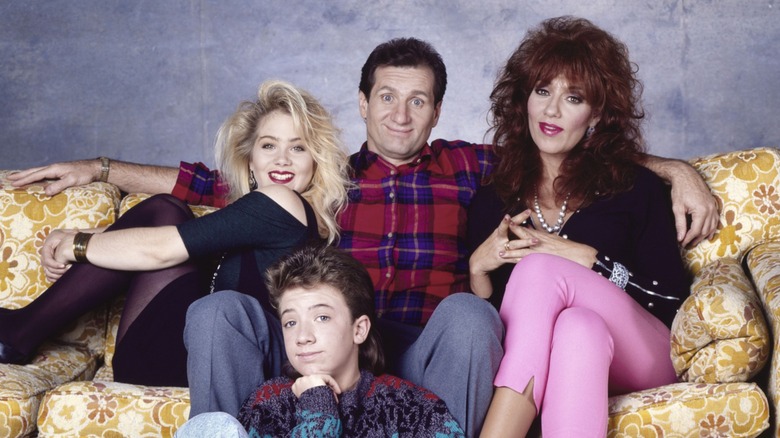
When "Married... with Children" made its debut on April 5, 1987, audiences didn't know what to think about the dysfunctional, insult-hurling Bundy clan and their endlessly shameful shenanigans. Created by prominent Hollywood duo Michael G. Moye and Ron Leavitt, the sitcom was intended to push TV boundaries and depict a family viewers hadn't seen before — narcissistic, self-loathing characters whose bleak lives made them feel a little better about their own by the end of an episode.
Featuring a talented cast of future Hollywood hitters led by Ed O'Neill, Katey Sagal, Christina Applegate, and David Faustino, the provocative series premiered with quite the splash and helped put the then-fledgling network Fox on the small screen map. Known for its jaw-dropping punchlines, crass sexual humor, and unabashed misogyny, it's no wonder "Married... with Children" courted endless criticism, controversy, and even a headline-making boycott campaign.
Despite the negative publicity, the iconic show ran for 11 seasons and a whopping 259 episodes. The series also dominated the pop culture zeitgeist for a decade until its 1997 finale. "Married... with Children" is now regarded as a trailblazing TV classic that continues attracting curiosity from new audiences, and it remains one of the small screen's most scandalous sitcoms.
'Married... with Children' made a mockery of classic sitcoms
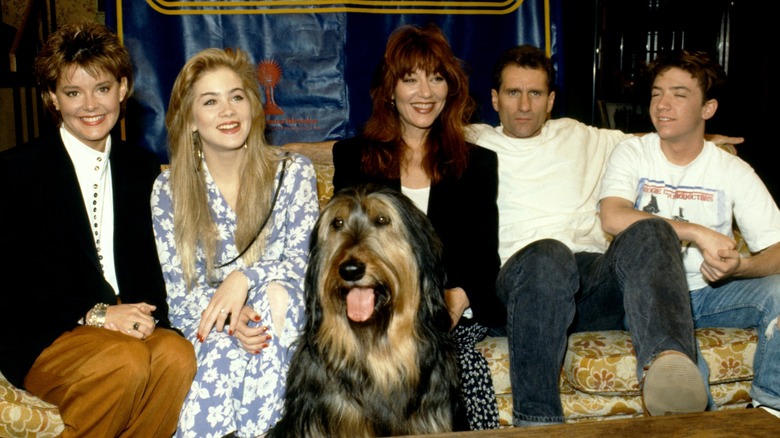
With a working title like "Not the Cosbys," it should come as no surprise that "Married... with Children" wanted to buck TV tradition and mock the classic sitcom formula. Fox executives encouraged series creators Michael G. Moye and Ron Leavitt to push boundaries and do the exact opposite of what the Big Three (CBS, ABC, NBC) would ever dare to air. The then-fledgling network was also brand new to the small screen and was looking to set itself apart from its fellow competitors.
"I felt the guys were disgusted by the insipid nature of American half-hour comedy at the time," episode director Gerry Cohen told the Biography Channel. "Where at the end of every given 22 minutes, everybody's problems are solved. Everybody around the dinner table is happy, and it's just not the way life is." Leavitt and Moye wanted to make a realistic sitcom and not the idyllic version audiences expected.
Despite conceptualizing such an out-of-the-box, unconventional premise, "Married... with Children" was almost over before it ever began. Fox initially envisioned controversial comedian Roseanne Barr and fiery performer Sam Kinison to headline the show, and when they turned down the offer, the network nearly axed the project. Moye and Leavitt rallied and eventually gathered their iconic cast, ultimately making history when the boundary-pushing sitcom premiered.
Its sexual humor pushed major boundaries
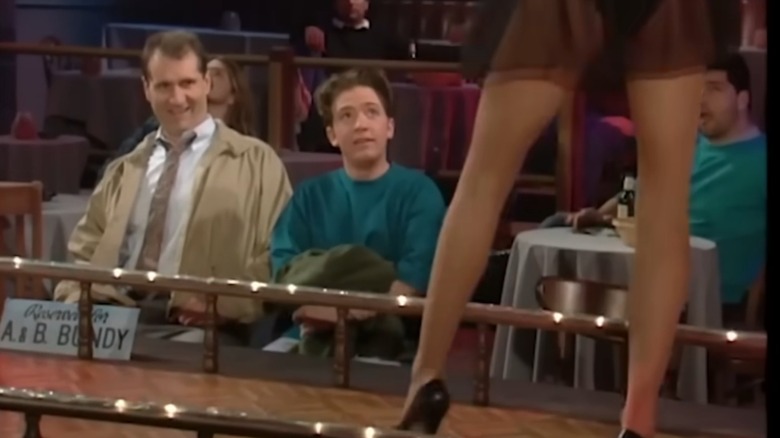
"Married... with Children" had an endless supply of crass humor and eyebrow-raising jokes that only added to its controversial reputation. Its lowbrow punchlines and provocative sexual content shocked viewers and courted chaos for the network, but the sitcom nonetheless prevailed despite the negative chatter. Audiences couldn't help but tune in week after week to hear what outrageous thing would come out of Al Bundy's mouth next.
"It had achieved a cult status as a somewhat tasteless sitcom that was so well written and acted that some actually saw it as dark satire of modern suburban life rather than simply an unending stream of sex jokes," film critic Daniel M. Kimmel wrote in "The Fourth Network: How FOX Broke the Rules and Reinvented Television." Kimmel further noted that the sitcom was chosen to help the network wade into primetime waters because, according to producer Kevin Wendel, it was a "show that we all look forward to watching every week that the public hasn't seen yet."
Whether it was Al lusting over a young and attractive customer at his shoe store or the perpetually hormonal Bud pining after anything with a pulse, the sitcom never tried to hide its sexually charged jokes and indiscreet innuendos. "Married... with Children" largely flew under the radar during its first few seasons, but in 1989 the sitcom would get a major ratings boost after a Michigan woman launched a fierce boycott against the show.
The sitcom faced an intense boycott (that epically backfired)
During its run, "Married... with Children" constantly courted controversy and faced a cancellation campaign from Michigan resident Terry Rakolta in 1989. She became outraged over the episode "Her Cups Runneth Over," which featured an elderly man in garters, a topless woman, and a homosexual man wearing a tiara. "I care that there are advertisers out there paying the freight for this. They're taking my dollars and putting them into soft-core pornography," Rakolta said to The New York Times.
Rakolta spearheaded a boycott that resulted in brands like Coca-Cola ending their sponsorship and Fox moving the sitcom to a different timeslot. However, the media attention actually helped the show gain viewers and drastically increased its ratings out of audience curiosity. "The spike in our ratings was so noticeable that we would get calls...from press and/or peers in the industry saying, 'What a genius move.' Thinking we had actually orchestrated it, which of course we hadn't," Fox executive Rob Kenneally shared in "The Fourth Network."
Instead of causing the demise of "Married... with Children," Rakolta's campaign helped it become a massive hit. Its cast members took her crusade in stride and even cheekily showed their appreciation for Rakolta. "We sent her flowers every year," Katey Sagal — who has the best advice for women who want to make it in Hollywood – told the "WTF With Marc Maron" podcast (via The Hollywood Reporter). "She tried to get us off the air and all it did was get us on the front of The New York Times. And it doubled our audience."
'Married... with Children' was extremely misogynistic
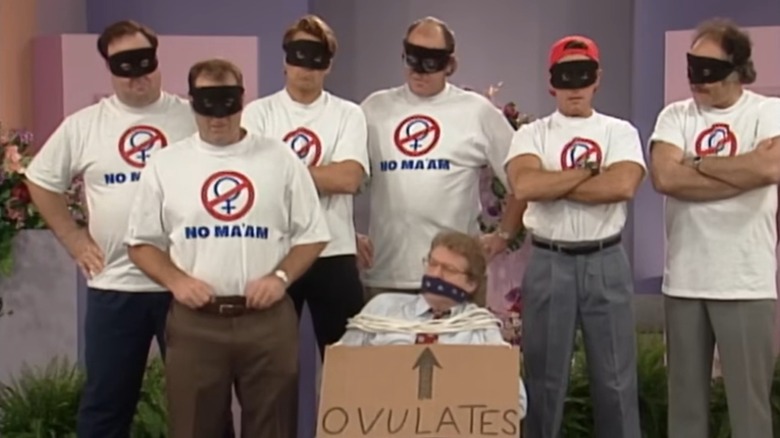
Though it is now regarded as a trailblazing TV sitcom, "Married... with Children" made no attempts to hide its blatant misogyny. Women on the show were depicted as either highly sexualized or angry and unappealing, and Al Bundy was constantly butting heads with his unapologetically feminist next-door neighbor Marcy (Amanda Bearse). Katey Sagal later acknowledged that the sitcom exploited women and was extremely misogynistic, but she also stressed that the show was intended to be a parody.
"It was a very misogynistic show. It was when I really, clearly understood that my job as an actor was to interpret the material," she told AOL (via Us Weekly). "It's not necessarily my belief system. My belief system has nothing to do with being an actor. You know, I was hired to play a part ... The women were portrayed completely exploited on that show. That was part of Al Bundy's thing — he liked hot women, and they showed them all the time."
The character of Al Bundy was specifically written to be a misanthropic, self-loathing grump whose only joy is ogling over attractive, well-endowed women he can daydream about. Al even founded the anti-feminist group No MA'AM in an effort to thwart progressivism and female empowerment. Despite its unapologetic misogyny, audiences connected with Al and were able to live vicariously through his over-the-top fantasies and exploitative (and downright degrading) opinions of women.
The series was notorious for fat-shaming jokes
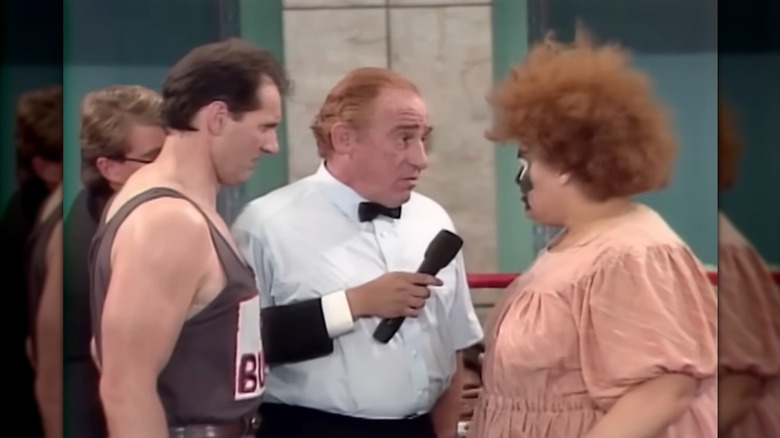
The cynical, self-deprecating Al Bundy never shied away from making snide insults at people (particularly women) he deemed overweight or simply unappealing. Al had no problem hurling harsh jokes and cruel comments at customers in his shoe store, and his penchant for fat-shaming is one of the many reasons "Married... with Children" would cause a media firestorm if it aired today.
Not only did the writers refuse to stifle the never-ending barrage of fat-shaming jokes, but they created Al to be dismissive and absolutely abhorrent toward women he found unattractive. "When I got the show, I thought we'll be canceled after three or four shows because we're making fun of all sorts of people," series alum Ed O'Neill said on "The Kelly Clarkson Show". The decorated actor would later express how the crude character and sitcom left him feeling typecast in Hollywood.
In fact, "Married... with Children" halted O'Neill's movie career. He was reportedly recast in the 1991 war film "Flight of the Intruder" because the test audience laughed whenever he appeared on screen, as they expected to see the crass Al Bundy. As a result, he tried to distance himself from his boorish counterpart during the sitcom's run. "I never think of him as me. Even with my wife, we never talk about it. I never imitate Al. We never discuss it. It's like another thing," he told Deseret News.
It fully embraced its mean-spirited label
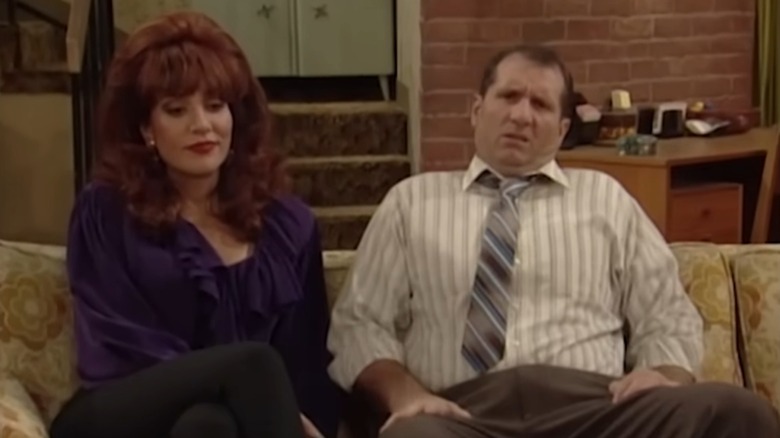
There's no denying that "Married... with Children" could be downright cruel and bleak, and it fully leaned into its parody approach to sitcoms and storytelling. Creator Michael Moye set out to challenge the norms of the TV world by pushing the sitcom as far as it could go. This often resulted in the show being labeled mean-spirited because of its endless harsh jokes, insensitive storylines, and relentless bickering amongst the Bundys.
In the decades since its run, multiple cast members have agreed that the series could be cruel. Ed O'Neill has expressed how its comedy was intended to be provocative and that the show highlighted the unsavory aspects of life and marriage. "People found it funny. Even if they thought, 'Oh my god that's awful,' they were laughing. Most people ... not everybody," O'Neill said to the Archive of American Television. "It was crude, and it was designed to be crude, and it was designed to get right on that line and sometimes we went over."
As for what happened to Amanda Bearse after starring on "Married... with Children," she has been extremely vocal about her time on the show and how it helped her career, though she has acknowledged the overall harsh message of the sitcom. "It was a mean-spirited and misogynist show," she told News Corp Australia. "It was just so completely inappropriate. Today I don't think the show would be produced because it's so globally offensive. Even then it wasn't everybody's cup of tea but for some reason it's had this amazing longevity."
The characters and storylines were outrageously over the top
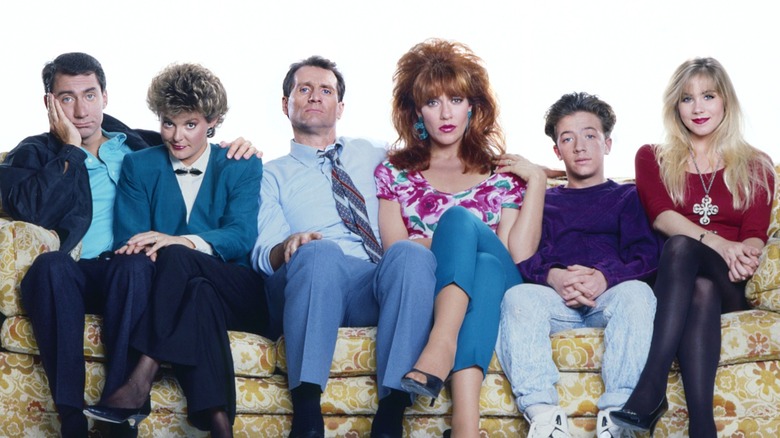
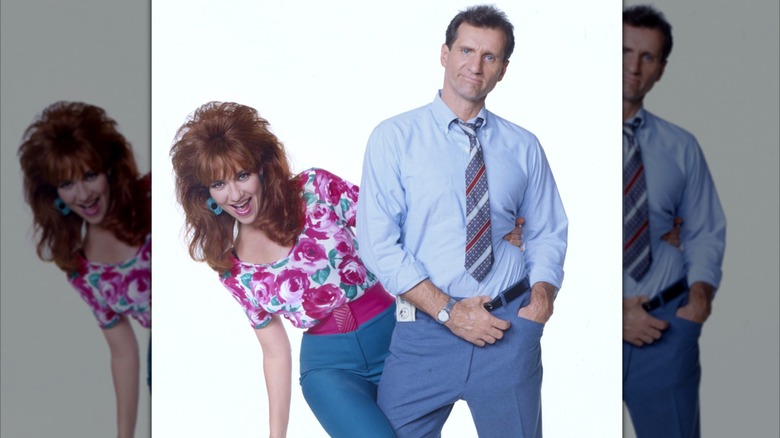
Each member of the Bundy family had their own quirks and shortcomings, and the series creators intentionally made them over-the-top caricatures. Peg was depicted as an attractive, vain housewife who refused to cook, clean, or do any type of manual labor. The perpetually sexist Al hated his life and couldn't stand his wife most of the time, daydreaming about being rid of his freeloading family.
Kelly was the stereotypical promiscuous blonde and Bud the lustful, hormone-driven younger brother with one thing on his mind. Ed O'Neill shared how the sitcom kept audiences on their toes as they never knew what to expect, and that it became more and more outrageous over time. "It's a relief for the audience. We're not trying to teach them anything. They never know what the hell we're going to do," O'Neill told Deseret News, before adding of the characters: "They are all twisted, but there is a certain affection."
The small screen hadn't seen an openly dysfunctional family like the Bundys before, and the writers took great care in making sure viewers were in on the joke. "The satire is heavy-handed because Al and Peggy are heavy-handed. Would you want to know these revolting people? No. Watch them? Yes. At least some of the time," the Los Angeles Times astutely wrote in their review of the show in 1987.
The sitcom wanted to appeal to men and a younger audience
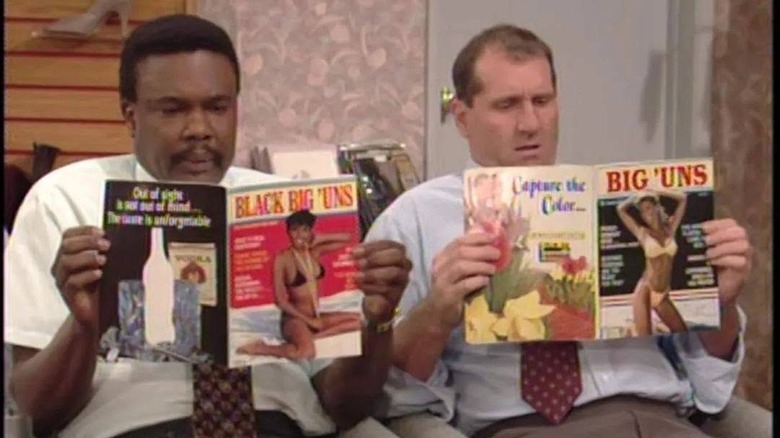
Female viewers often made up a large portion of a sitcom's demographic during the '80s and '90s, but "Married... with Children" opted for something different by luring male viewers from the beginning. From rude and crude dirty jokes to scantily clad women, and the endless barrage of rapid-fire insults shared between the Bundys, the edgy show set out to appeal to younger, more rambunctious audiences.
"Usually, sitcoms appeal more to women, but 'Married' hooks the testosterone crowd for several reasons: Its humor is locker-room, aggressive, insult driven. On every episode, you'll see at least one gratuitous cleavage shot or exposed navel," Entertainment Weekly wrote of the show's core viewers, while also noting its appeal to younger generations. "The MTV generation appreciates a little sicker sense of humor," media consultant and senior analyst Larry Gerbrandt told the outlet in 1994.
The sitcom managed to make 18- to 49-year-old-men its main demographic, a rare feat that network bigwigs claimed was ideal for advertisers. The studio audience for "Married... with Children" was also noted to have been largely made up of boisterous men who went wild (right along with Al Bundy) whenever an attractive female walked across the screen. Producers encouraged audience participation and wanted them to be as loud and raucous as possible.
'Married... with Children' refused to sugarcoat the working-class experience
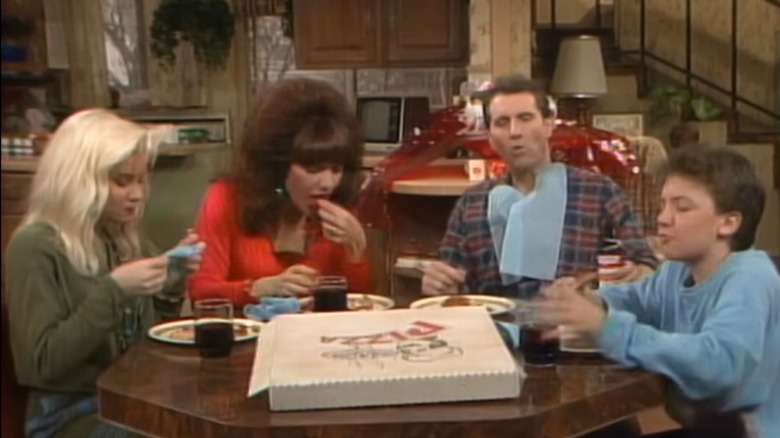
People often tuned into sitcoms to escape the stressful realities of their everyday lives, but "Married... with Children" wasn't created to bring peace of mind. The show depicted the harsh hurdles families go through every day and provided a bleak (yet accurate) look at the working-class experience. Al Bundy hates his job and dreads returning home to his ungrateful wife and kids, yet he's too resigned to his lot in life and not ambitious enough to change anything about his situation.
"Their theory was, when you watch television family sitcoms, 'Family Ties,' 'The Cosby Show,' you just feel terrible about your own life because your life sucks and they all have clean houses and hug at the end," producer Marcy Vosburgh told The Biography Channel. "Ron and Mike wanted to do a show where no matter what happened, after you turned it off, you could feel a little bit better about yourself."
Viewers all around the world connected with the dysfunctional Bundy family and the many hijinks they got caught up in, their challenging lives reflecting what countless people went through. "Zestily lowbrow and sex-obsessed, 'Married' was dedicated to the classical ideal that unhappy families were more interesting than happy ones... and a lot funnier," Time Magazine wrote of the sitcom, which featured on its list of "The 100 Best TV Shows of All Time."
Al and Peg Bundy were terrible role models
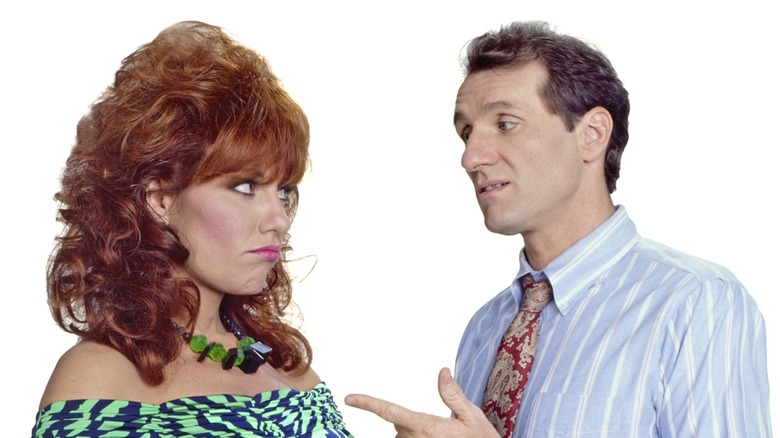
There's no arguing that Al and Peg Bundy would never win any parent of the year award, as they can't even handle being husband and wife to one another without constant quips and condescension. Neither of them bothered to get to know their kids, and they set terrible examples throughout the series, the dysfunctional duo frequently putting their own happiness and well-being over Kelly and Bud's.
The kids were often neglected, a storyline element that wouldn't have been depicted in other sitcoms. Cliff and Clair Huxtable never would have let their children run wild and hang with a questionable crowd in "The Cosby Show," yet Al and Peg had no problem turning a blind eye (or simply not caring at all) about Kelly and Bud's shenanigans. However, when it came down to it, the Bundys had each other's backs.
If someone insulted one of them, they insulted all of them, and the Bundys weren't afraid to throw down for each other if one was being messed with. That fierce loyalty translated off-screen, as Christina Applegate has since praised her TV mom Katey Sagal for being a major support system for her during the show. "I needed that so badly in my life, a stable person. And you were that stability to me always. I always knew if I came to you with something or I cried, that you would comfort me, that I'd feel safe," she said on her "MesSy" podcast.
There was plenty of behind-the-scenes drama
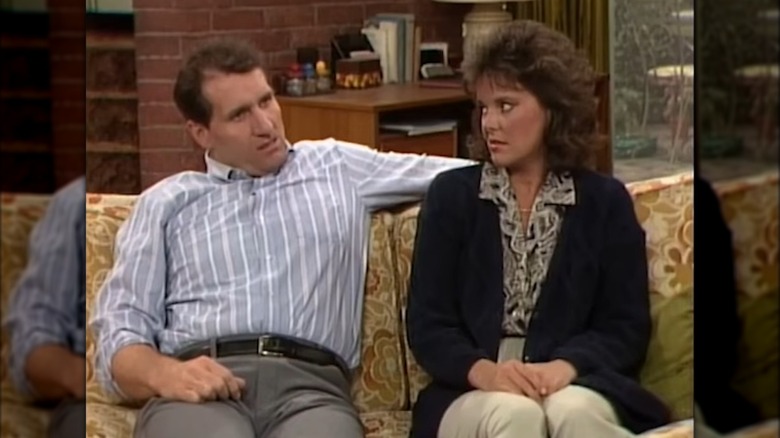
"Married... with Children" may have been one of TV's most provocative sitcoms, but that didn't mean there wasn't drama going on behind the scenes. Much like their characters, Ed O'Neill and Amanda Bearse famously clashed on set, their rivalry intensifying toward the end of the series. After previously enjoying a closer relationship, O'Neill later claimed that Bearse's sexuality (she publicly came out in 1993) and her feminism caused the two to butt heads.
"I don't know whose fault it was. We just sort of grew a bit apart," he told the Archive of American Television. "I have to say that when she started out she was gay — she was gay a long time — she was more or less the female in the couple. You know, she was very, very feminine and cute." O'Neill added that, "a change took place where she then was the more masculine of the two," before claiming that "as she became more masculine, she became a little more snarky."
While appearing on his "Modern Family" co-star Jesse Tyler Ferguson's podcast "Dinner's on Me" (read: what the cast of "Modern Family" is up to now), O'Neill also revealed that a photo shoot for TV Guide further drove a wedge between them. After Bearse and David Garrison weren't asked to appear on the cover of the publication, a line was drawn. Bearse responded to the comments during a Q&A at a fan convention: "I follow the Thumper rule: If you don't have something nice to say, don't say anything at all."