

Weird Rules About Wearing Tiaras That Royals Have To Follow
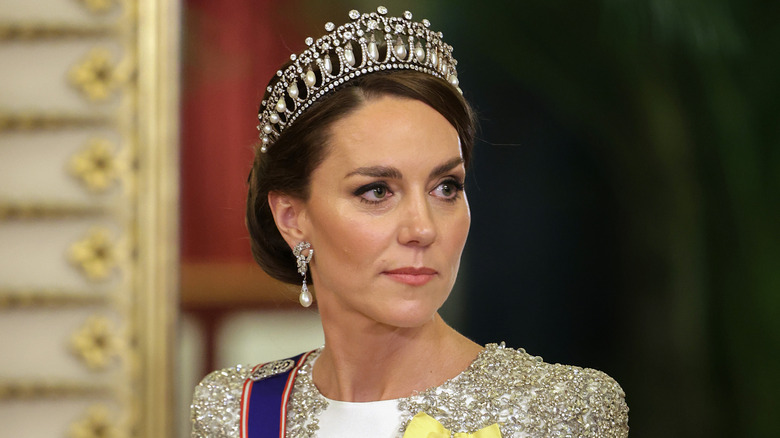
Marrying into a European royal family can seem pretty glamorous — mostly because princesses get to wear tiaras. These jewel-clad headpieces are so stunning that it would be easy to think that they make all the limitations surrounding royal life worth it. Sure, old-fashioned protocols may subject princesses to the weird rules all royals must follow at garden parties — or, even more horrifyingly, the weird rules royals follow in the bathroom. That said, given the beauty of the tiaras and dresses that princesses get to wear at important events, wouldn't all the pomp of protocol be worth it?
Not so fast. While it might appear that princesses are free to wear their gorgeous tiaras at will, the truth is another story. In reality, most European princesses can only sport these spectacular pieces of art on very special occasions — and, even then, palace officials can refuse their request to wear one tiara versus another. This may all seem very unfair, but at the end of the day, princesses must follow a ton of strict rules that surround the use of tiaras. And, although protocol surrounding tiaras can vary greatly from one royal family to the next, no princess is totally free to wear her tiaras whenever she desires.
Tiaras must only be worn at formal evening events
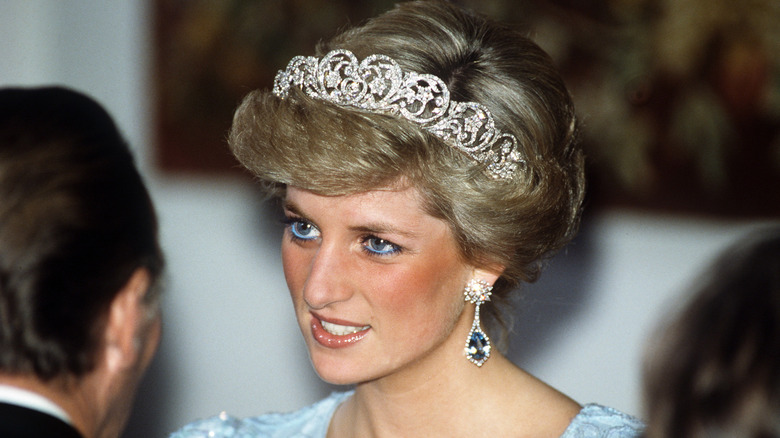
If you've ever dreamed of waking up in a stunning castle, plopping a tiara on your head, and ordering room service, so have we — but that's not actually how royals do things. Tiaras are not accessories suited for breakfast time, and they should not be worn casually. As the late Queen Elizabeth II once told Meghan Markle, Duchess of Sussex, with reference to a much-coveted emerald tiara, "It's not a toy" (via Sky News). This quote, which first came to light via royal expert Robert Hardman's biography "Elizabeth II," hints at the seriousness of wearing a tiara. Because these pieces symbolize a woman's status within the royal fold, they must be worn only on important occasions. Historically, that meant white tie parties, though this trend is shifting.
These days, queens, princesses, and duchesses should only wear their tiaras at important official events such as state visits and diplomatic galas, generally after 6 p.m. Royal weddings are also an excellent place to wear a tiara, as these ceremonies reach peak formality. Weddings also provide the one exception to the 6 p.m. rule, meaning that royal women can wear their tiaras all day long. Breakfasts in bed, on the other hand, don't qualify for appropriate tiara usage. What about those famous photos of Elizabeth II's younger sister wearing a tiara in the bathtub? Well, that was a breach of protocol and one of the weird things everybody ignores about Princess Margaret.
Royals aren't encouraged to wear tiaras to hotels
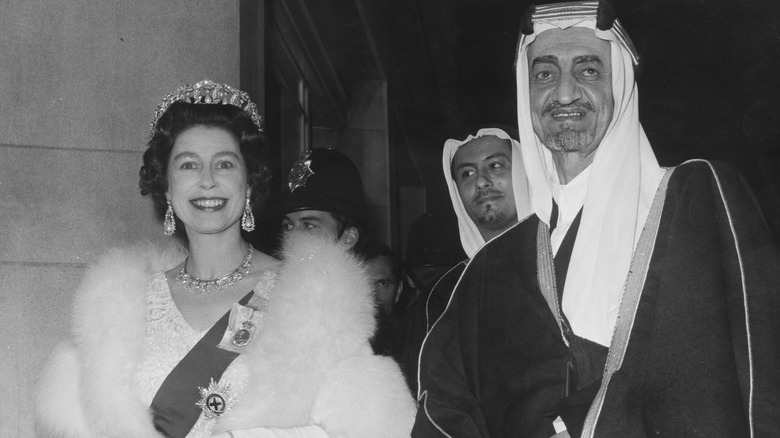
Once upon a time, members of the royal family never had to stay at hotels because they always had a castle to crash at; therefore, the thought of wearing a tiara at a hotel was appallingly common. While this may seem odd, it's important to consider that, historically, royals — especially those of the British variety — stayed at their own residences. Whenever one of the royals' homes was unavailable, aristocratic friends would step in, hosting at their manors instead. This meant that upper-class parties took place in private. Public dance halls, including hotel ballrooms, were viewed as so common that propriety banned tiaras from these spaces.
As time has gone on and cultural perceptions of hotels have shifted, royal family members have relaxed their approach to wearing tiaras at hotels. Princess Margaret was a huge pioneer on this front, sporting her tiara to many hotel parties, including one at the Hôtel Perrinet de Jars in Paris in 1951. By 1956, Queen Elizabeth II had consented to wearing a tiara to a hotel, sporting an extravagant piece to the Dorchester Hotel in London. Of course, unlike her sister, Elizabeth II was not attending a simple party but rather a royal event. More recently, though, the royal family has seemingly returned to its old-fashioned ways, as both Queen Camilla and Catherine, Princess of Wales, have limited their tiara use to formal events since the 2010s.
Only the highest-ranked women can wear tiaras
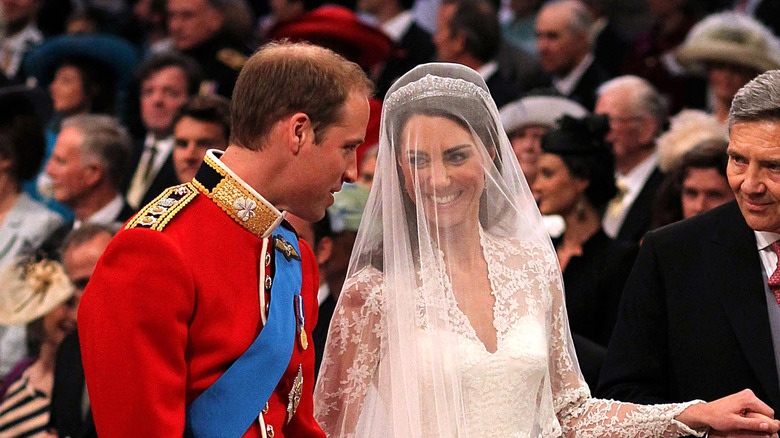
Not just anybody can wear a tiara, according to royal family etiquette. Only women of an extremely high rank are permitted to wear one of these gorgeous headpieces in royal company. Even Catherine, Princess of Wales, and Meghan Markle, Duchess of Sussex, were not always invited to sport tiaras. The reason for this rule is that, traditionally, only queens, princesses, and duchesses are allowed to don tiaras. Daughters of earls, viscounts, and knights do not share this pleasure — leaving commoners like us quite certain that we will never wear a tiara before the king. Since Catherine and Meghan were both born into common families, they were not allowed to wear their tiaras until their respective wedding days. After saying "I do," they both received duchess titles, giving them the right to wear this jaw-droppingly beautiful bling.
Interestingly, Meghan and Catherine were hardly the first women in history to join the Tiara Club after tying the knot. The relationship between tiaras and weddings is actually so strong that the jewelry has become synonymous with marriage. "Traditionally, tiaras are a sign of marriage. So, typically they could be worn by a bride on her wedding day, or after she is married, she can wear one to any white tie event," said Grant Harrold, royal expert, former palace butler, and director at the Royal School of Etiquette, to Business Insider of this dynamic. Daughters of monarchs, like Princess Anne, can wear a tiara prior to marrying.
Lower-ranked British princesses can only wear tiaras after their weddings
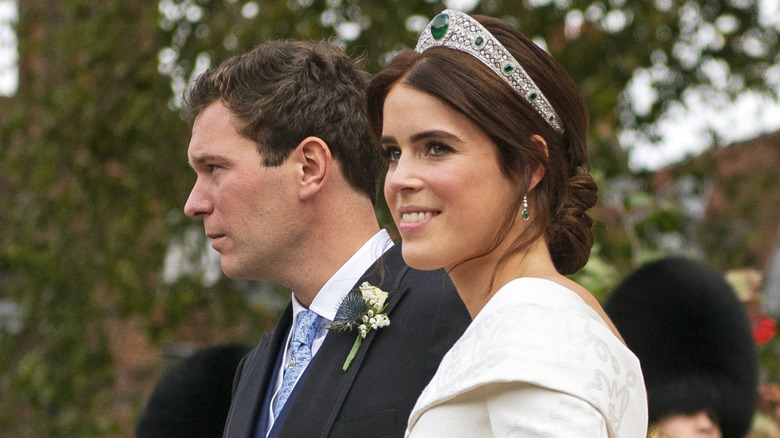
Princess Margaret and Princess Anne were both known to wear tiaras prior to their weddings, but in the world of princesses, they were pretty special. Margaret was both the daughter of a king and the sister of Queen Elizabeth II. Anne, meanwhile, was the daughter of Elizabeth and would eventually receive the prestigious title of Princess Royal. Because these women have been considered integral members of the British royal family, there was never any question of whether it would be appropriate for them to don tiaras prior to their respective weddings. However, this is not true for all princesses.
Princess Beatrice and Princess Eugenie were both born with titles. Their father, Andrew Mountbatten Windsor, was a prince at the time of their birth, granting both women the right to princess titles of their own. However, as their father was considered a spare prince rather than a monarch, Beatrice and Eugenie lacked the rank necessary to don a tiara before their weddings. Eugenie finally had her tiara debut in 2018 when she said "I do" to Jack Brooksbank in the Greville Emerald Kokoshnik. Beatrice, meanwhile, wore Queen Mary's fringe tiara at her 2020 wedding to Edoardo Mapelli Mozzi. Beatrice and Eugenie's younger cousin, Lady Louise Windsor, shares the right to a princess title via her father, Prince Edward. However, as she turned down the title, Louise may choose against wearing a tiara in the future.
Scandinavian princesses can't wear tiaras before their 18th birthdays
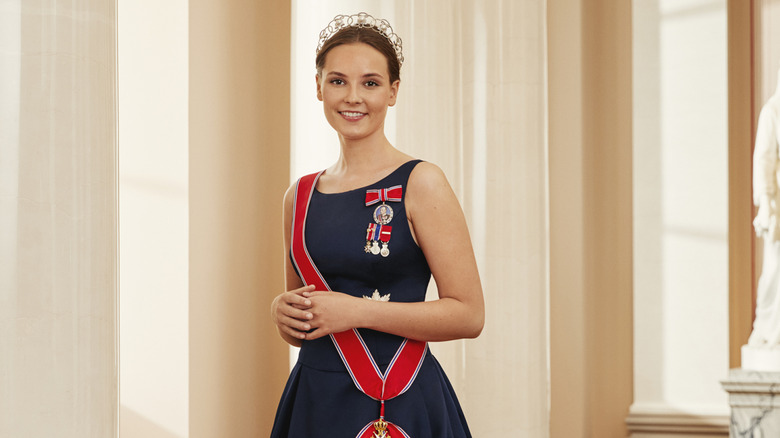
While some princesses are made, others are born. Princesses in the latter category are not required to wait until marriage to sport a tiara; however, depending on her country of origin, she may have to wait until her 18th birthday. This is especially true for Scandinavian princesses, who wait until the big 1-8 to enjoy a ceremony known as a tiara debut. This typically occurs at an official banquet or state event that takes place shortly after a princess' birthday, if not on the day itself. During the gathering, the birthday girl joins the rest of the royal women in wearing a tiara. Oftentimes, she wears a piece that was specifically fashioned for the occasion.
The next Queen of Norway, Princess Ingrid Alexandra, made her tiara debut in 2022 at a gala dinner following her 18th birthday. The princess posed for special tiara debut photographs that were released on her actual birthday. Previously, Princess Victoria of Sweden held an 18th birthday bash, where she made her own tiara debut in 1995. She received a special headpiece for the occasion — and looked infinitely glamorous. Several other royal families of Europe have embraced this Scandinavian custom, like the royals of Belgium. Princess Eléonore of Belgium, daughter of the King Philippe of Belgium, first debuted her 18th birthday tiara at a Japanese state visit. The daughters of British monarchs, on the other hand, aren't bound to this rule, and Princess Anne made her tiara debut at the age of 17.
Princesses must properly prepare their hair to receive a tiara
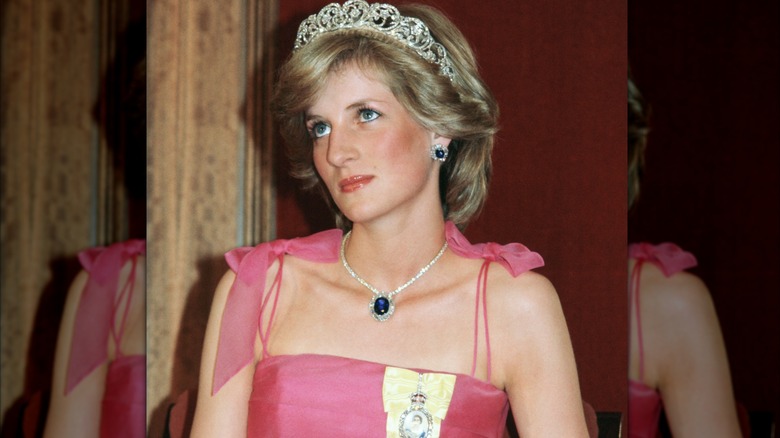
Royals make wearing a tiara look easy, but there's actually a lot of thought behind the way these headpieces are styled. Royal women need to get their hair ready to receive these luxurious jeweled items, and the preparation can begin days before the big event. Generally, princesses are told to wash their hair 24 hours prior to the outing. They are also instructed not to use conditioner. While this may sound strange, the idea is to give their hair enough texture that the tiara won't just slip right out of their hairstyles.
On the day of the actual event, royal women style their hair into magnificent updos. This allows hairstylists to pin the tiara into a woman's hair — and also prevents royals from looking too bohemian. Even if you think that a tiara would fit nicely with those "long hair, don't care" vibes, the palace probably wouldn't agree. This is, ultimately, why some of Princess Catherine's most gorgeous royal hairstyles are updos. What about royals with short hair? If a woman of high rank lacks Rapunzel's long locks, it's no big deal. In the case of the late Queen Elizabeth II or Princess Diana, a great deal of styling ensured that both women always looked regal with their tiaras pinned on their heads. Queen Camilla followed suit, only wearing a tiara after styling her hair to perfection.
Princesses cannot practice new hairstyle ideas with their tiaras
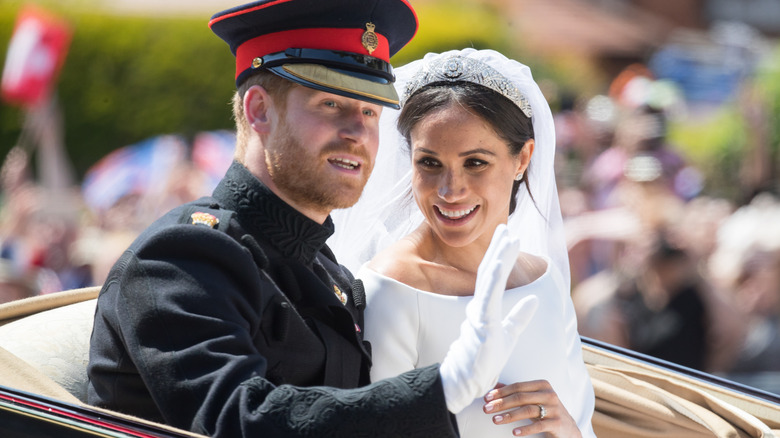
Because tiaras and updos often go hand in hand, it makes sense for a princess to practice a new hairstyle with their tiara within reach. Wouldn't it be nice to see how a tiara looks with a sleek low bun or an intricate fishtail braid? We certainly think so, but, again, the palace would disagree. In the U.K., tiaras do not belong to individual princesses but rather the Royal Collection. This means that royal women cannot just pull these headpieces out of their closets and sport them at will. Instead, they have to request the tiara for a certain event, and, no, they can't use one to try out a new hairstyle.
Meghan Markle, Duchess of Sussex, found out about this rule the hard way in the days leading up to her royal wedding in 2018. She asked the Royal Collection for permission to borrow a tiara to see how it looked with her hairstyle — and promptly received a firm "no." If she had spoken to Catherine, Princess of Wales, about this dilemma, Meghan would have discovered that her sister-in-law had faced a similar predicament. How had Catherine tried out potential hairstyles prior to her own royal wedding? She purchased a cheap plastic tiara from Claire's and asked her hair team to just go with it. At the end of the day, Catherine looked great on her wedding day, and Meghan looked spectacular walking down the aisle. Both tiara crises were clearly averted.
There is a correct way to place a tiara
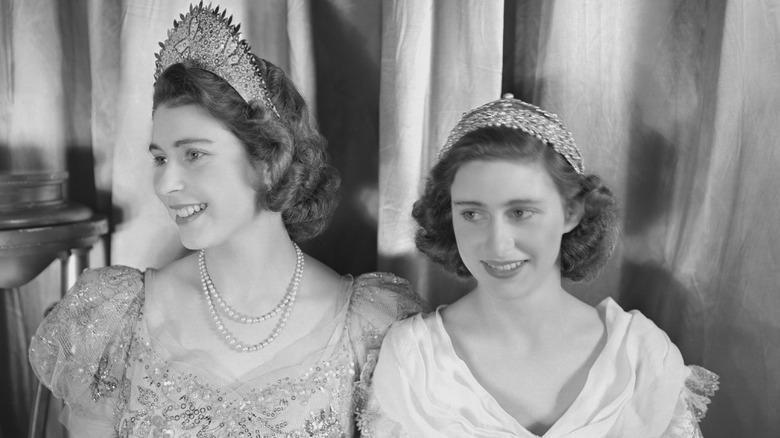
When the literal crowning moment arrives, and royal women are getting ready to put a tiara on their heads, there are still a number of rules that they must follow. Placing a tiara is no easy task. If a princess places it too far up on her head, the tiara will get lost among their tresses. However, if she places it too close to her hairline, it will look silly. To learn how to put a tiara properly on one's hair, we turned to Tatler's tiara advice.
Per the British social guide, it's possible for a royal to use her hands to ascertain her ideal tiara proportions. "Put your thumb on the dimple of your chin and your index finger on the gap in between your eyebrows," reads the advice. "Keeping that measurement, move your thumb up to where your finger was." At this point, your index finger will be touching the exact point where the tiara belongs. What happens if you accidentally misplace the headpiece? Well, according to Tatler, disaster will ensue. "Anymore than an inch and a half from your hairline, and people will talk," the guide warns. We certainly wouldn't want that, would we?
Tiaras can only travel abroad if absolutely necessary
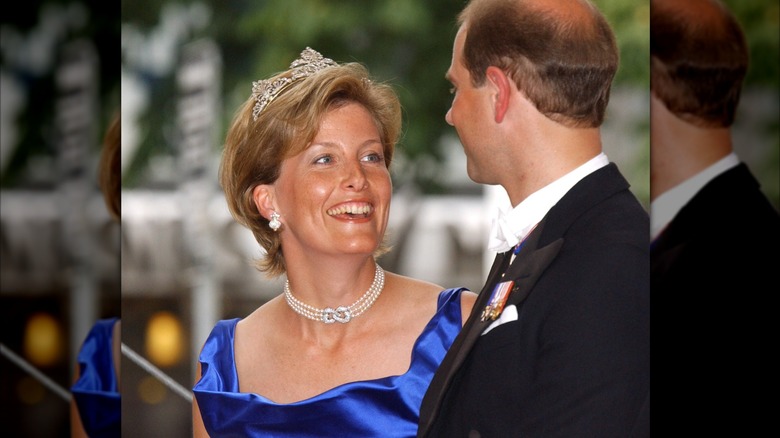
The idea of taking a tiara on an exciting vacation may sound enticing to most commoners, but for the royal family's security team, it would be a literal nightmare. There are plenty of strange travel rules royals must follow, and leaving priceless tiaras at home is one of them. The reason pertains mainly to the threat of theft, though palace officials also worry about tiaras suffering wear and tear. For this reason, royals often travel sans tiaras. Indeed, when Sofia, the former Queen of Spain, attended the 2011 wedding of Prince William and Princess Catherine, she did not wear a tiara. Princess Charlene of Monaco also refrained from wearing a hairpiece on her 2026 state visit to Spain.
That said, there are times when royal tradition outweighs security protocols. When Princess Mette-Marit of Norway married Prince Haakon in a 2001 ceremony held in Oslo, Prince Edward and Sophie, then-Countess of Wessex, were on the guest list. As all the other European royal women would be wearing tiaras for the event, Sophie felt that it was important to sport one as well. The Royal Collection, therefore, gave her special permission to wear the Anthemion Tiara for the 2001 wedding. In 2023, Queen Camilla also transported a tiara overseas, wearing the Greville Tiara to a German state banquet. In this case, an exception to the wider rule was made due to Camilla's recent ascension to queenhood. Generally, though, traveling with tiaras is discouraged — even if it complement your outfit.
A tiara's symbolic value is everything
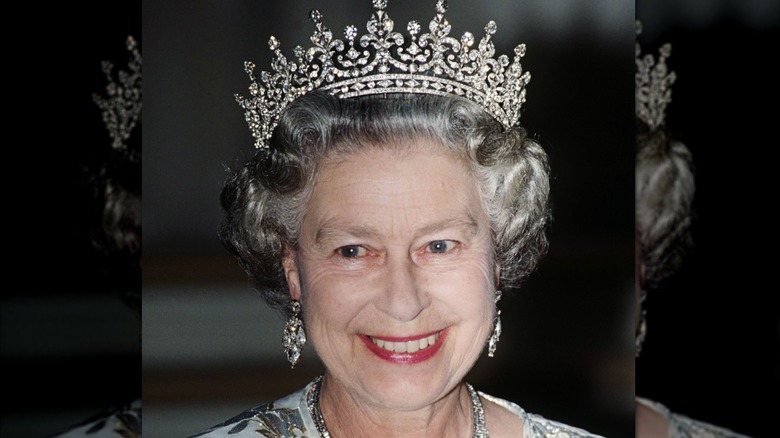
Tiaras are not your average piece of jewelry. They are generally created for a certain royal under a specific set of circumstances. As a result, these headpieces hold very strong symbolic meaning. For example, during the lead-up to Princess Charlene's wedding, Prince Albert ordered a special Ocean Tiara for the bride. Given Albert's passion for oceanic conservation and Charlene's love of swimming, the tiara symbolizes the couple's shared adoration of water. In the U.K., the Girls of Great Britain and Ireland tiara symbolizes the power of the late Queen Elizabeth II, as the piece appeared in several official portraits.
While some tiaras hold positive connotations, others leave behind more questionable messages. Meghan Markle, Duchess of Sussex, discovered this after selecting a stunning emerald tiara for her royal wedding. When she followed up with the Royal Collection about the possibility of wearing the piece, Meghan was surprised to find that the piece was perpetually unavailable. Apparently, the tiara had been deemed inappropriate. According to an excerpt of historian Robert Lacey's book, "Battle of Brothers," the tiara had "a sensitive origin, meaning that the treasure was one of those that had found its way into Windsor hands through 'undefined' not to say dodgy channels" (via The Mirror). For Meghan to wear a controversial piece to her wedding would have been disastrous for her own public image. As Lacey put it, "There was scandal attached." Meghan wore Queen Mary's Diamond Bandeau instead.