

The Complete Transformation Of '70s Heartthrob Bobby Sherman
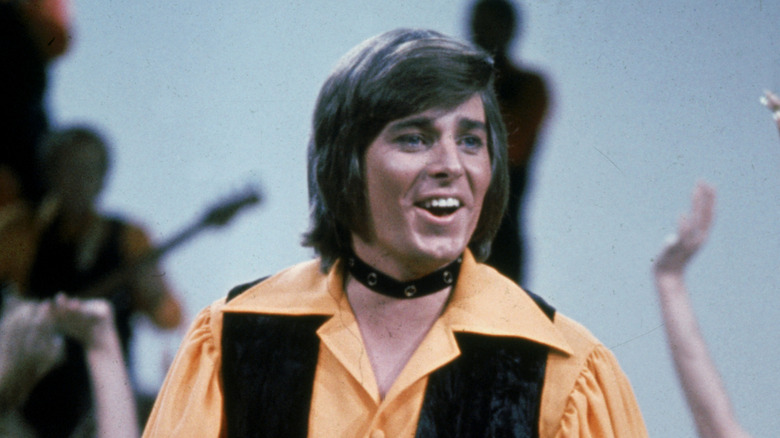
Mention Bobby Sherman today to many people under 50, and the name may not immediately register. Sherman was a familiar presence on the covers of Tiger Beat and 16 Magazine. With his shaggy hair and charming smile, he had the look of a quintessential '70s Hollywood icon. He was often mentioned alongside other child stars from the '70s like Donny Osmond and David Cassidy, and he later ranked eighth on TV Guide's list of "TV's 25 Greatest Teen Idols."
Robert Cabot Sherman Jr. was born on July 22, 1943, in Santa Monica, California. Though his parents did not work in the entertainment industry — his father was a milkman — Sherman got into showbiz early on. He appeared on music programs such as "Hollywood a Go Go" and "Shindig!" and spent several years trying to establish himself as a recording artist without much commercial traction. His breakthrough came when he was cast as the stammering logger Jeremy Bolt on "Here Come the Brides." That role helped turn him from an aspiring star into a recognizable teen idol.
Sherman's chart success was also substantial, even if it was concentrated in a fairly brief period. He placed four songs in the Billboard Hot 100 top 10 — "Little Woman," "Julie, Do Ya Love Me," "Easy Come, Easy Go," and "La La La (If I Had You)" — and reached the Billboard 200 with six albums. Among them, "Here Comes Bobby" had the longest run, spending 48 weeks on the chart and peaking at No. 10. For a while, at least, America seemed to have a hard time walking past a magazine rack without seeing his face.
As a kid, Bobby Sherman developed a deep interest in science
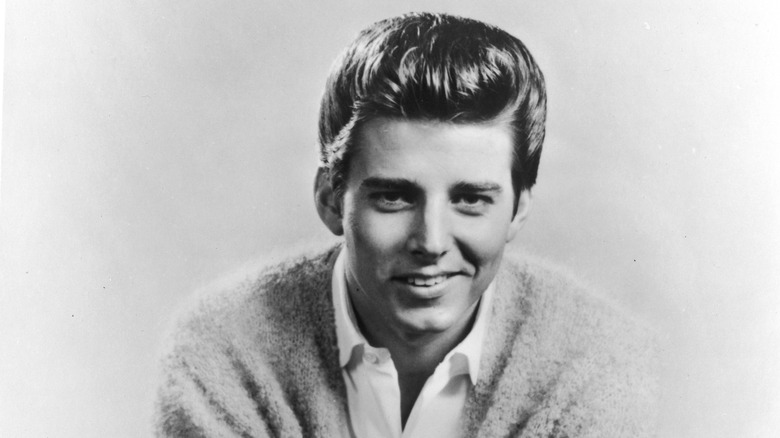
Bobby Sherman's childhood, by his own account, was shaped by a feeling that he did not fully fit in. In an interview with Ann Moses for Tiger Beat (via annmoses.com), he said, "There was a time in my life when I had few friends and the kids my age really didn't accept me. So, I always forced myself to work harder and be better than anyone else. It's just this drive had a big effect on my life today!"
He was also very into science. In the same interview, Sherman recalled that after he visited the Griffith Park Observatory as a youngster, he decided he wanted a telescope. He worked to earn the money for one, and then set it up in the family garage. He said, "I had to have a whole Observatory of my own!" In addition to being into studying the cosmos, he also enjoyed building things. As a teen, he created a miniature replica of Disneyland.
The future pop star was also interested in behavioral and social science. Sherman went on to spend a year at Pierce College, where he studied child psychology. As he said on a 2023 episode of "A Breath of Fresh Air," "I was thinking about becoming a child psychologist." However, before he could earn his degree, fate would pull him in another direction.
Superstardom all began on a whim for Bobby Sherman
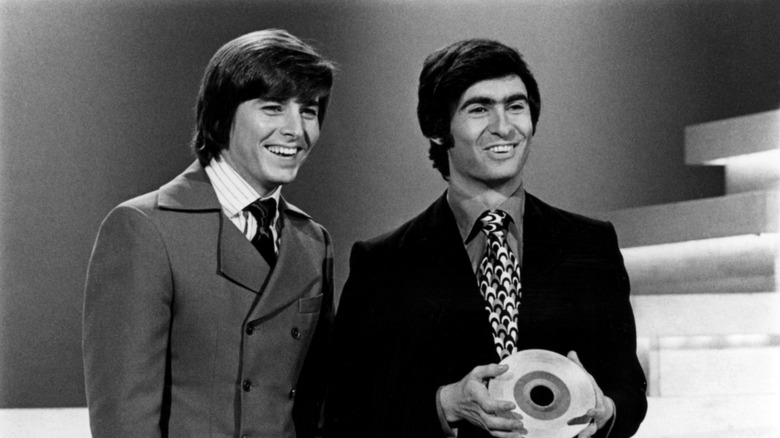
For Bobby Sherman, it started with a break that seems, in retrospect, almost accidental. As the Los Angeles Times recounted, Sherman, who was still a college student, was at a party when the band asked him to perform with them — in front of Hollywood stars like Jane Fonda and Natalie Wood. That night led to an audition for ABC's "Shindig!," where he became a regular for nearly two and a half years. Another account, later cited by Variety, said Sherman lip-synced during that audition because he had not yet made a record.
Sherman himself seemed quite aware of how he was being marketed. In the aforementioned 1989 Los Angeles Times interview, he said, "But I could have sang 'Auld Lang Syne' and they would have bought it. My audience was so young and impressionable, they would buy everything associated with Bobby Sherman."
His first real sitcom-style acting break came soon after "Shindig!" ended, marking the next step for a star who came from humble beginnings. Sherman toured for about eight months, then auditioned for and won the role of Jeremy Bolt in "Here Come the Brides." Recalling the period after "Shindig!" was canceled, he told Ann Moses for Tiger Beat (via annmoses.com), "It's kind of embarrassing for me to say I went through eight months of 'dark days,' when you realize that many actors wait for several years before they get a break in the business. But to me it was very tough and I didn't know how long it was going to last."
He became one of the most recognizable young stars in America
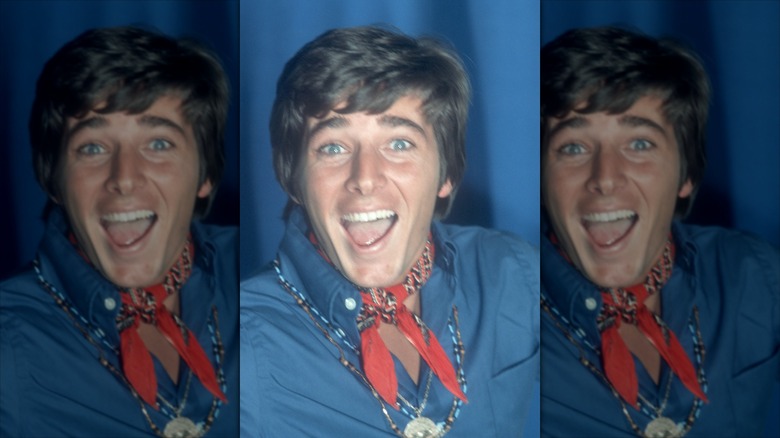
Bobby Sherman would later recall that his early rise did not feel easy at all. In his aforementioned interview with Ann Moses for Tiger Beat, he said, "After three or four months of not working at all I got pretty depressed. I was reading for parts and not getting them. Banging on door after door and getting nowhere." "Before Here Come the Brides," he said he picked up small parts on shows including "Honey West," "The FBI," and "The Monkees."
It was during that stretch, Sherman recalled, that Screen Gems executive Steve Blauner approached him with a new possibility: "I have a show that you might be good for, can you stutter?" Blauner had seen Sherman on "The Monkees," and the part in question was Jeremy Bolt on "Here Come the Brides." Sherman did not sound ambivalent about that period. "Everything that has happened since that day is been more exciting than the day before," he told Moses. "I never been so happy working at anything than I am working on 'Brides' and making appearances all over the country."
The Los Angeles Times said his television exposure and records helped turn him into "Bubblegum Bobby." His run of hits included "Little Woman," "La La La (If I Had You)," "Easy Come, Easy Go" and "Julie, Do Ya Love Me," songs widely identified as the records that fixed him in late-1960s and early-1970s teen pop.
By the mid-1970s, Sherman had stepped away from full-time show business
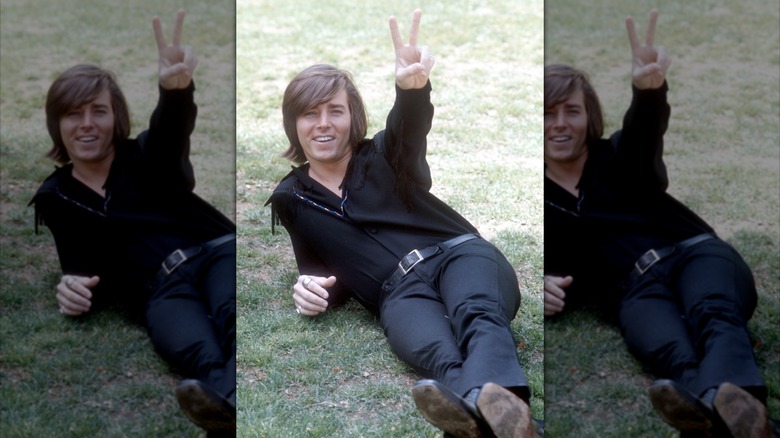
By the mid-1970s, Bobby Sherman was already moving away from the kind of all-consuming pop stardom that had made him famous. His chart run had peaked in 1969 and 1970, and the television momentum did not last in quite the same way after that. His short-lived sitcom "Getting Together" was canceled in 1972.
In a 1982 interview with The Washington Post, he said, "I always think of my career as a conglomerate of fast-thinking and wheeler-dealer kinds of people, capitalizing obviously on that kind of a phenomenon." The same Washington Post profile noted that by then he was spending time with his two sons and producing a record for Bobbie Gentry. That did not mean he disappeared from entertainment altogether, the singer-songwriter best known for "Ode to Billie Joe."
Sherman continued making guest appearances on television through the 1970s and into the 1980s, including roles on shows such as "Mod Squad," "Fantasy Island," "The Love Boat" and other series. After making it big, Sherman abandoned fame for a normal life. In the 1980s, he started to take up emergency medical service in a serious way.
Bobby Sherman built a mini Disneyland in his backyard
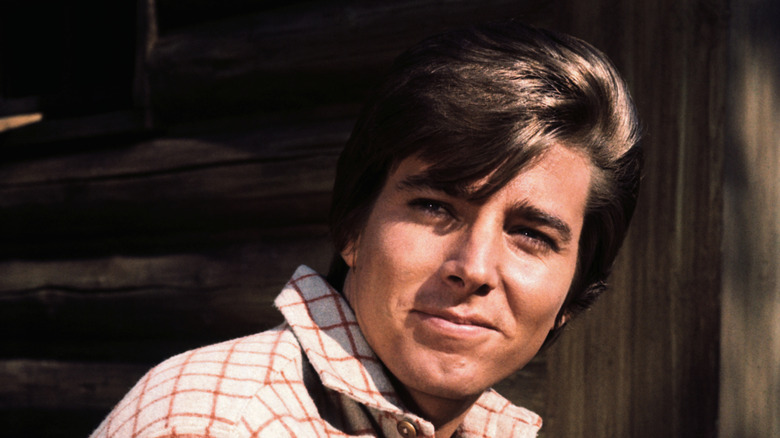
Bobby Sherman's first marriage was to Patti Carnel, whom he married in 1971. They shared two sons. In a 1971 Tiger Beat interview with Ann Moses (via Facebook), Carnel said she first met Sherman through a friend who lived in the same apartment building. According to Carnel, she and her friend knocked on his door pretending they needed to use the phone. Carnel recalled, "So after we visited him the next day, he dated [the friend] a couple of times. Then after a while he asked me for a date."
In the mid-'70s, Sherman built a miniature version of Disneyland's Main Street in his backyard for his sons. "Originally, what I was going to do was build my boys a treehouse, but they were rather young and I kept having nightmares of them falling out," he said in an interview with MickeyTone News. "So I decided, 'I know! I'll build the first two blocks of Main Street Disneyland.'" Sherman explained that Disney actually sent him over the plans so he could build a 1/5 scale replica of the section of the park on his own property — and he did it all on its own. The project took over two years, and during that time, he spent a lot of time with his own thoughts. "It really gave me some insight into myself," he said. "It did turn out to be quite therapeutic."
The pop idol became a certified emergency medical technician
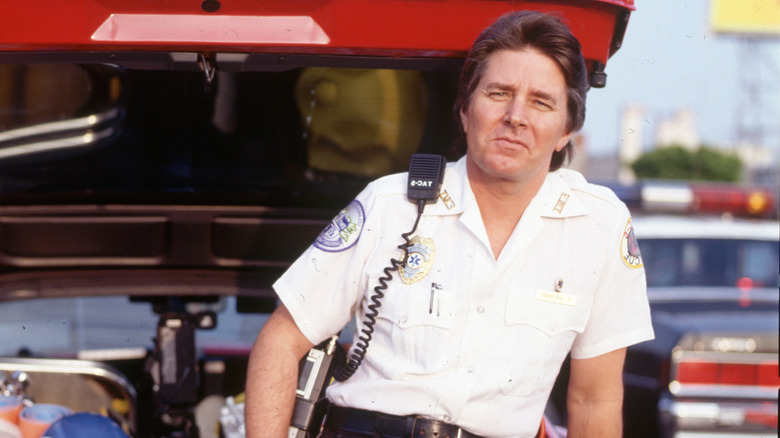
While a number of '70s heartthrobs have continued to pursue careers in showbiz, Bobby Sherman pivoted to emergency medicine and law enforcement. In a 1998 interview with The Washington Post, Sherman said his interest in first aid grew out of family life. "As kids grow up, they fall down, scrape their knees, get bloody noses," Sherman explained. "My ex-wife was very squeamish when it came to blood, especially our kids' blood, so it was kind of up to me. I took a basic first aid-CPR class, just in case, and found I had a knack for it." With more training, he went from EMT to EMTD and then became an instructor.
The Washington Post reported that Sherman eventually turned that interest into fieldwork and teaching. He had delivered five babies while working as a medic. "It's tremendously rewarding, which is why I always say in concert that everyone should take the time to learn first aid and CPR, because it works," Sherman said.
His public-service career later extended into police work. A 2004 tribute in the Congressional Record described Sherman as a certified EMT Instructor, a technical reserve officer with the Los Angeles Police Department, and a Reserve Deputy Sheriff with the San Bernardino County Sheriff's Department. It also noted that for 15 years he served at the Los Angeles Police Academy, "instructing thousands of police officers in first aid and CPR." A 2025 remembrance from the Los Angeles Police Reserve Foundation likewise said he trained thousands of recruits and was named LAPD Reserve Officer of the Year in 1999.
His public service work led him back to music in the 1990s
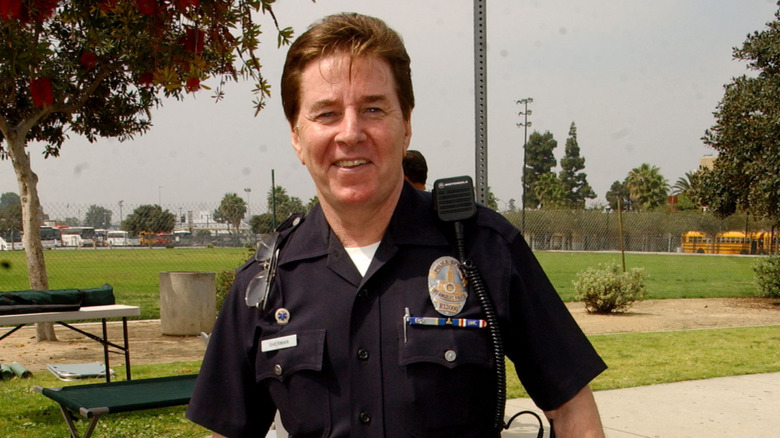
Bobby Sherman's return to music in the 1990s appeared to have grown out of his public service work. On January 28, 1993, the Los Angeles Times reported that Sherman had resumed recording and was also working on a television comedy pilot.
By November 1994, that renewed recording activity had taken a more concrete form. Sherman was working on "The Thin Blue Line," a song and accompanying video intended to raise money for the LAPD's Reserve Officer Training Fund. The project was tied to his work as an LAPD paramedic and first-aid instructor. At the same time, his earlier albums remained available through Restless Records, so his musical return seems to have combined a small amount of new, purpose-driven recording with the reissue and continued sale of his older material.
Sherman's more visible return to performing came in 1998, when he joined Peter Noone and Davy Jones for the "Teen Idols" tour, his first major concert appearances in roughly twenty-five years. In his interview with The Washington Post, Sherman described the tour as an unexpected opportunity that grew out of the CD reissue of his music. The tour continued into 1999, with Micky Dolenz replacing Jones for some performances, and a new compilation, "The Very Best of Bobby Sherman," was released by Varèse Vintage in 2000.
He embraced a quieter life in his later years

Bobby Sherman did not really retire so much as withdraw from the center of the entertainment business. A 1989 Los Angeles Times report described Sherman working in a recording studio at his Encino home, where he composed music for television projects, including "Crime Watch Tonight" and "People Magazine on TV." His last documented solo concert was in Lincoln, Rhode Island, on August 25, 2001, after which he largely disappeared from regular public performance.
In a 1997 interview with the Tulsa World (via Associated Press), Sherman looked back on his years as a teen idol without dismissing them. "I don't think I'd change a thing — except to maybe be a little bit more aware of it, because I probably could've relished the fun of it a little more," he said. "It was a lot of work. It was a lot of blood, sweat and tears. But it was the best of times." The constant cycle of filming, flying, and performing had left little room for an ordinary personal life, which may help explain why he did not pursue a conventional second act in entertainment
One of Sherman's last substantial interviews came in March 2023, when he spoke with Sandy Kaye on the "A Breath of Fresh Air" podcast. He revisited the speed of his rise and the loneliness that accompanied a schedule in which he worked continuously in different cities.
His second wife became part of his legacy
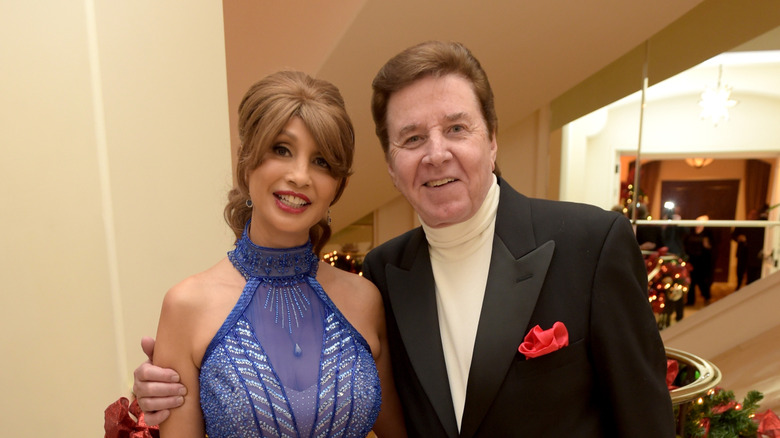
Much of Bobby Sherman's legacy in his final years was shaped by his marriage to Brigitte Poublon. They married in 2010, and in 2011 they established the Brigitte & Bobby Sherman Children's Foundation. On a 2023 episode of "A Breath of Fresh Air," he noted that helping kids is something that was always important to both him and Poublon. "That wasn't how we connected, but that was one of the things that connected us and kept us going so that we could help kids out there," he said. "The Foundation is still going strong."
The organization offers schooling assistance, meals, tutoring, and music and arts instruction. The nonprofit was a new chapter for Sherman, shaping his public identity beyond former teen pop star and television actor. Per Sherman's bio on the BBSCF website, he supported the foundation through his love of music and children, with its "musical village" and music program giving students arts instruction and performance opportunities.
In March 2025, Sherman was diagnosed with cancer. In a statement to EIN Presswire, Poublon shared that he would no longer make public appearances and asked fans to respect their privacy. Children connected with the foundation nevertheless sent him messages of support that April, thanking him for the help they had received.
Bobby Sherman passed away at the age of 81
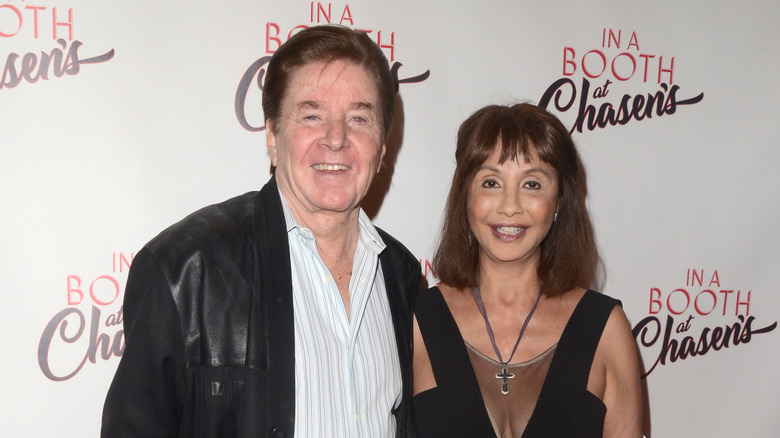
Bobby Sherman died on June 24, 2025, at his home in Los Angeles, at 81. The announcement was first shared publicly by his wife, Brigitte Poublon Sherman, through her friend John Stamos' Instagram. Three months earlier, in March 2025, Poublon told Fox News Digital that Sherman had stage 4 kidney cancer and was "terminally ill."
In a statement provided to the Associated Press following his death, Poublon said, "Bobby left this world holding my hand — just as he held up our life with love, courage, and unwavering grace." She went on to add, "And though our family feels his loss profoundly, we also feel the warmth of his legacy."
In the weeks before his passing, the family had already signaled that Sherman's condition was serious. The Los Angeles Times reported in April 2025 that Poublon said his body was "shutting down." Poublon stayed by Sherman's side until the end.