
John Cusack Hasn't Been Shy About His Dislike Of Hollywood: What He's Said
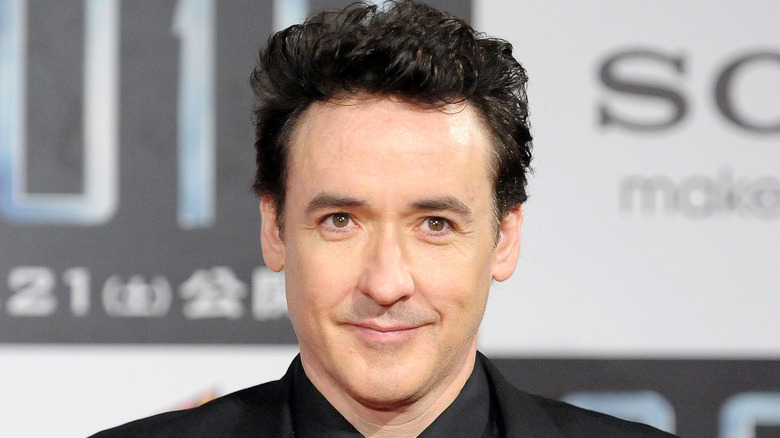
John Cusack has never been the typical Hollywood star. While many actors spend years trying to fit in, Cusack has often pushed back, questioning the norms and standing up for what he believes in. He has built a career by choosing roles that defied audience expectations rather than blockbusters that might have made him one of Hollywood's biggest leading men. It's even come to the point where Hollywood won't cast Cusack anymore – and he's totally cool with that.
Away from the camera, the "Con Air" star has developed a reputation for being outspoken. Unlike many celebrities who do their best to avoid controversy, Cusack has never seemed interested in saying what people want to hear. Instead, he's repeatedly criticized different aspects of Hollywood. Whether you respect his opinions or disagree with them, one thing is clear: Cusack has never been interested in playing industry games. Here are some of the most critical things he has said about Hollywood over the years.
John Cusack left Hollywood because he was tired of negotiating his work
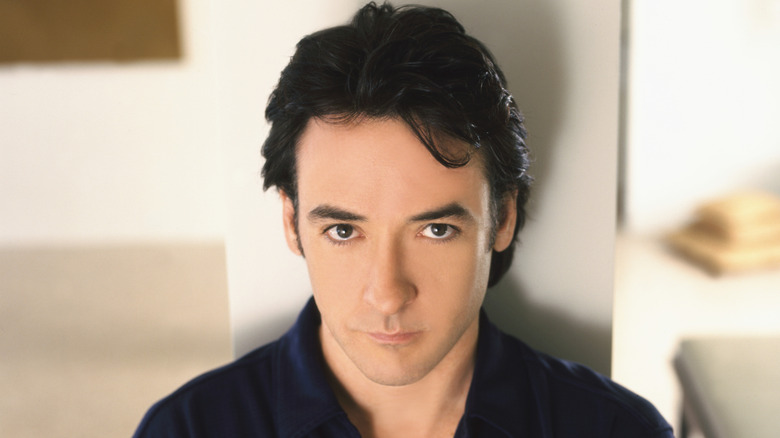
Even though John Cusack's family is full of megastars, he slowly transitioned away from Hollywood, taking on fewer projects and eventually switching gears to become a graphic novelist. The "Grosse Pointe Blank" star previously told Variety that he "didn't want to negotiate" his creative vision. "I wanted to tell a story, but I didn't want to negotiate telling a story really. When you ask somebody to put like $20 to $30 million into a bank account, they wanna have an opinion, and they're afraid and all that stuff," he said, adding, "this was just like, I wrote it and I said 'I like this story.'"
For Cusack, the move into graphic novels represents the kind of creative freedom Hollywood rarely offers. Instead of navigating the unwritten rules of Hollywood studios, he's now able to develop stories exactly as he envisions them from beginning to end. Cusack's first graphic novel, titled "Momo," is set to be released in September 2026. "It's not 'on brand.' It's more like a brand-buster," he told Forbes in July 2026.
The movies he enjoys making don't always pay the best
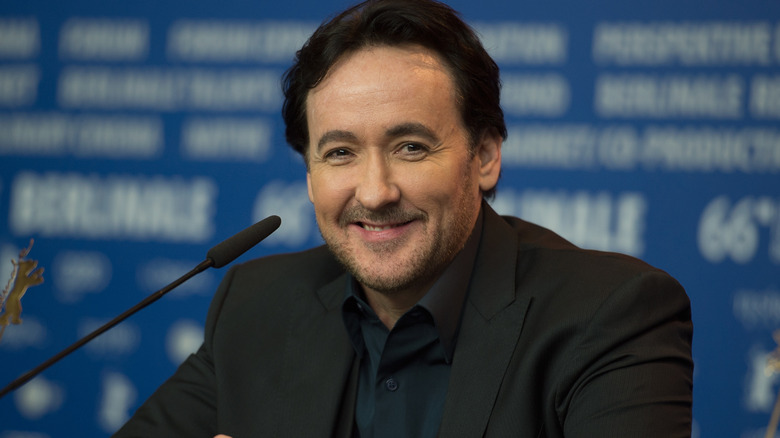
Unlike some people, John Cusack doesn't measure success by the size of a paycheck. While he's appeared in major box-office hits like "Con Air," some of the films he's been most proud of are the smaller projects that didn't end up being blockbuster successes. His approach to choosing roles that stirred him creatively rather than those that guaranteed commercial success prompted questions about why he didn't pursue a more traditional path to megastardom.
"People are always telling me, 'You should do more of this, more of that. Why aren't you more of a star? You could be more successful.' But it's all relative," Cusack told The Guardian in 2000. "It all depends on your definition of success. Is 'High Fidelity' or 'Being John Malkovich' a success? Both films will probably make money for the people who made them. But neither of them, in total, will make what 'Con Air' made in its opening weekend – $200 million."
While films like "Con Air" became major commercial hits, others like "High Fidelity" and "Being John Malkovich" earned critical acclaim and gained devoted fan bases. Rather than chasing the biggest payday, Cusack has often suggested he'd rather be remembered for making films that resonate with himself and audiences.
He's extremely self-aware about where he stands in the business
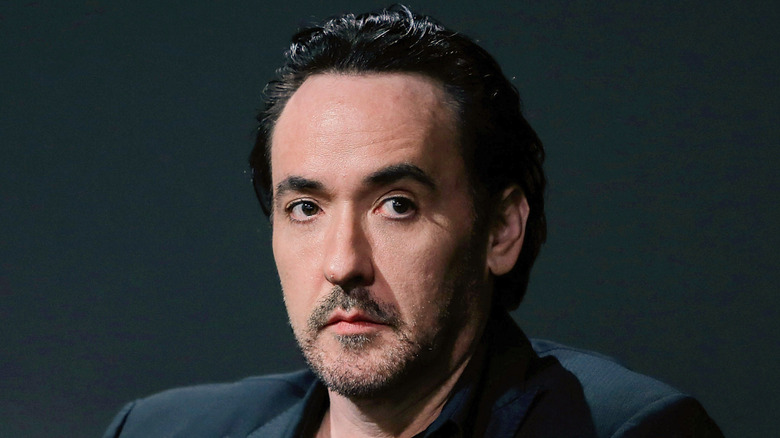
John Cusack has also been candid about something Hollywood doesn't always say out loud: An actor can go from being one of the industry's most sought-after stars to struggling to get a movie financed. Cusack understood that distinction, and he wasn't afraid to admit where he believed he stood in the business. "In the last few years, I haven't been able to get projects financed," Cusack told The Guardian in 2020. "That could be a function of getting older. Or it could be a function of being cold."
When the conversation turned to whether he was still considered "hot" in Hollywood, Cusack didn't try to argue his way around the question. Instead, he seemed to accept that being a successful actor doesn't necessarily mean you're always at the top of the list. "We-e-e-ell. I haven't really been hot for a long time," he said. Cusack's straightforward response offered a glimpse into how he views Hollywood's idea of who's in demand and who's not. Indeed, as an actor who has spent decades in the business and appeared in some of the industry's most recognizable films, he understands the volatility of Hollywood incredibly well.
John Cusack compared Hollywood to a 'wh*rehouse' in a 2014 interview
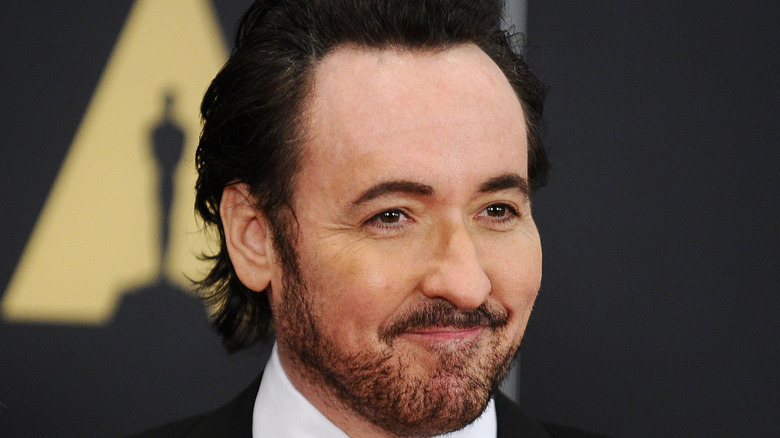
John Cusack has often spoken about how dramatically Hollywood changed over the course of his career, and he doesn't believe the shift has been for the better. Having entered the business as a teen in the 1980s, the actor remembers an industry where experienced filmmakers and actors took younger performers under their wings. "People would look after you when I was a kid. There were good people in the business. When I came to LA Rob Reiner said: 'Come stay at my house.' He taught me. I worked with [Al] Pacino ... Pacino would talk to you and mentor you," Cusack told The Guardian. "Now it's different. The culture just eats young actors up and spits them out. It's a hard thing to survive without finding safe harbour."
Cusack's criticism of Hollywood didn't end there. Frustrated by what he sees as an increasingly unforgiving industry, the actor summed up modern Hollywood with a comparison that left little doubt about how he feels. "You can't make it up. It's a wh*rehouse and people go mad." The surprising remark reflected Cusack's broader frustrations with today's entertainment industry.
He doesn't think his body of work is a success
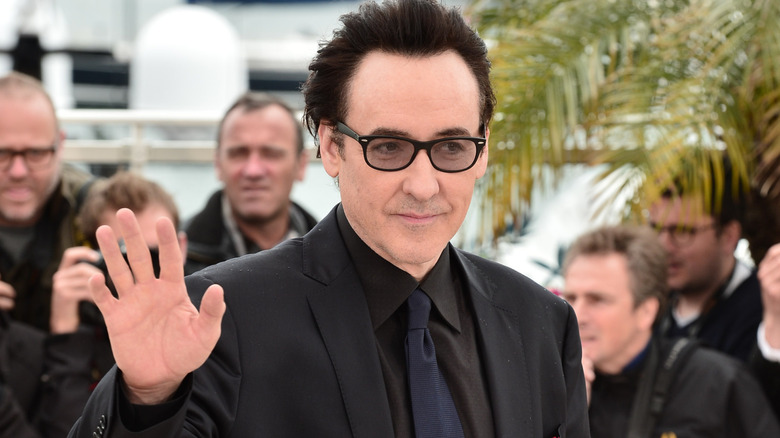
With a career that spans more than four decades, John Cusack has built an impressive resume. But unlike many actors, he doesn't believe every movie he's made deserves to be remembered, nor does he pretend each one is a masterpiece just because his name is attached to it. In truth, Cusack has been surprisingly candid about the projects that didn't live up to his expectations, while acknowledging that he's had his share of successful films. "I've made 10 good films. I'm sure you know which ones they are. The ones that suck I tend to blank out," he previously told The Guardian. "It's like I never even made them. Well, there aren't 40 that are great, put it that way. But that's fine. Ten is a good batting average, don't you think?"
Many of his longtime fans would probably disagree with his assessment, arguing that he's made far more than 10 memorable films. From "Say Anything..." and "Grosse Pointe Blank" to "High Fidelity" and "Being John Malkovich," his resume includes plenty of movies that have remained popular with audiences years after their release — he was part of the cast of "16 Candles," for example. Even still, Cusack's willingness to poke fun at his career fits with the bigger picture.
He's been critical of Hollywood's higher-ups
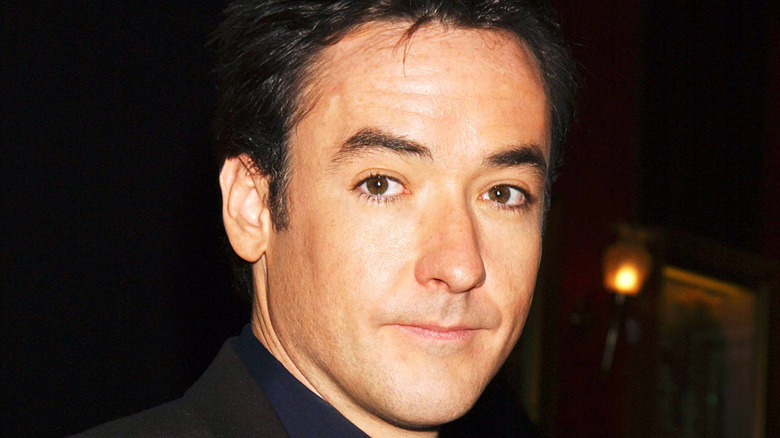
In addition to his criticism of the changes in Hollywood, John Cusack has also spoken about the executives running the industry — the powers that be, if you will. After SAG-AFTRA President Fran Drescher — who is rarely seen in Hollywood these days — criticized studio leaders over claims that companies were losing money while executives earned millions, Cusack shared his own frustrations on the matter. "The greed is almost a legendary comic trope," Cusack wrote on Twitter (now X), "When I was a youngin – I did a film (with a boom box) and somehow I got points – net not gross. Never expected to see any money – but the film became quite famous."
Years later, Cusack said he looked back at the financial statements and was shocked by what he found. "So about 10 years ago – I looked again at the financial statements they were obligated to report – and to my shock – they claimed they had LOST 44 million dollars on the film," he wrote, joking that he "almost bankrupted Fox." Cusack was referring to "Say Anything...," the 1989 comedy-drama that became one of his most recognizable movies. He noted that the film had a budget of $13 million and its release was inexpensive. "30 years in – that film lost millions every year! A neat accounting trick don't ya think?" Cusack wrote.
John Cusack said that movie-making is 'brutal'
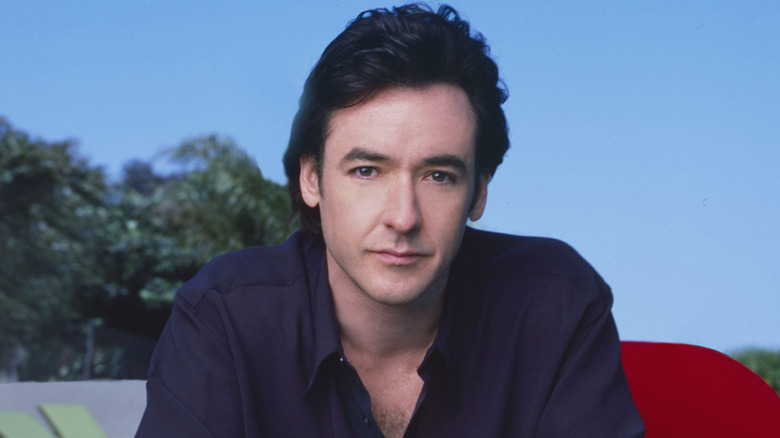
Making movies might seem like a dream job, but John Cusack sees it differently. For him, part of the frustration comes from knowing that an actor or filmmaker can spend months working on a project only to have the final product changed once it reaches the editing room. Cusack has spoken about how difficult it can be for actors and filmmakers to protect the work they were proud of once a studio becomes involved. Even when everyone starts with the same vision, that objective can change considerably before the movie reaches the theater.
"You may go make a film; you do all this work. And the movie sort of gets butchered in the editing room," he told The Guardian. "And that happens, like ... nine times out of 10? So it's not a very satisfying thing, if only one in 10 movies that you're making work out the way they were planned." For Cusack, that reality can make the filmmaking process far less satisfying than it might appear from the outside. Audiences see the finished product, but they don't necessarily see all of the changes that happened along the way. Movie-making, he concluded, is "brutal, transactional, superficial and dumb."
He's been critical of the change in Hollywood over the years
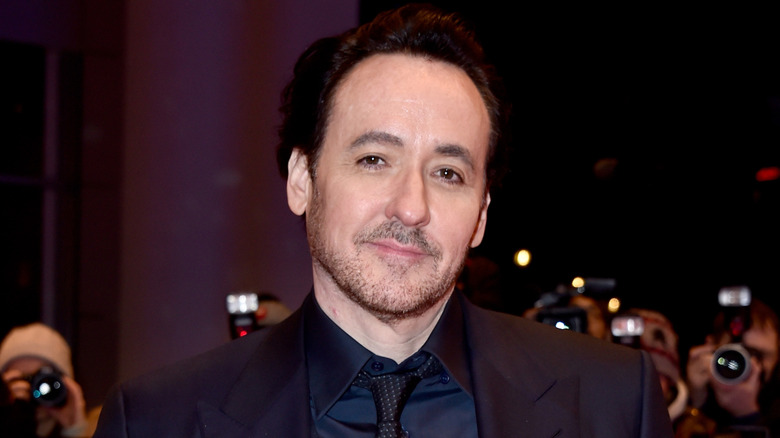
John Cusack has also noticed a major shift in how Hollywood approaches filmmaking. He believes that it has become harder for actors and filmmakers to make the projects they truly want while also meeting the demands of the studios footing the bill. In an interview with The New York Times, Cusack explained that many actors try to follow the idea of making one movie for the studio and one movie for themselves. But, in his opinion, that balance can quickly disappear. "You try to do — it's a cliché — one for them, one for you. Then it becomes four for them, one for you. Then it becomes all for them, none for you," he added.
The actor also looked back on a time when studio executives were more willing to take chances. He credited Joe Roth, a former studio executive, with helping him make films like "Grosse Pointe Blank" and "High Fidelity" through handshake deals. "He asked me to do 'Con Air,'" Cusack told the outlet. "In order to get movies funded, you had to make people money, and then you could leverage that into doing a movie like 'Max.'" Even when Cusack took on bigger commercial projects, he still found ways to make them his own. "I would do ridiculous things," he admitted.
John Cusack said that working in Hollywood is a 'tough business'
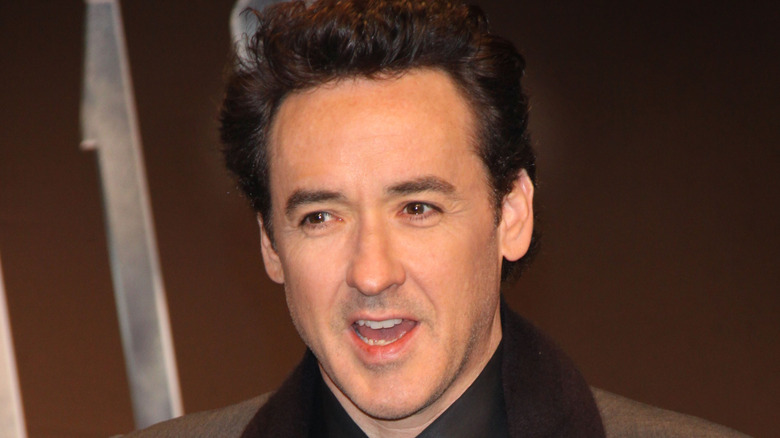
Given his experience in Hollywood, John Cusack knows firsthand how complicated the industry can be. For him, the hardest part has never been the art itself but the friction between creativity and the business side of filmmaking. "The artists, they're never the tough part. The tough part is navigating the idea of making everything into a commodity," the actor told The New York Times. "You get tired of the business. It's also a strange thing, because what are the struggles of navigating Hollywood, really? It seems petty to complain. But it can be a tough business," he added.
Cusack went on to describe some of the challenges filmmakers face once a movie moves beyond the creative process. He recalled working with a first-time filmmaker and knowing they had to "survive the editing process and the selling of the film. That's where 60, 70 percent of movies get destroyed." He explained that the movie was eventually sold, only for the people who bought it to decide that they or their executives would make cuts. Cusack had been through the process before and knew the filmmaker was about to experience a side of Hollywood that isn't always obvious to someone making their first movie. "You work with people and they go fresh-eyed into it, but they don't know what happens to these films," he noted.
He's very selective about the work he chooses to do
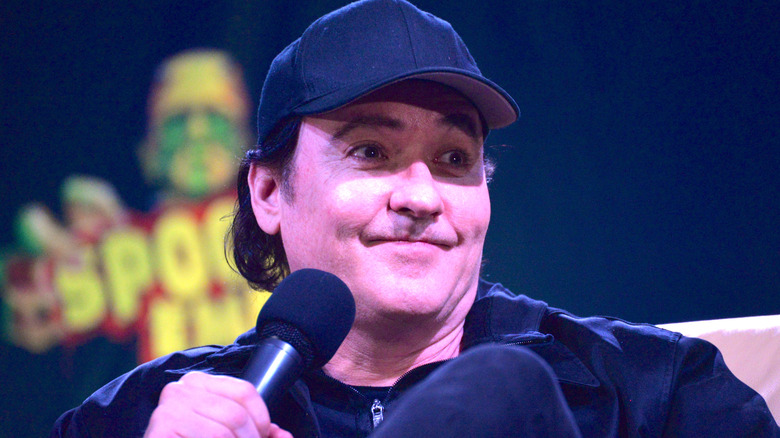
As Hollywood has changed, John Cusack has become increasingly selective about the projects he wants to be part of, particularly when the material doesn't give him much reason to get excited. In his interview with The New York Times, Cusack pointed to a project that immediately caught his attention. "A few years ago I got a call to be in a David Cronenberg film. 'Maps to the Stars.' But even that was six years ago," Cusack began. "Well, it was beautifully written by Bruce Wagner. Acidic, chilling. So of course you're going to go do that one."
He also had the opportunity to play Brian Wilson in the 2014 biographical drama "Love & Mercy," another role he loved that gave him something different to sink his teeth into. For Cusack, those have been the kinds of opportunities that make taking on another movie worthwhile. But he also acknowledged that those roles don't always come along, which can leave him questioning whether a project is worth doing at all. "If you don't get those offers or if you can't get your own projects funded, then you're doing less."
Cusack then summed up his frustration with a question that speaks to his larger criticism of the industry: "Unless you have some great character or classic text, then it's hard not to think: What is the use? How many times can you put this mask on?"
John Cusack said the movie business 'sucks most of the time'
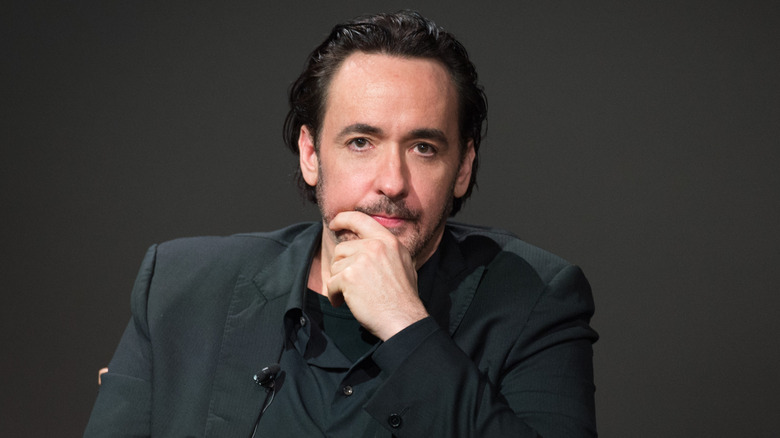
John Cusack has also been critical of the way Hollywood and the entertainment media respond to movies that attempt to tackle more complex subjects. For the actor, some films are meant to spark conversations beyond the usual discussion of whether it was entertaining or successful. In an interview with The Guardian, Cusack pointed to two of his projects, "Max" and "War, Inc.," as examples. Both films dealt with political subjects. "There's a slicing and dicing of what people should think about. Why can't you make larger connections?" Cusack questioned.
He went on to explain the inspiration for the film. "War Inc was interesting because it was a reaction to the opening up of new markets at the point of a gun in Iraq." It also frustrated Cusack that "'War Inc' was savaged by regular movie critics." At the same time, he noticed that people outside the entertainment world were writing about the film in a very different way. "Why wouldn't you have contempt for the movie business? It sucks most of the time." This comment captures another aspect of Cusack's complicated relationship with Hollywood.
He's not a fan of excessive film budgets
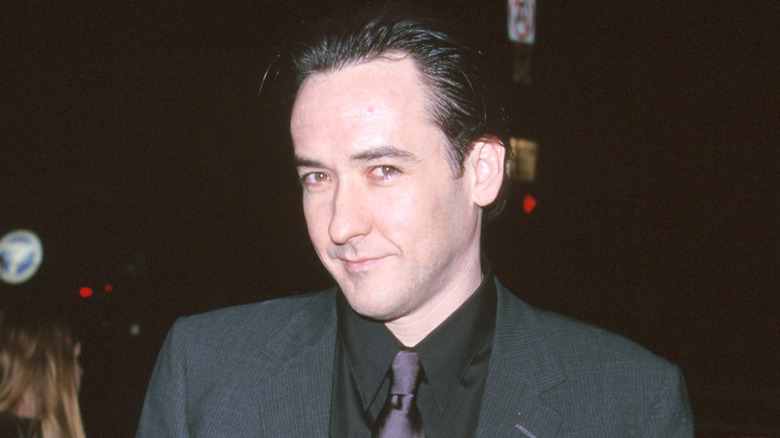
John Cusack dislikes when Hollywood overfunds a project. In his view, bigger budgets don't necessarily lead to better films. In some cases, he believes such amounts give directors and studios too much room to make decisions that ultimately hurt the product. Looking back, he sees a difference between today's Hollywood and that of years past. "Hollywood has changed a lot. When I was first coming up, it was connected to '60s, '70s filmmaking," Cusack told The New York Times. "The film companies weren't part of megacorporations where the film division was nothing compared with their vast holdings."
He also questioned what happens when directors are given increasingly large budgets. According to Cusack, the more money a studio puts into a movie, the more pressure there is to make sure that the investment pays off. "Then that starts a process of watering down impulses and shooting forever and collecting coverage for producers," he explained. Cusack recalled one particularly ridiculous example involving a scene in which a train pulls into a station. After the director decided he didn't like the scene, it was shot again. Then, according to Cusack, production went so far as to build a fake train station and shoot it yet again. "And you're thinking: What the [expletive] are we doing? This is madness," he recalled.