

Hit '80s Sitcoms, Ranked By How Well They Hold Up Today
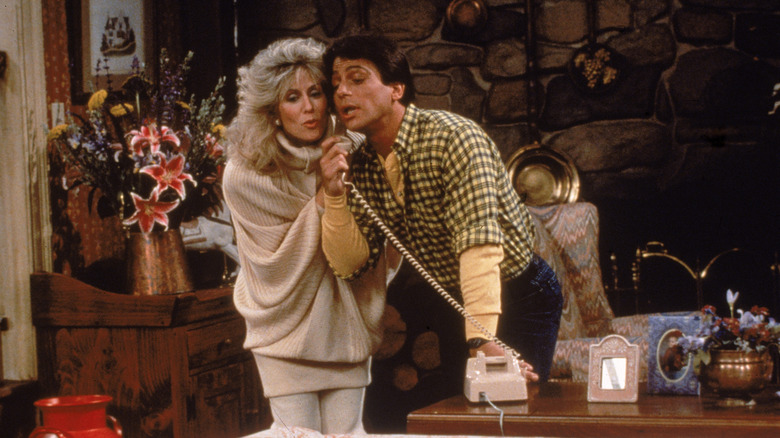
Sitcoms defined television of the '80s and '90s. Most were geared to entertain families in the after-dinner hours. The shows were meant to appeal to a wide range of ages, keeping audiences tuning in week after week. Since the shows premiered in the 1980s, the most popular went into syndication and eventually made their way to streaming. Shows like "The Dukes of Hazzard" and "Cheers" became so popular they became part of pop culture history.
There is a strong sense of nostalgia associated with the sitcoms of yesteryear, but some of them might be better to remain fond memories rather than rewatched by a modern audience. The world has changed a lot since the decade of greed and excess; just look at how the '80s rockstars are unrecognizable today. To be fair, shows from the past might come off as dated no matter how well the jokes hold up. However, some of them have really not aged well. Here are some of the hit 1980s television shows ranked by how well they hold up today–from "do not watch" to "binge-worthy."
13. The Dukes of Hazzard (1979-1985)
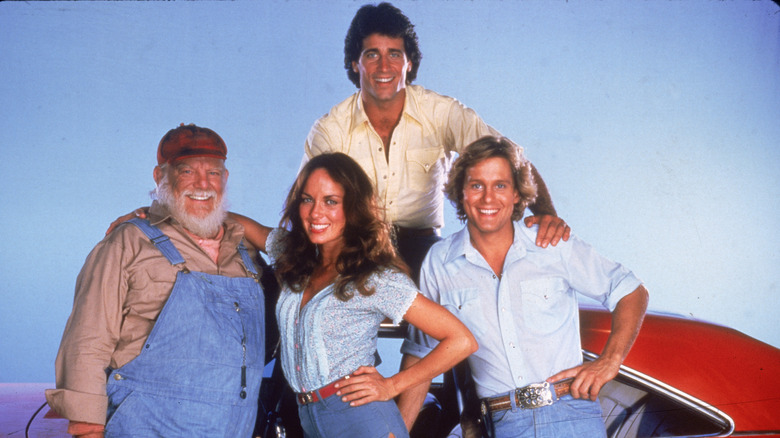
"The Dukes of Hazzard" originally hit the airwaves in 1979 and ran for seven seasons until the mid-80s. It centered around cousins Luke (Tom Wopat) and Bo (John Schneider) Duke as they tried to run moonshine and other soft crimes or get-rich-quick schemes under the nose of corrupt politician Jefferson Davis "Boss" Hogg (Sorrell Booke). The Dukes' ditzy cousin Daisy (Catherine Bach) was also featured on the show for comic relief and showing off her short shorts, which would later be referred to as "Daisy Dukes." Most episodes ended with a car race where the Dukes' bright 1969 Dodge Charger R/T flew through the air.
The biggest argument around the show was the giant Confederate flag painted on the top of the General Lee. Interestingly, "The Dukes of Hazzard" were around longer than the Confederacy, which lasted less than five years. The Confederate flag that people know today was one of many used during the rebellion. The symbol became more and more problematic over the years until 2015, when many called for the removal of all Confederate flags. Between the over-the-top use of dated symbols and hokey storylines, "Dukes of Hazzard" wouldn't be nearly as beloved to a modern audience.
12. Three's Company (1976-1984)
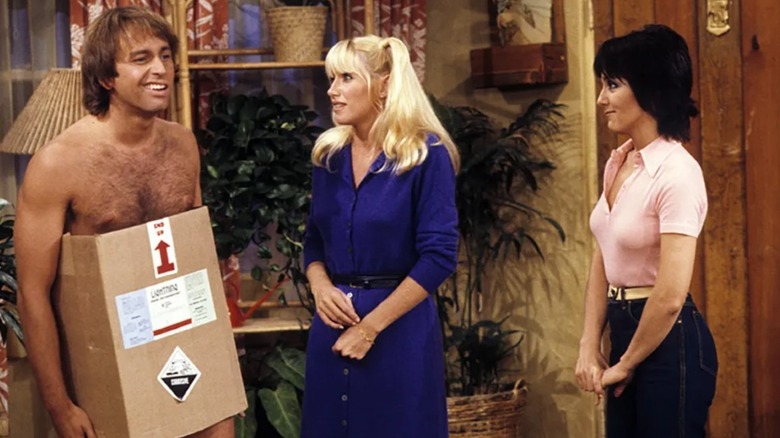
When it first came out in the late '70s, "Three's Company" could have almost been perceived as progressive. Janet (Joyce DeWitt) and Chrissy (Suzanne Somers) become roommates with Jack (John Ritter) in their Southern California apartment. The only problem is their landlord, Stanley Roper, doesn't allow unmarried men and women to reside in the same unit. To get around this rule, they claim that Jack is gay. Halfway through the eight-season run, legendary comedian Don Knotts joined the cast as the apartment manager Ralph Furley. Showing the young mixed-gender household having fun was something different for television at the time.
With talent like Ritter, Somers, and Knotts, it seems like the show would always be a classic. Although they all had great comedic timing, the jokes on "Three's Company" don't land the way they were meant to. Being gay was the running punchline that comes off as extremely homophobic now. Even though the show was always meant to be campy, the sexist jokes are lame rather than edgy, like the gag in the opening credits where Jack falls off his bicycle from ogling a woman walking past him. The show just doesn't hold up for new audiences.
11. ALF (1986-1990)
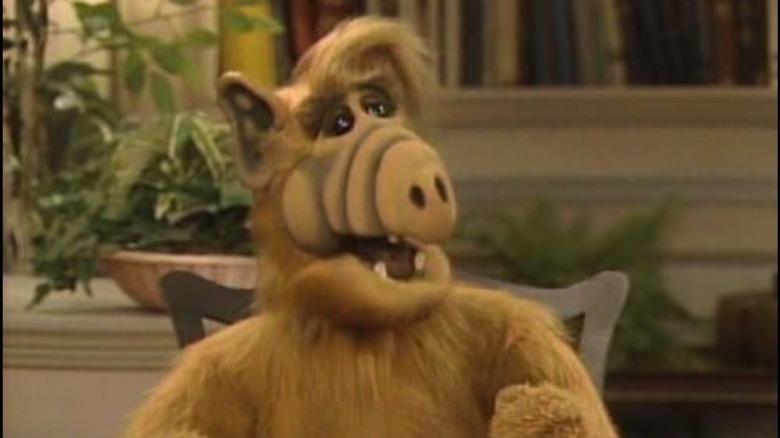
"ALF" may have been one of the most '80s things to exist. It turned out to be a big hit with fans, including merchandise with the main character's face on everything from air fresheners to bed sheets. Gordon Shumway crash-lands on Earth near the home of an average American family, the Tanners. They take in the furry astronaut and nickname him ALF, which stands for "Alien Life Form." The Tanners hide ALF from the government while trying to keep him from eating the family cat. Despite being from a different planet, he soon becomes another member of the Tanner clan.
As a sitcom, it had many sarcastic quips and jokes stemming from ALF's culture shock. However, contemporary topics were discussed. In one early episode, ALF reveals his planet was destroyed by nuclear war, so he asks the US President to end the nuclear program lest Earth have the same fate. It is a strange story for a family sitcom. For such a successful series, many fans wondered what happened to the "ALF" cast, as many disappeared from Hollywood. Once the spell "ALF" held over the world faded, it seems like the nostalgia made it more memorable than the actual show. Some may still find novelty in the series, but it is more of a time capsule rather than anything compelling.
10. Married...With Children (1987-1997)
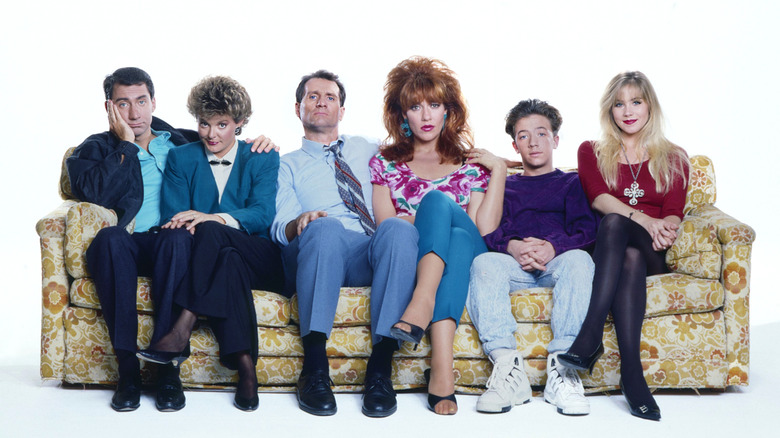
"Married...With Children" was one of the most scandalous shows of the decade, so it stands to reason that it might not age well. The show was a satire against traditional family sitcoms. Al (Ed O'Neill), Peggy (Katey Sagal), Kelly (Christina Applegate), and Bud (David Faustino) Bundy were a working-class family that pulled no punches. Fans of "Married...With Children" loved the constant adult jokes and a family that wasn't perfect. No matter how outrageous Al Bundy got, audiences still seemed to love him. However, the crude humor was a step too far for many at the time, leading to calls to boycott the show.
Although "Married...With Children" has a special place in pop culture history, it is deeply problematic upon re-watch. Beyond the dislike between the main married couple, sexualization of the teenage Kelly, and Al's never-ending jokes about larger-bodied women, the series was extremely misogynistic. Two stars of the series, Katey Sagal and Amanda Bearse, who played feminist neighbor Marcy, have spoken out about how much the show was "a very misogynistic show." Sagal told AOL's BUILD (via Us Weekly), "If you're asking me, do I think women should be portrayed in a misogynistic way, in an exploited way, of course I don't think that." The series may have made history, but many of the jokes should remain in the past.
9. The Cosby Show (1984-1992)
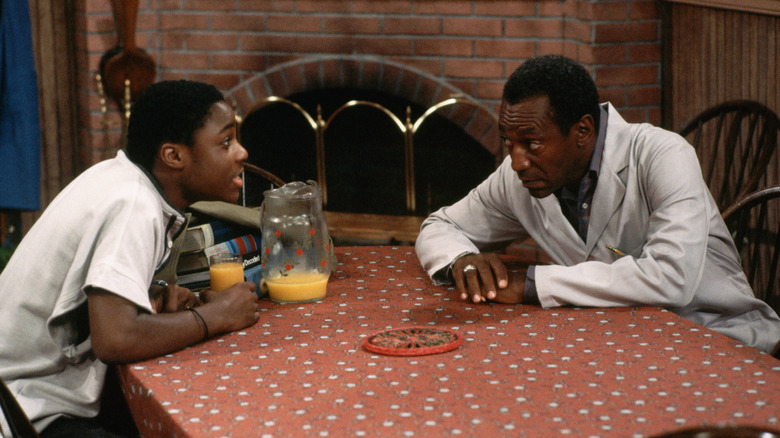
During its highly successful eight-season run, "The Cosby Show" made history. It was a family sitcom, like many others on TV at the time, but this was the first mainstream show to feature an upper-middle-class Black family as the central characters. Stand-up comedian Bill Cosby starred as Dr. Cliff Huxtable. Phylicia Rashad played Clair Huxtable, Cliff's wife and the matriarch who maintained a career as a lawyer. Lisa Bonet, Malcolm-Jamal Warner, Tempestt Bledsoe, and Keshia Knight Pulliam rounded out the cast as the Huxtable children. It made people laugh with its wholesome comedy and high moral content. Audiences loved this show so much that Cosby was often referred to as "America's dad."
Behind the scenes, there were many tragic details about "The Cosby Show" that fans weren't aware of while the show aired. The biggest bombshell, however, dropped in 2014 when news broke that several women had accused Cosby of sexual assault after allegedly drugging them. As the show was named after the man, not the character, Cosby's real-life behavior influenced how it is perceived. One joke from the third episode of Season 7, Cliff suggested his special barbecue sauce made people get touchy-feely. It was a funny suggestion then, but it is very creepy now. Unfortunately, the entire show can't be free of its real-life context.
8. Cheers (1982-1993)
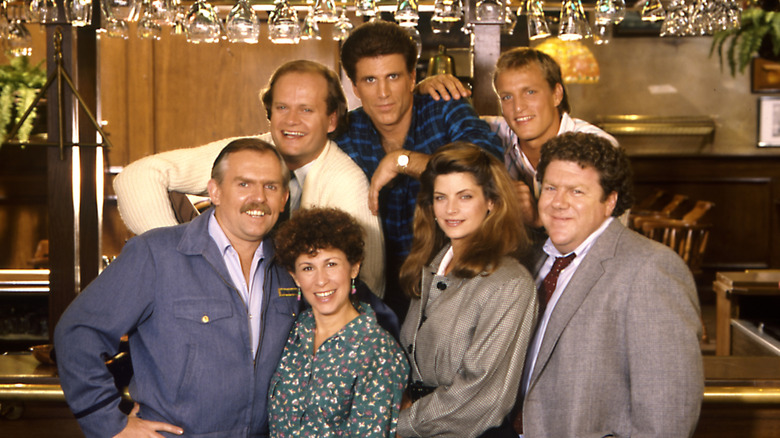
Everyone wants to go to a place where everyone knows their name, just like the theme song of "Cheers" suggests. The sitcom began in 1982 and became widely popular. It starred Ted Danson as Sam Malone, the baseball player-turned-bartender and owner of the bar Cheers in Boston. The bar was full of colorful characters like Norm (George Wendt), Carla (Rhea Perlman), and Dr. Frasier Crane (Kelsey Grammer). Sam's will they, won't they dynamic with Dianne, and later Rebecca, kept romantic tension going. Audiences loved the running gag of the crew yelling "Norm!" every episode when the character arrived at his favorite watering hole.
As much as the show gives fans warm feelings of nostalgia and laughs over some of the jokes, the characters don't seem so wonderful now. Sam was a womanizer, not a ladies' man. Carla was sharp-witted, but also mean. And maybe the regulars needed to take care of their problems instead of trying to drink them away in a bar. On a less serious note, the age of the main cast literally didn't age well–they all were supposed to be much younger than people think now. On the show, mailman Cliff (John Ratzenberger) has gray hair. However, as the internet revealed, Cliff was only supposed to be 35 years old. That seems so much younger now than it did in the '80s.
7. Full House (1987-1995)
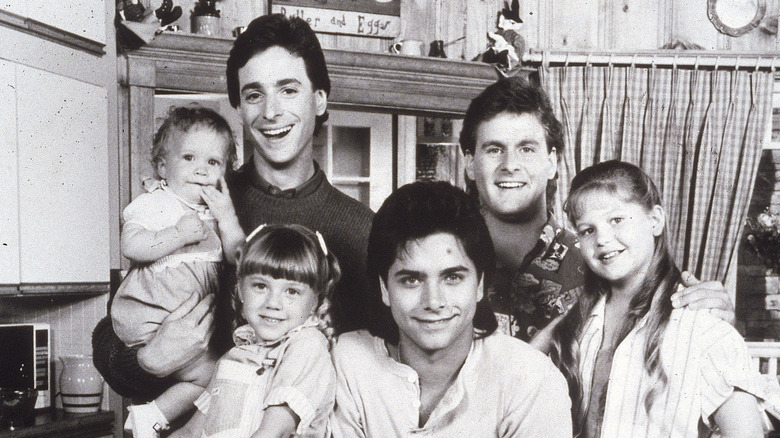
In 1987, "Full House" took a new angle on the family sitcom with three men raising three little girls, D.J. (Candace Cameron), Stephanie (Jodi Sweetin), and Michelle (Mary-Kate and Ashley Olsen). Danny Tanner (Bob Saget) is a widower who has his brother-in-law, Uncle Jesse (John Stamos), and best friend, Joey (Dave Coulier), move in to help parent. The house may be crowded, but it is full of love and sitcom laughs. The house becomes fuller when Jesse moves in his new wife, Becky (Lori Loughlin). To be fair, it takes place in San Francisco, which is notoriously known for its high cost of living.
Like every other sitcom, "Full House" had the now-cheesy "very special episodes" where they tried to deal with a serious topic in a half-hour period, peppered with a few laughs. An example is in season 4, D.J. develops an eating disorder that is over-the-top, yet neatly fixed by the end of the episode. "Full House" also has a dated sense of gender roles, and Danny's ongoing obsessive-compulsive disorder is treated as a punchline rather than dealt with as something serious. Part of the family was Greek, yet many of the depictions feel more stereotypical rather than diverse. That being said, "Full House" is still popular enough that it earned a Netflix sequel series, "Fuller House," proving that audiences still like spending time in the iconic Victorian home.
6. Night Court (1984-1992)
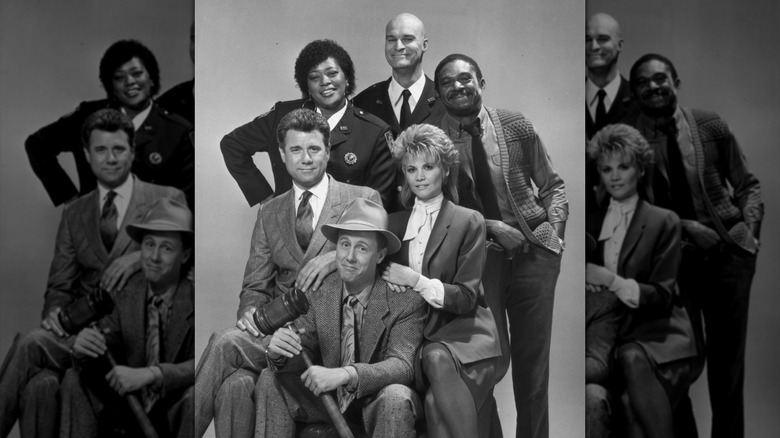
Instead of focusing on a family, as was so popular in the '80s, "Night Court" was a workplace comedy. From 1984 to 1992, audiences saw the zany happenings of an after-hours New York court. Since it helps people who can't come during normal business hours, it is usually full of colorful characters. Judge Harry T. Stone (Harry Anderson) presided over the court, with Bull the bailiff (Richard Moll) at his side. They often had to deal with the womanizing Assistant District Attorney Dan Fielding (John Larroquette).
An odd thing about "Night Court" was that real issues in the legal system never seemed to make their way into the show's plot. A series about people having the worst times of their lives didn't analyze how that might be due to a faulty system rather than someone just making a bad choice. Larroquette once said to The Los Angeles Times, "The show may not be in any way intellectual, and we don't make any pretense of dealing with issues that are impossible to address or solve in the sitcom format.... But if you just want to forget it all for a minute and laugh at pies in the face and pants around the ankles, that's what we do very well." As unsatisfying as that may be, it also allowed for the series to remain timeless in that aspect, even if certain moments still scream the '80s.
5. Who's the Boss? (1984-1992)
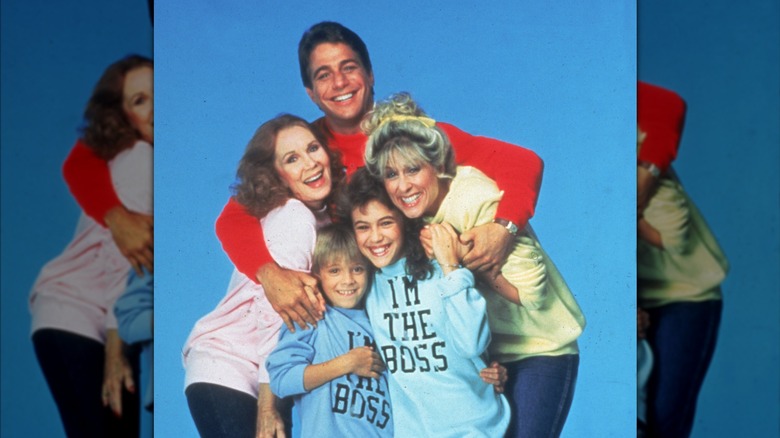
"Who's the Boss?" was a story of an oddly blended family. Former baseball player Tony (Tony Danza) takes his daughter, Samantha (Alyssa Milano), from Brooklyn to Connecticut to become a housekeeper for Angela (Judith Light) and her son Jonathan (Danny Pintauro). Angela's mom, Mona (Katherine Helmond), also appeared in most episodes with a bawdy quip. The show was a success that helped launch Milano's career, even though viewers never actually learned who the boss was.
The visuals of "Who's the Boss" are quintessential '80s, as are many of the jokes. Yet, the sweetness of the series and the love both parents have for their kids shines through. It is also interesting that a "man's man" like Tony gladly took on housework in the mid-1980s just to give his daughter a better life. With Tony's help, Angela could focus on being a mom and a career woman rather than worrying about cleaning the house. The dynamic and eventual love affair between Angela and Tony still keeps audiences interested.
4. Perfect Strangers (1986-1993)
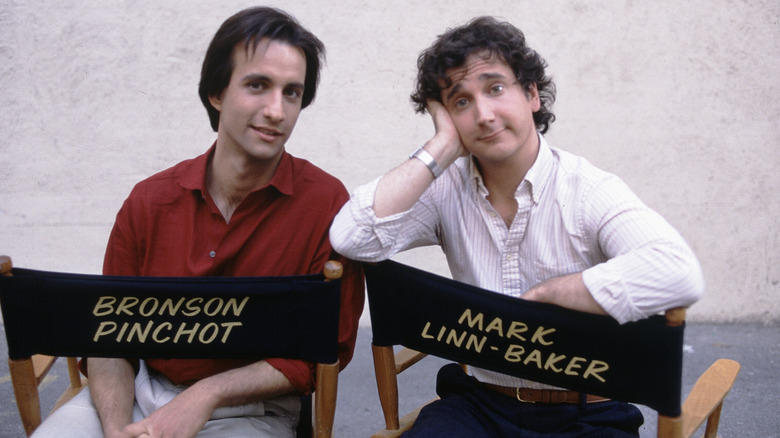
"Perfect Strangers" is a ridiculous yet beloved sitcom that aired from 1986 until 1993. It was an odd-couple buddy comedy that became a huge hit. Larry (Mark Linn-Baker) lived alone until one day his cousin Balki Bartokomous (Bronson Pinchot) from the fictional Mypos, Greece, shows up to move in with him. Balki is an optimist full of joy, and finds awe in everyday American culture. Larry is basically the opposite of that, but the cousins find a way to live and work together in Chicago.
While "Perfect Strangers" may have a fairly basic plot and make huge plot jumps, the show maintains a certain charm. Just the opening credits give you an idea that "Perfect Strangers" might be dated, but viewers will still have fun. The simplicity and slapstick humor still plays the same today. As the cherry on top of "Perfect Strangers," it also gave TV fans the amazing spin-off "Family Matters" that infiltrated pop culture in the '90s.
3. Designing Women (1986-1993)
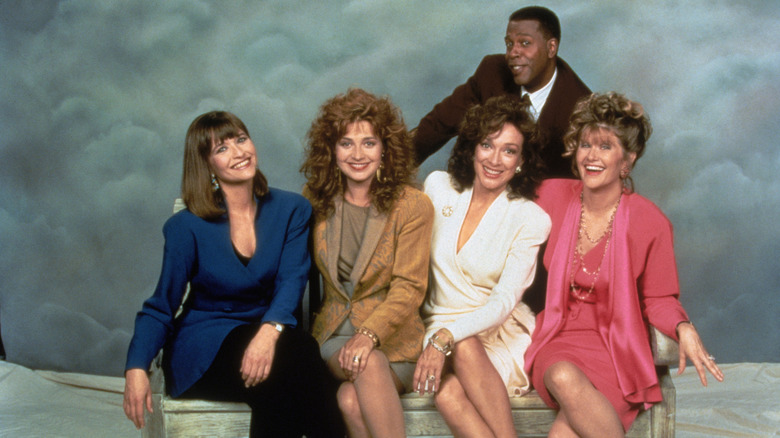
One of the best and most unique workplace sitcoms of the '80s was "Designing Women." The show starred Dixie Carter as Julia Sugarbaker, a woman in Atlanta who runs a classy interior design company in her home. Her younger sister Suzanne (Delta Burke) works with her, along with secretary Charlene (Jean Smart), designer Mary Jo (Annie Potts), and Anthony (Meshach Taylor), who goes from deliveryman to partner throughout the series.
Although some jokes haven't aged well, "Designing Women" was surprisingly progressive. It was one of the few shows that featured a Black main character, Anthony, with a primarily white cast. The series also didn't shy away from cultural issues of the time, like the AIDS crisis.
In an episode that aired in 1987, the design firm is hired to help a man (played by Tony Goldwyn) dying of AIDS plan his funeral. When another client disgustingly says the disease is "killing all the right people," she is quickly taken to task by an angry Southern belle. Everything about the show may not have aged well, but "Designing Women" still can resonate.
2. Family Ties (1982-1989)
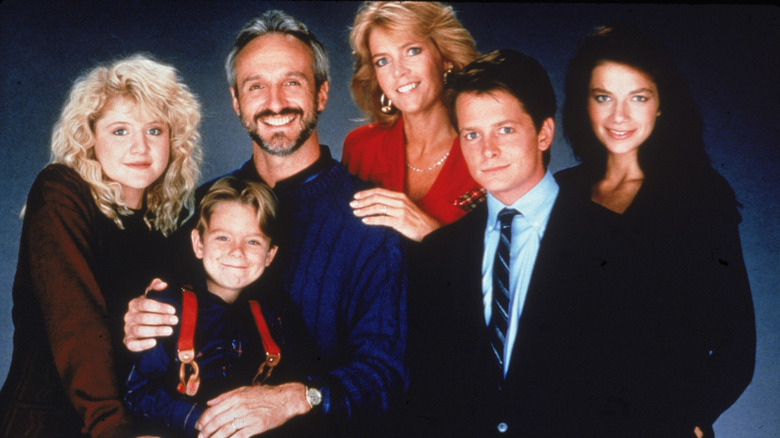
"Family Ties" had two of the most iconic 80s sitcom parents–Steven and Elyse Keaton. Played by Michael Gross and Meredith Baxter, the Keatons were former hippies who were raising a family. Elyse worked as an architect while Steven managed their local PBS station. They were still trying to fight the good fight and provide for their three kids. Their eldest daughter, Mallory (Justine Bateman), was a typical teenage girl of the 1980s, while their youngest daughter, Jennifer (Tina Yothers), focused on sports. Their middle son, Alex P. Keaton (Michael J. Fox), was a good kid who rebelled against his liberal parents by becoming a Young Republican and idolizing Ronald Reagan.
Truthfully, a modern reboot of "Family Ties" wouldn't work the same as it did in the 1980s. Although Alex wanted wealth, he also agreed with his parents on many civil rights issues. Maybe because times were different, or because Michael J. Fox is one of the most charming actors to grace a screen, the show still worked. Yes, it could be cheesy, like when the siblings would hug it out, but it is still surprisingly relatable in how the family dynamics worked. At the end of the day, they all wanted what was best for the family, and they all cared about each other. The show may have ended almost 40 years ago, but it is still sweet and silly.
1. The Golden Girls (1985-1992)
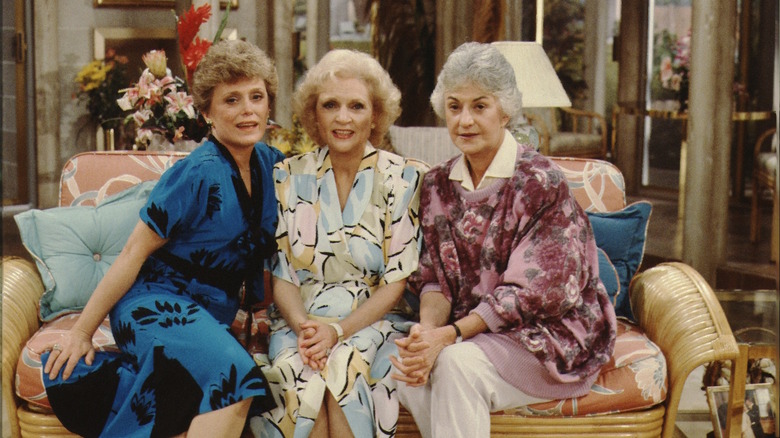
A show that never seems to lose relevance is "The Golden Girls." Even with all the drama behind the scenes of "The Golden Girls", fans can't help but love the show. It's a powerhouse comedy that is still very bingeable despite ending in the early 1990s. Bea Arthur, Betty White, Rue McClanahan, and Estelle Getty played a group of older women who lived together in Miami, Florida. Dorothy (Arthur) and her mother Sophia (Getty) were sarcastic and sharp-tongued. Blanche (McClanahan) went after what her heart and body wanted without apology, while Rose (White) was a little dumb but very sweet. The dynamic between the women and their love lives made for some hilarious moments.
"The Golden Girls" dealt with LGBTQ+ topics in a progressive way, long before it was the norm on television. In a 1986 episode, Rose gently deals with a woman who has a crush on her. In another episode a few years later, Blanche's brother marries his male partner. Plus, it is just great seeing a group of older women living their fabulous lives exactly how they want to. Is "The Golden Girls" without its dated blunders? No, but no one is perfect, and that is why there is cheesecake, as the Girls would eat, gathered around the kitchen table.