

The Amazing Life Of Audrey Hepburn: She Was More Than Just An Actor
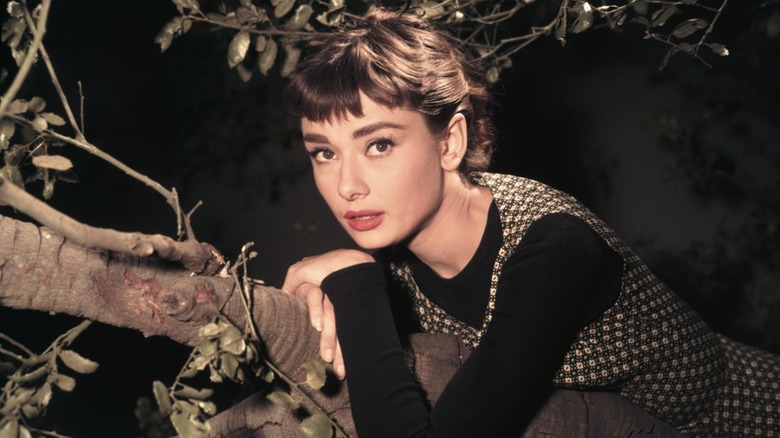
Revered for her timeless beauty, iconic performances, and devotion to UNICEF, Audrey Hepburn is one of the most recognizable figures of the 20th century. The famed leading lady starred in an array of cinema classics throughout her surprisingly short yet enviable acting career, including "Roman Holiday," "Sabrina," and "Breakfast at Tiffany's." Though her screen contributions were impressive, Hepburn's life outside of her film work was also extraordinary, and she left quite an impact on the world during her lifetime and beyond.
Hepburn's journey to becoming a beloved Hollywood actor and bona fide fashion icon was filled with spectacular highs and lows, as she survived the horrors of World War II and thus became a fierce advocate for children's rights. Her dedication to her philanthropy, family, and craft helped Hepburn earn the respect from both her acting peers and fans all around the globe.
She used her celebrity status to advocate for change and raise awareness about serious issues plaguing society like famine, a lack of clean water, and immunization, her humanitarian work further adding to her legacy. Though she has been gone since 1993, Hepburn remains one of the most admired figures of all time.
Audrey Hepburn supported the Dutch Resistance during World War II
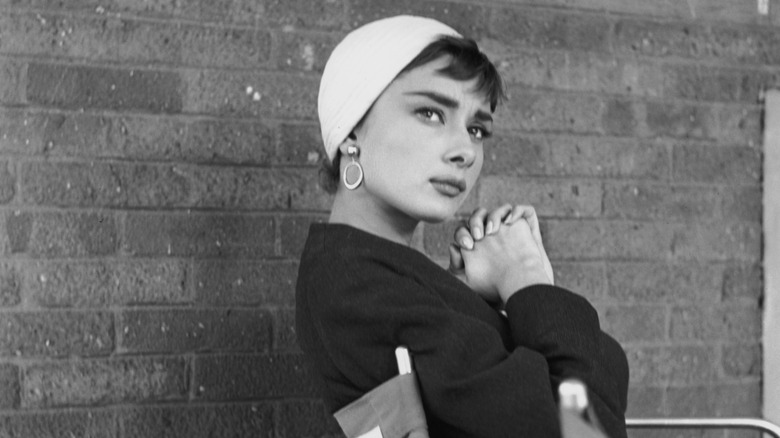
Born in Brussels, Belgium, on May 4, 1929, future Hollywood icon Audrey Hepburn was just 10 years old when Nazi forces invaded the country. Her maternal grandfather, Baron Aarnoud van Heemstra, was a nobleman; Hepburn's mother, Ella van Heemstra, supported Adolf Hitler before his reign of terror. Both of Hepburn's parents were both members of the British Union of Fascists. Hepburn's father, Joseph Victor Anthony Ruston, walked out on his family and moved to London prior to World War II. During the war, Hepburn and her mother lost their wealth and struggled to get by.
Hepburn was a talented dancer who had been studying at the Arnhem Conservatory during the invasion, volunteering for anti-German leader Dr. Hendrik Visser 't Hooft in 1944 to carry out illegal performances that helped raise funds for the Resistance. Known as "zwarte avonden," or "black evenings," Hepburn danced at the secret gatherings, during which audiences weren't allowed to make a noise.
"Guards were posted outside to let us know when Germans approached," Hepburn later said, per The New York Post. "The best audiences I ever had made not a single sound at the end of my performance." The future superstar risked her life to fight for what she believed in, even helping deliver a resistance newspaper and sheltering a wounded English pilot in acts of defiance. Hepburn never forgot the atrocities she witnessed during the war, her town ultimately being liberated in the spring of 1945.
She was a gifted ballet dancer
By the time WWII concluded in 1945, Audrey Hepburn's health had severely deteriorated; she suffered from wartime malnutrition, and her metabolism was impacted significantly. "By the end of the war, she was very close to death ... She was almost 5' 6" and weighed 88 lbs," her son Luca Dotti told People in 2026. "She had jaundice and edema. She suffered from anemia the rest of her life, possibly as a consequence."
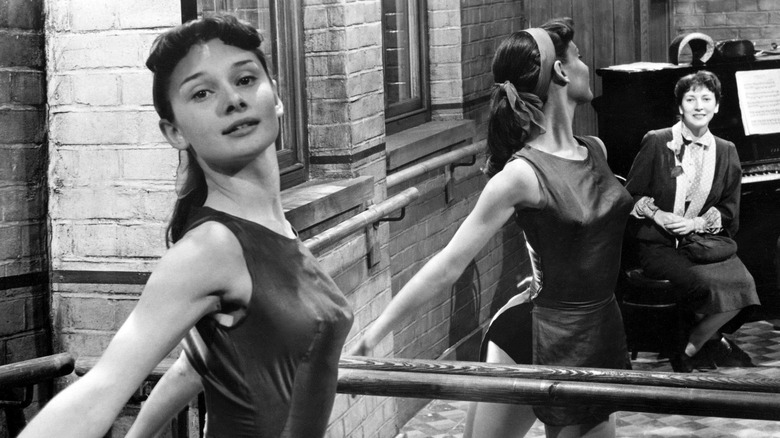
Hepburn was a gifted ballet dancer who hoped to one day become a prima ballerina. She studied ballet in Amsterdam before accepting a scholarship to the Rambert Ballet School in London in 1948. However, her plans all came to a halt when she was told she would never become a star dancer due to her malnutrition, height, and waif-like frame. "That was her first dream. That was the dream of childhood that kept her going through the war, that kept her going after the war," her son Sean Hepburn Ferrer said to Larry King in 2003 of his mother's ballet aspirations.
Though she was told she could still make a good living as a second ballerina, Hepburn decided to switch up her creative ambitions. "But she wanted to excel at what she was going to do, and so she defaulted to acting," Ferrer further told the host. To help support her mother and her newfound career path, Hepburn continued dancing and performed at the nightclub Ciro's London, eventually becoming a chorus girl in the West End.
She was a chorus girl in the West End
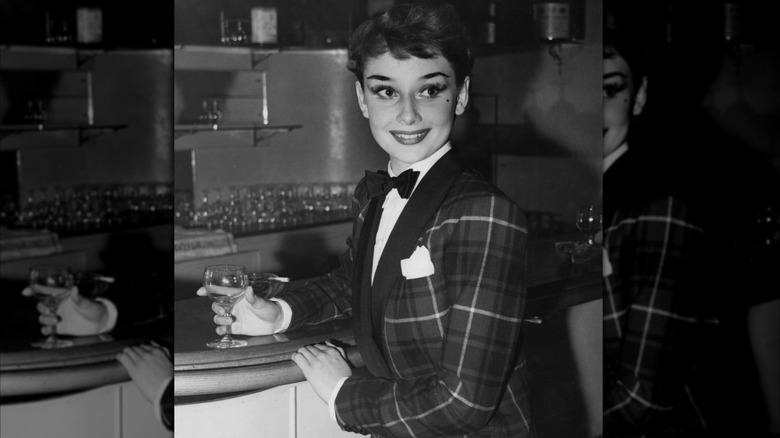
After her ballet dreams were shattered, Audrey Hepburn persevered and continued to focus on both dancing and acting, instead becoming a chorus girl in the prestigious West End musical theatre scene. Hepburn appeared in revues like "High Button Shoes" and "Sauce Tartare," and evidently, it wasn't long before audiences noticed her magnetism and overall star power.
English comedian Bob Monkhouse crossed paths with Hepburn in 1950 when she was starring in "Sauce Piquante" and noticed how much she stood out from her peers. Monkhouse claimed (via the Daily Mail) that another chorus girl had even voiced her frustrations with Hepburn to him. "They can't take their eyes off that face! Those eyes! That bloody smile! She's a darling girl but, honestly, I could just murder that Audrey Hepburn," he recounted of the exchange, before musing why she made such an impact: "She had an air of defenselessness, of helplessness."
In 1948, while still performing in the West End, Hepburn made her film debut as a flight attendant in "Dutch in Seven Lessons" before briefly appearing in the 1951 comedy "The Lavender Hill Mob." She had a short scene with star Alec Guinness, leaving quite the impression despite her limited screen time. "She only had half a line to say, and I don't think she even said it in any particular or interesting way. But her fawn-like beauty and presence were remarkable," Guinness later said, per The Independent.
Audrey Hepburn was multilingual
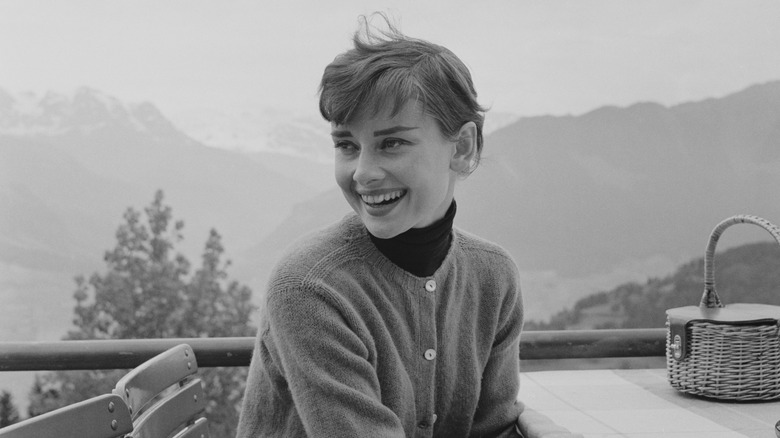
Before World War II, Audrey Hepburn experienced an affluent upbringing as the member of a noble family and spent a great deal of her life jetting between her birth country of Belgium, the Netherlands, and England. The iconic star was predominantly of Dutch and British descent and a native of Brussels, and as a result her first language was Dutch. She was able to speak fluent English, Italian, and French and immersed herself in different cultures, maintaining a curious, can-do attitude all her life.
Hepburn attended boarding school in Kent from 1936 to 1939 and frequently traveled with her family for her father's work with a trading company, living in Brussels, London, The Hague, and Arnhem before permanently moving to the Belgian municipality of Linkebeek. In her adult life, Hepburn's acting career and humanitarian efforts led to her trekking all around the world, which led to her becoming proficient in German and Spanish. Throughout her career, the leading lady would speak English, Dutch, Italian, and French at promotional events and in interviews.
She redefined what a leading lady was like on screen
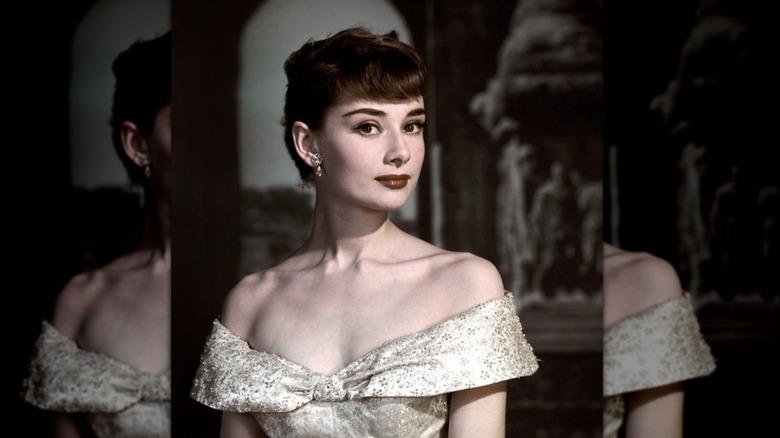
Audrey Hepburn was unlike anything Hollywood had ever seen when she first burst into the entertainment industry in 1953's "Roman Holiday," the actor's waif-like beauty, grace, and quiet strength quickly endearing herself to audiences. Hepburn was the opposite of famous screen sirens at the time like Marilyn Monroe and Elizabeth Taylor, and she helped establish a different version of what a leading lady could look like and what kind of roles female actors sought.
During the '50s, the silver screen was brimming with curvaceous starlets who oozed sex appeal, and Hepburn's refreshing presence helped usher in a new era of attraction, fashion, and talent. Hepburn's iconic pixie haircut and powerful grace reshaped modern-day beauty standards. In fact, "Roman Holiday" director William Wyler specifically wanted the actor to portray Princess Ann because she was so different from other performers.
Per The Times, Wyler was drawn to Hepburn's look because she wasn't the typical bombshell of the era. "In short a Martian," he said. "She will be a sensation." Outside of her transcendent allure, Hepburn also pushed back against how women were represented in the cinema and made a point of playing resourceful, complex characters, becoming a deeply admired role model and feminist. "I don't think she ever knew that she was that special, and therefore, she just did the best she could and gave her all," her firstborn son, Sean Hepburn Ferrer, said in People in 2026 of his mother's humility.
She was a trailblazing fashion icon
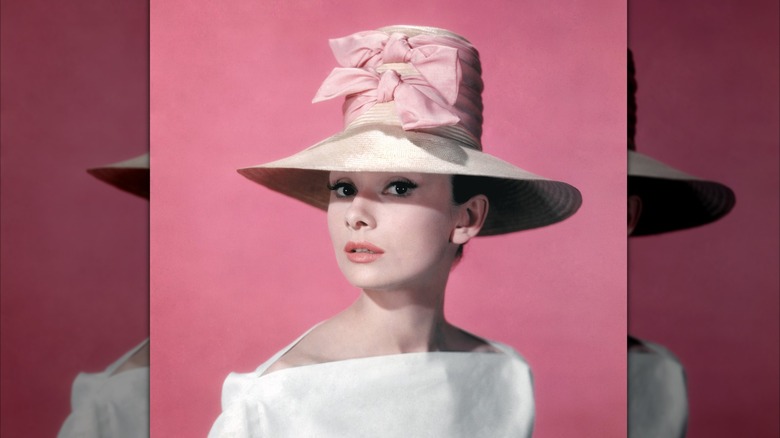
For decades, Audrey Hepburn has remained a beloved style icon adored by fans everywhere, her trailblazing fashion becoming a thing of legend. Throughout her illustrious career, Hepburn wore one unforgettable ensemble after another, her timeless tailored looks establishing her as one of Hollywood's best-dressed stars. The actor was known for her elegant and feminine outfits; as fashion journalist Meredith Etherington-Smith told The Telegraph in 2017, "Her look has gone on being wonderfully popular because, first of all, she had a radiance about her, and second, it's essentially very modern and pared down."
Hepburn became the muse for French designer Hubert de Givenchy after he dressed her in the 1954 classic "Sabrina," the partnership helping establish her signature style that often featured a bateau neckline, fitted waistline, and ballet flats. "Fashion came into my life when I had my very, very first couture dress made by Hubert de Givenchy," Hepburn once said, per British Vogue. "The beauty was extraordinary." She was added to the International Best Dressed List in 1961 and became one of the most-photographed stars of the 20th century.
Givenchy helped design Hepburn's costumes in a slew of films, including "Funny Face," "Charade," and "Breakfast at Tiffany's," the latter of which she donned a now-legendary little black dress as Holly Golightly. Hepburn's iconic role in "Breakfast at Tiffany's" and her LBD sealed her status as a certified fashionista, the satin sheath dress being endlessly emulated and becoming one of her most transcending looks. In 2006, the garment was sold at auction for a whopping £467,200 ($923,187) by Christie's.
Audrey Hepburn was an EGOT recipient
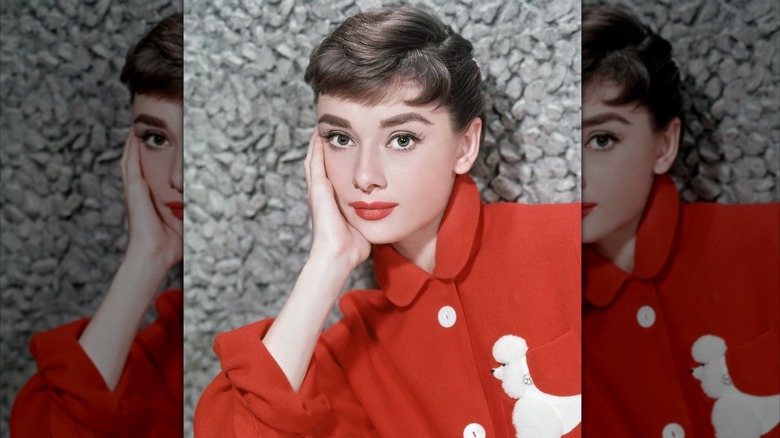
Only a select few stars are EGOT winners, or performers who have won an Emmy, a Grammy, an Oscar, and a Tony. Audrey Hepburn joined that elite group when she earned her EGOT posthumously.
Hepburn not only dominated the cinema, but she also excelled in the theater world, winning a Tony Award in 1954 for best performance by an actress in a Leading Role in a Play for "Ondine." She took this home just three days after she nabbed the Oscar for her role as Princess Ann in "Roman Holiday," her first major film. In 1993, months after she died, she won an Emmy for outstanding individual achievement for her informational show "Gardens of the World with Audrey Hepburn." She would go on to to win the Grammy for best spoken word album for children for "Audrey Hepburn's Enchanted Tales" — and complete the EGOT — the following year.
Hepburn became the first person to achieve EGOT status posthumously, doing so on March 1, 1994. She joined an exclusive list of stars to receive the honor, as fellow talents like Rita Moreno, Mel Brooks, and Viola Davis have all accomplished the rare feat. If there's one thing that Hepburn has in common with all of those stars, it's that she worked hard to achieve what she did. Per The Economic Times, she once reportedly said, "Good things aren't supposed to just fall into your lap. God is very generous, but He expects you to do your part first."
She was a UNICEF Goodwill Ambassador
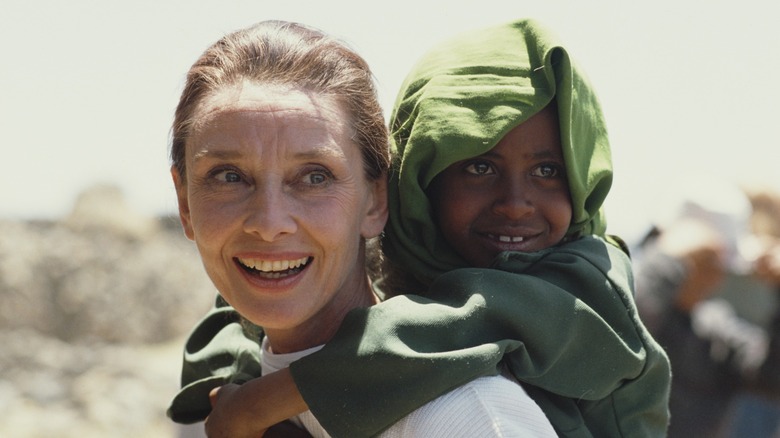
Audrey Hepburn became devoted to spreading good and making a positive impact on society after witnessing the atrocities of World War II, the Tinseltown star becoming involved with UNICEF in the mid-1950s. She helped narrate radio programs for the prestigious organization, retelling harrowing children's stories of their experiences during the war. Hepburn became a dedicated advocate for children's rights and was appointed as a UNICEF Goodwill Ambassador in 1988 after years of supporting the cause.
"I can testify to what UNICEF means to children, because I was among those who received food and medical relief after World War II. I have a long-lasting gratitude and trust for what UNICEF does," she said via the organization's website after being appointed. Hepburn went on a mission to Ethiopia shortly after assuming the role and remained highly vocal about the cause, making her rounds in the media to raise awareness.
In the ensuing years, Hepburn went on a series of trips as a Goodwill Ambassador and visited places like Ecuador, Turkey, and Sudan, participating in projects that aided impoverished children while helping establish clean drinking water, vaccines, and literacy programs. In 1992, she received the Presidential Medal of Freedom for not only her screen contributions but her relentless dedication to UNICEF. "The humanitarian legacy that she left behind was built so elegantly and gracefully. She used to call it her second and most important career," Sean Hepburn Ferrer told People in 2026.
She walked away from Hollywood to focus on her family
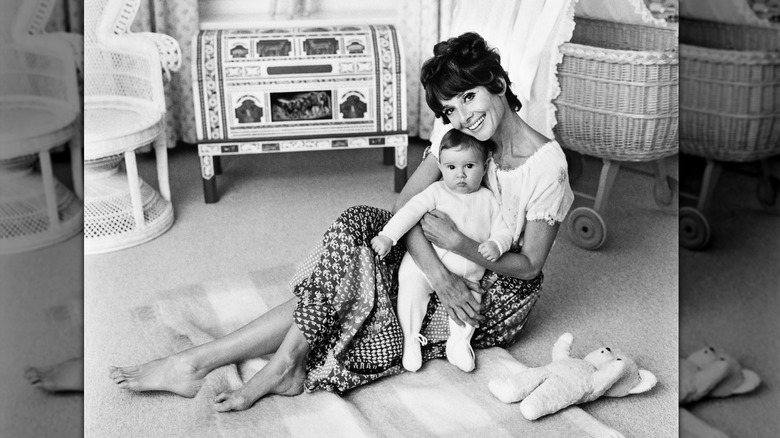
Despite being one of the world's most successful and sought-after stars, Audrey Hepburn more or less retired in the late '60s to focus on raising her family. Hepburn chose her two children over her career and enjoyed a private, more normal life away from the glitz and glamour of Hollywood, becoming one of the first major stars to do so. Hepburn's own childhood had been tumultuous due to the war and her father abandoning the family when she was 6 years old, and she was determined to give her kids stability.
"I was insulated away from the whole Hollywood thing. That's actually one of the greatest gifts she gave us," Sean Hepburn Ferrer shared with People of his mother's shocking decision. "She stopped her career at the top of her game to become a full-time mom and be there and pick me up at school and get up in the morning, make breakfast. She wanted kids and she said, 'I'm going to be a mom.'"
After 1967, Hepburn stepped away from her Hollywood career and abandoned her fame for a normal life with her children, enjoying a slower pace in the small Switzerland town of Tolochenaz. "After what she had been through as a child, she wanted to make certain that we had a home in a safe place," Ferrer told The Telegraph in 2014. She would star in only a handful of projects in the remainder of her life including 1976's "Robin and Marian" and 1979's "Bloodline."
She wanted to age gracefully and pushed back against beauty standards
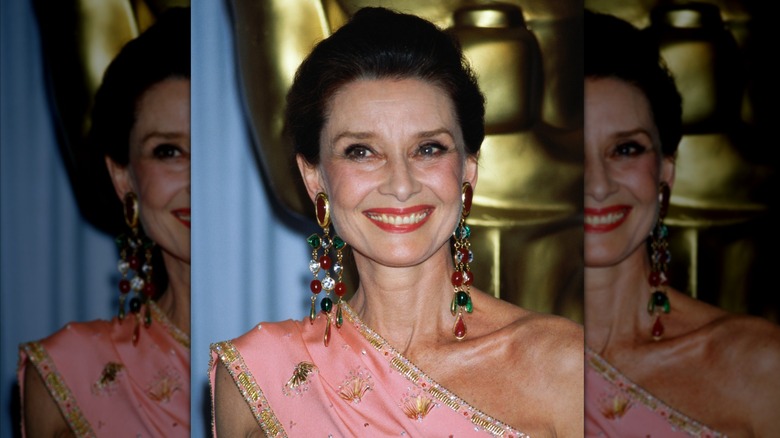
Audrey Hepburn pushed back against beauty standards and the pressures of Hollywood and instead opted to age gracefully, refusing to go under the knife. In fact, Hepburn was so comfortable in her own skin that she outright declined photo editing. When she was chosen to select one of her favorite portraits for American Photo magazine, photographer John Isaac asked the Oscar winner if she wanted him to remove any wrinkles.
In a 2017 chat with People, Emma Ferrer, Hepburn's granddaughter, recounted the film icon's response. "She told him, 'Don't you dare touch any one of those wrinkles, I earned every single one of them,'" Ferrer said. "Any suggestion of plastic surgery was anathema to her, as she honored the history of every line on her face."
Hepburn's second son, Luca Dotti, echoed this sentiment, noting that his late mother embraced age and all that came with it. "She was pretty happy about getting older. What age gave her was more time for her family, more time for her home, her dogs. Unfortunately, she didn't get that old because she died at 63," he told People in 2026. Dotti shared that though his mother never wanted to have cosmetic surgery, she never judged those who did. "She said, 'If you really are unhappy about a feature about yourself that really depresses you ... A woman should be free to indulge in whatever she pleases,'" he recalled.
Audrey Hepburn starred in cinema classics and was admired by her peers
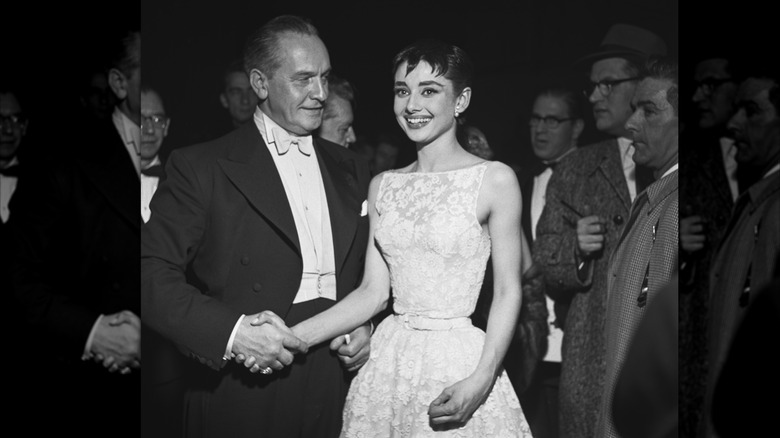
Few actors have had the spectacular rise to fame quite like Audrey Hepburn, as her first major movie, "Roman Holiday." earned her both an Academy Award and a Golden Globe in 1954. She became a part of the pop culture zeitgeist thanks to her unforgettable performances in celebrated classics like "Breakfast at Tiffany's," "Sabrina," and "My Fair Lady," and she was widely respected throughout the industry.
A-listers like Gregory Peck and Cary Grant had nothing but wonderful things to say about working with her. Hepburn and Peck, who starred opposite each other in "Roman Holiday," enjoyed a lifelong friendship after appearing in the romantic comedy. "Everyone on the set of 'Roman Holiday' was in love with Audrey," Peck once said, per Turner Classic Movies. "We did that one picture together, and I think it was the happiest experience I ever had on a movie set."
Likewise, revered Hollywood director Billy Wilder was also blown away by Hepburn after working with her on 1954's "Sabrina." As filmmaker Stanley Donen told Film Talk in 2016, "Billy Wilder, who has always been one of my best friends, said, 'What Audrey Hepburn had, you couldn't teach, you couldn't even learn it. God kissed her on the cheek, and there she was.'" When Hepburn died on January 20, 1993, from cancer at the age of 63, she left behind a legacy full of compassion, resilience, and kindness.