

The Transformation Of Kavan Smith From Sci-Fi Superstar To Hallmark Hunk
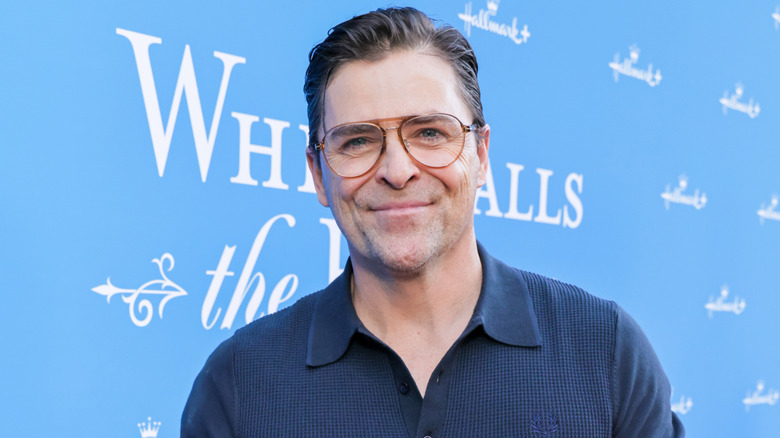
Long before he was charming the "Hearties" (yes, that is the affectionate name for the deeply loyal "When Calls the Heart" fan base) in Hope Valley, Kavan Smith was still finding his way. Raised by his single dad in Alberta, Canada, he bailed on an economics degree at the University of Calgary before landing in Mount Royal University's performing arts program. From there, he spent the better part of the 2000s as a fixture of the genre TV scene, most memorably as Maj. Evan Lorne on "Stargate Atlantis," a role he was surprised got a second life at all. "I thought it was going to be this new character, and lo and behold, when I got the script, they changed it to Lorne," he told GateWorld in 2006.
Smith racked up 29 episodes of "Atlantis" and popped up seemingly everywhere else a spaceship or a monster was involved: "Battlestar Galactica," "Supernatural," "Smallville," "The 4400," and "Eureka," in which he played a lovably overeager robot deputy. So how did that guy end up as one of Hallmark's most reliable leading men?
"I didn't consider myself a Hallmark actor as I'm not that classic Hollywood beauty for a guy," Smith admitted to MediaVillage in 2019. His first outing with the network came in 2010's "Growing the Big One" opposite Shannen Doherty, and it eventually led to "When Calls the Heart." The funny thing is, he almost turned that one down. Perhaps the most enchanting fact about Kavan Smith's career is how unexpectedly it evolved.
Kavan Smith grew up in a home where the arts were not treated as a serious path
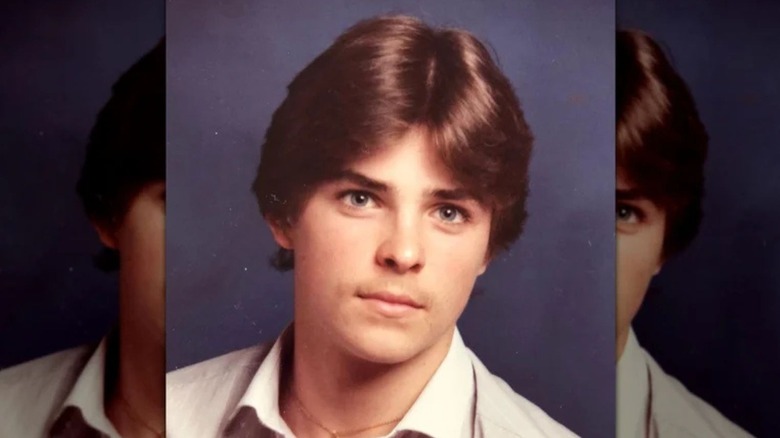
Arts were not strongly encouraged in Kavan Smith's household growing up. In a 2016 interview with Ruth Hill, Smith reflected on how unusual that interest felt in his upbringing: "It's strange when you're a kid growing up and you are interested in acting or entertaining if you come from a background where the arts weren't really encouraged or highly praised in your household."
Smith described himself as more focused on athletics, including football and martial arts, and said that entering a performing-arts program was not a natural jump for him. Smith has also credited a childhood friend with helping him discover his interest in entertaining.
On the "Deck the Hallmark" podcast, he said that after leaving law school, his mother asked what he actually enjoyed doing. Thinking back to the comedy sketches he used to perform with that friend, he realized how much those bits had stayed with him, prompting his mother to tell him, "I think that's acting."
His earliest creative outlet was not a drama class or professional audition
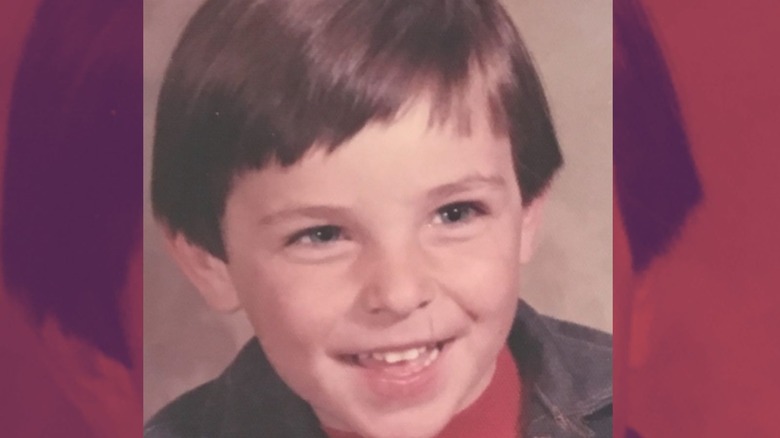
The comedy sketches Kavan Smith made with a childhood friend became more important later in his life. On the "Deck the Hallmark" podcast, Smith recalled feeling uncertain about what came next after college, but he kept returning to the skits they had created years earlier. Looking back on that experience, Smith said it gave him a rush and made him think, "Yeah, I could see myself enjoying that."
The performances gave Smith an early sense that he enjoyed entertaining people beyond his immediate circle of friends. He recalled that performing in public made him realize he could see himself doing that on a larger scale. Even so, on the podcast, he explained that when his mother connected those childhood sketches to a possible career, he did not immediately see himself as someone suited to stand-up comedy because he was uncomfortable performing as himself. As he put it, "I didn't like the sound of that because I was quite shy."
He also shared some of the family background that shaped his early life, saying on the same podcast that his parents divorced when he was about 7 and that he and his brother were then raised by their father. The family moved to Alberta after his father received a job transfer to Calgary. Reflecting on his father's work life, Smith told Ruth Hill in his 2016 interview: "[M]y father did something for a living that he really didn't enjoy ... he was miserable."
University forced him to confront what he actually wanted
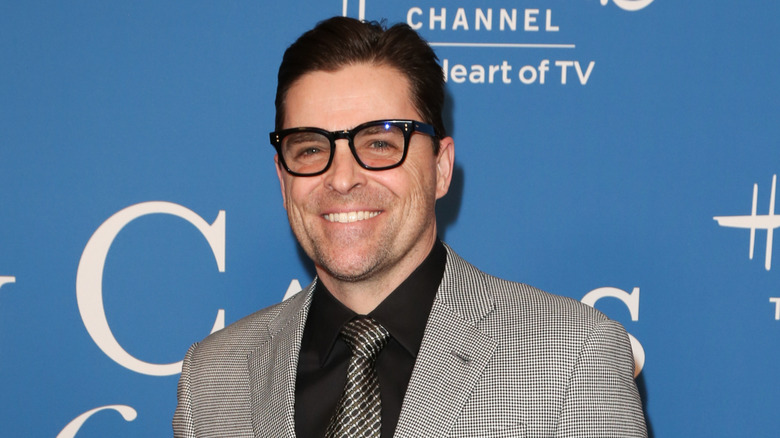
In his interview with Ruth Hill, Kavan Smith said that after a year and a half at university, he was asked to withdraw because of poor academic performance. As Smith put it, "They told me to reevaluate what I was doing, so I did." He was then living partly at his father's house and found a small acting class across the street.
On the "Deck the Hallmark" podcast, he described it as a class held in a private home: "It was this little sweet old lady's house. She had a couple — she was a hippie lady and her husband was a hippie dude — and he taught piano lessons upstairs and she taught acting lessons downstairs." Smith said he attended a few classes before performing for the students' families, but that experience convinced him he wanted to continue: "I was hooked from that point on."
Smith said the people around him told him that private classes were not enough and that he needed formal training. As he recalled, "[T]hey all told me no. You need to go back to school ... You need to get back to university or college or whatever and go to a proper theater school and learn how to do it right." He followed that advice and enrolled in Mount Royal's performing-arts program.
Mount Royal's performing-arts program gave him a professional foundation
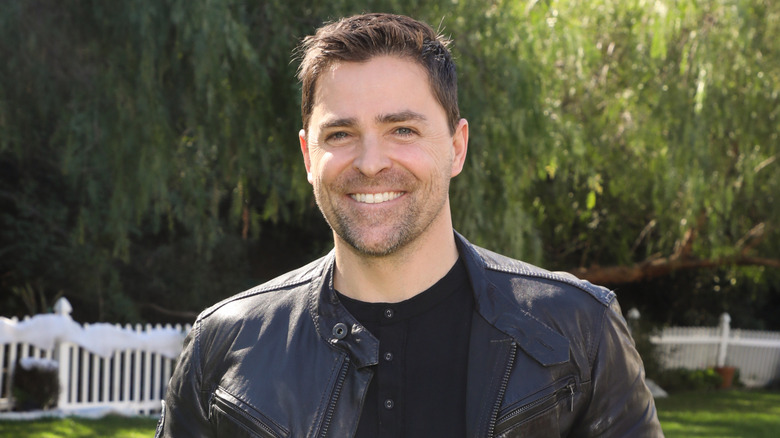
At Mount Royal, Kavan Smith developed the stage skills that later shaped his screen work. On the "Deck the Hallmark" podcast, he described the shift in his attitude toward school in simple terms: "I just turned a switch on in my head." The courses introduced him more seriously to classics, poetry, literature connected to Greek tragedy, older plays and screenplays, and classic films. Smith recalled going with his girlfriend to see "Casablanca" at an art-house theater and becoming newly attentive to the film's atmosphere, dialogue, costumes, music, and sound.
Smith also played leading roles in musicals and took part in summer theater productions, viewing singing as his greatest weakness. He explained that many theater productions demanded that a performer act, dance, and sing. And while he felt comfortable acting and believed he could improve as a dancer, he did not feel the same confidence about singing.
"As soon as I got out of a theater program, I was like, 'I should probably focus my efforts on film,'" he explained. That realization encouraged him to focus more on film auditions while he was still connected to the school. As he recounted on the podcast, a Calgary casting director contacted the program looking for actors, the program submitted his name, and the audition became his first professional screen opportunity.
Soon after graduating, Kavan Smith landed a leading role
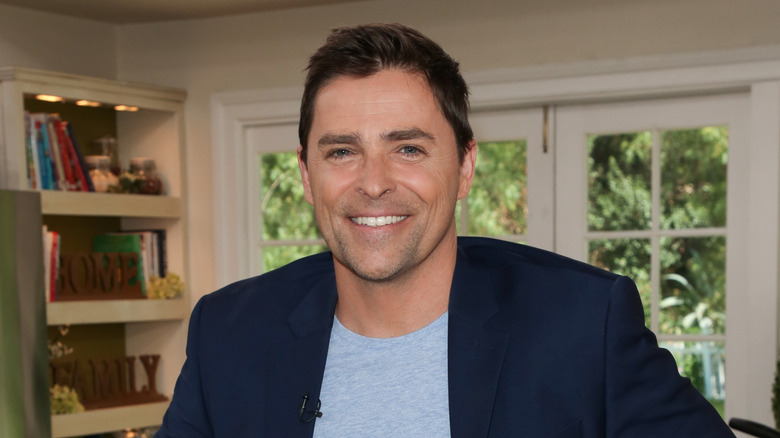
When Mount Royal submitted his name to a casting director, Kavan Smith went to audition for a character he described on the "Deck the Hallmark" podcast as a motorcycle-riding ranch hand in a "cowboy kind of show." He arrived on his motorcycle wearing gear and played the character as an aggressive, arrogant man. Smith admitted that the choice was deliberately over the top, but said it matched the character so well that it helped him stand out.
Smith said on the podcast that the producers wanted to meet him a few days later because they had not found anyone they preferred. He traveled to the producers, who wanted to determine whether his audition behavior reflected the character or his real personality. By the end of the meeting, they placed a contract in front of him, and he signed it. Smith summarized the importance of that moment by saying, "I got a series out of it."
That series was "Destiny Ridge," which premiered in 1993. It ran for one season and provided him with enough money to move from Calgary to Vancouver. Smith admitted that he still had to bartend through 1996, but "Destiny Ridge" had already provided the first professional foothold that allowed him to keep pursuing acting full time.
His first years as a working actor were financially unstable
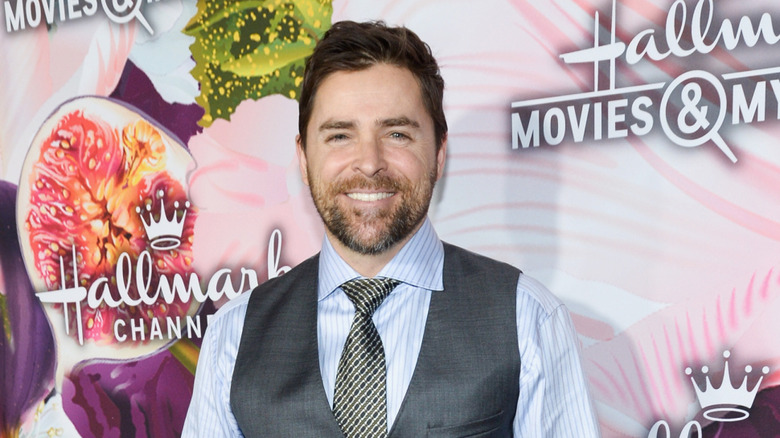
"Destiny Ridge" ended after one season, but Kavan Smith said he was initially able to get by through family support and occasional work. On the "Deck the Hallmark" podcast, he explained, "I was very lucky because I had literally just got out of theater school and my father was letting me — I kind of lived with him and a little bit with my girlfriend." He also said that he briefly worked for his father after his father's secretary left, explaining, "He was a business guy and I just worked the phones for a couple of weeks when I got out of school."
The situation changed after Smith began dividing his time between Vancouver and Los Angeles in search of American opportunities. He said on the same podcast that he spent increasing amounts of time in Los Angeles, attending auditions and taking part in pilot seasons, but the work did not come quickly enough to support him. Smith described his financial reality: "Then I went broke and then I had to get a job job." He said he went to Los Angeles repeatedly and was there on and off for about five or six years.
Smith returned to bartending, working for about two years in the late 1990s while continuing to pursue auditions. Recalling the job with dry humor, Smith admitted, "I was the world's worst bartender." That period ended only after he secured a film role that paid enough to make full-time acting possible. Smith recalled that the project "paid enough that it was — I could quit bartending."
Kavan Smith built his range gradually, but Maj. Evan Lorne made him a sci-fi favorite

Kavan Smith might not have looked like a future Hallmark star in the early 2000s. After a two-year bartending period, however, his career began moving forward through a run of television work. His credits included television films and guest roles in productions such as "Generation X" (1996), "Titanic" (1996), "Intensity" (1997), and "First Wave" (1998). Those jobs kept him working in Vancouver's production industry. Smith admitted in his 2006 GateWorld interview that he had not been deliberately pursuing science-fiction roles: "Not necessarily intentionally. It just seems to kind of happen that way."
The financial turning point came with "Escape From Mars," a UPN television film released in 1999. On the "Deck the Hallmark" podcast, he added that the payment from the role gave him confidence that he was "actually a professional at this now."
The next step was a genuine feature-film opportunity. In 1999, Smith was cast in Brian De Palma's "Mission to Mars," released by Disney in March 2000, alongside Gary Sinise, Tim Robbins, Don Cheadle, and Connie Nielsen. The film was larger in scale than his earlier television work and helped establish him as an actor capable of working in studio productions, even though it was not a starring role. After that, he continued taking television parts, including appearances on "Smallville" (2002) and "Stargate SG-1" (2003). His "Stargate" role was originally intended as a brief guest appearance, but his character, Maj. Evan Lorne, later returned and became part of "Stargate Atlantis."
Marriage and fatherhood changed how he thought about his sci-fi career
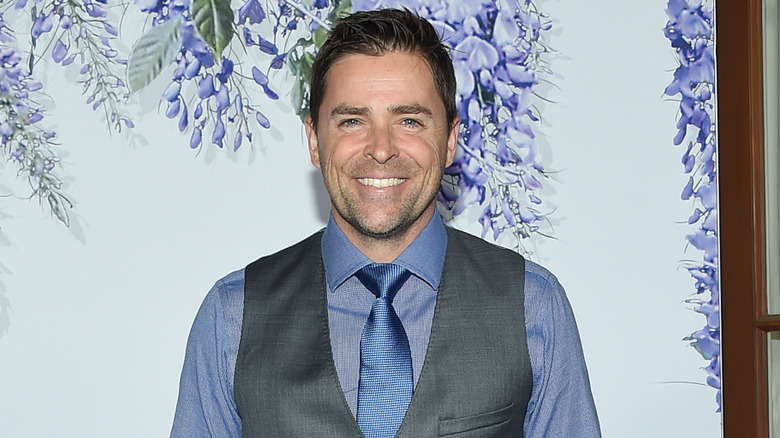
Kavan Smith's relationship with his wife, Corinne Clark, changed the way he thought about his career. In his 2016 interview with Ruth Hill, he explained that after he married, the long-running Vancouver–Los Angeles arrangement no longer felt sustainable. "When I met my wife, it got harder and harder to be away," he said. That shift coincided with a new stage in his personal life with his wife. In his 2006 interview with GateWorld, he revealed that the couple were expecting their first child the following month: "[M]y wife is due in October with our first child."
He immediately turned the moment into a joke about how fatherhood might reshape his screen identity: "So I'm not going anywhere. And I'll play a daddy for a while." Smith added that the family eventually gave up their Los Angeles home in 2006 because he no longer wanted to live part of his life away from his family in Canada. "When we had kids, it became virtually impossible," he admitted.
Though Smith had to make adjustments to a career that had long involved science-fiction work and travel, he later spoke warmly about Hallmark's emphasis on family viewing. In a 2017 interview with Pop Culture Principle, he said, "Hallmark makes family viewing. Being the dad of two young boys, I know firsthand that there is a real place for that on television." He added, jokingly, that he could not endure "another animated movie" and appreciated that Hallmark offered something parents could watch with their children.
Hallmark opened a second act in Kavan Smith's career
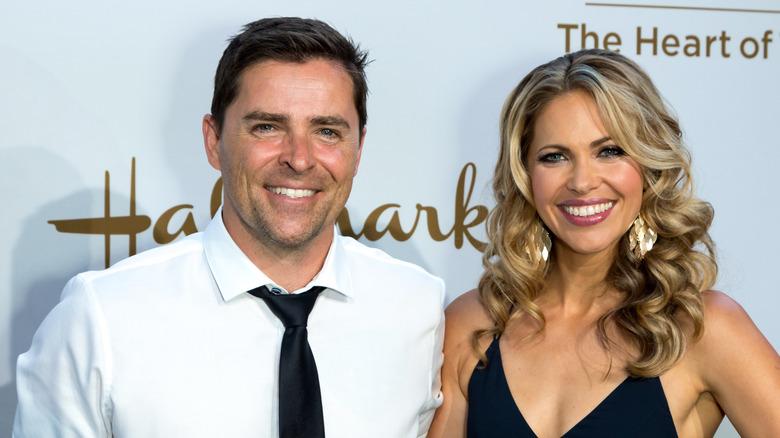
A second act in Kavan Smith's career began in 2010, when he appeared opposite Shannen Doherty in "Growing the Big One," a popular Hallmark movie. Smith later said he did not realize at the time that the film would begin a long relationship with the network. In his 2019 interview with MediaVillage, he recalled, "I had no clue, no clue!" He also said, "I didn't consider myself a Hallmark actor," explaining that he did not think he matched the network's usual leading-man type.
A decisive step came in 2015, when Smith joined "When Calls the Heart" at the start of Season 2 as Hope Valley mayor Leland "Lee" Coulter. On the "Deck the Hallmark" podcast, he said his agent first asked him to read for the role and that he "said no because that show didn't make any sense to me." He reconsidered after learning that Neill Fearnley would direct the opening episodes; Smith had worked with Fearnley before and trusted him. The audition also involved a unique chemistry with Pascale Hutton, whom Smith already knew from "The 4400." Smith said he did not initially understand how important the series would become.
That turned out to be good news for Hearties, as Smith only later came to appreciate how much the show's audience helped sustain its success. By 2019, Hallmark gave Smith an established screen partnership with Hutton, and eventually a chance to help create his own project. In "Love on the Menu," which premiered in 2019, he played Hank Daniels, a chef and restaurant owner, opposite Autumn Reeser.
His love of cooking became part of his public identity
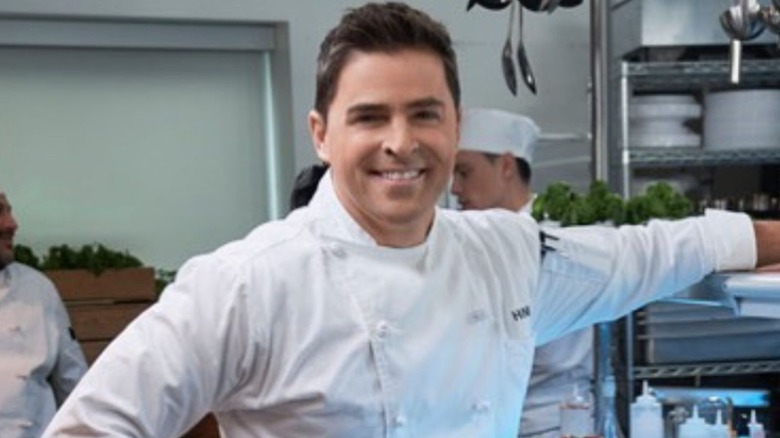
For Kavan Smith, cooking appears to be one of the clearest ways he expresses his attachment to home and family. His personal enthusiasm fed directly into "Love on the Menu," a Hallmark film he not only starred in but also helped write. In an interview with Parade, Smith explained why the role appealed to him: "I love to cook and I thought I could pull off a chef." He said in his 2019 interview with MediaVillage that the project began after a Hallmark executive asked what he wanted to do next. As he recalled, the response was, "Good things come to those who wait. We greenlit your project."
Smith's passion for cooking predated Hallmark by many years. In his interview with Ruth Hill, Smith said his interest in cooking began in childhood and was influenced by one of his nannies, who had previously taught at the Cordon Bleu cooking school in Paris. Cooking ultimately became a regular part of his family life.
Smith said his sons especially love the crepes he made on Saturday mornings, while he himself enjoyed attempting more demanding dishes, including beef Wellington, homemade candies, and butter-poached lobster risotto. When Hill asked him to name a favorite dish, he resisted settling on only one: "I like to try everything. I like a challenge." In a 2018 interview with TV Goodness, Smith admitted that his sons had turned his kitchen skills into household legend: "If you ask my kids how I [won over] their Mom, they always tell people it was my pesto."
Fatherhood opened a new creative outlet in writing
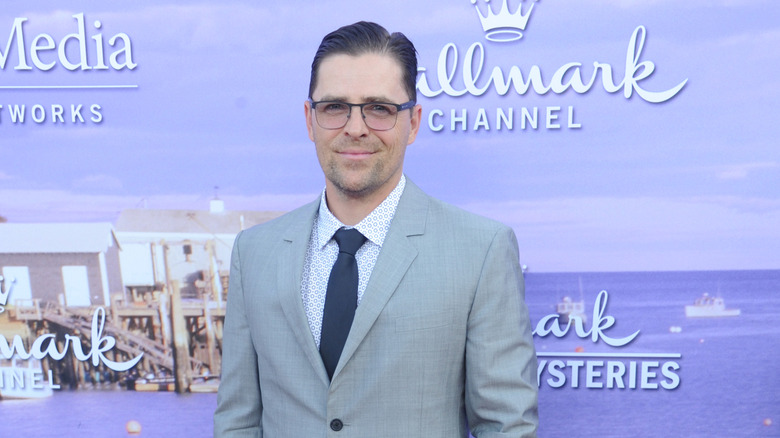
Fatherhood seems to have opened a second creative outlet for Kavan Smith. In his interview with Ruth Hill, Kavan Smith noted that he had been writing more seriously in his spare time, especially during the stretches when acting left him away from set. "[W]hen my last son was born, I wrote a kids' book," he added.
He also made clear that the book remained a personal project. Smith said, "I haven't really pursued publishing it," though he added that he believed it had a catchy story. Later on the "Deck the Hallmark" podcast, he explained that the hesitation was partly connected to the rejection he had experienced as an actor: "I know how much rejection I have had to face as an actor." Smith feared that similar rejection from agents and publishers might interfere with the pleasure of writing.
Smith also told Hill that while fatherhood left him with less uninterrupted time for reading, it deepened his interest in storytelling and writing. He said he hoped one day to bring together his writing, cooking, and acting skills. The ambition later took clearer professional form in "Love on the Menu."