

12 Things About Hit '80s Sitcom Webster That Only True Fans Will Know
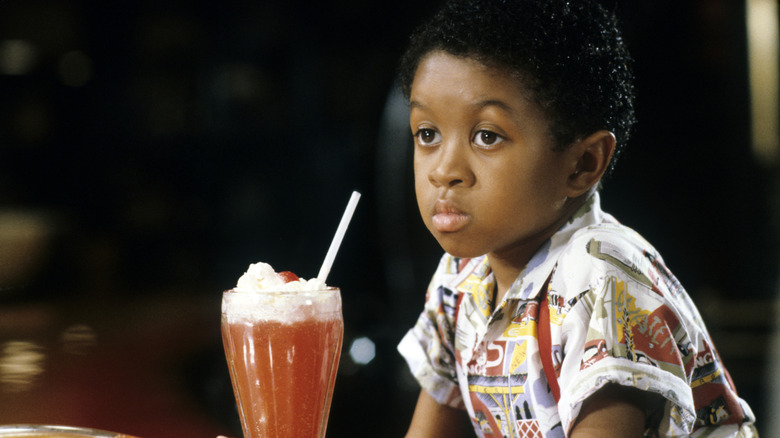
"Webster" is one of the most iconic sitcoms of the 1980s. The show was about a white NFL player named George Papadopoulos (Alex Karras) and his wife, Katherine Calder-Young Papadopoulos (Susan Clark), who adopt a Black child named Webster Long (Emmanuel Lewis). The success of "Webster" turned Lewis into a superstar. During a 2024 interview with The Atlanta Journal-Constitution, the actor revealed what he thought of his signature show years after its cancellation. "The show's great life lessons still hold up today," Lewis said. In his opinion, "Webster" was adept at tackling heavy themes.
The behind-the-scenes facts about "Webster" are just as entertaining as the show itself. For example, the sitcom was originally intended to be based on a classic movie starring Katharine Hepburn and Spencer Tracy. The success of "Webster" caused Lewis to become friends with the King of Pop, Michael Jackson. In addition, "Webster" had a fascinatingly unusual crossover episode with "Star Trek: The Next Generation." With that in mind, let's take a look at some facts about the hit '80s sitcom "Webster" that only true fans would know.
Webster was inspired by the success of Burger King commercials

Before "Webster" aired, Emmanuel Lewis was best known for his work in commercials. After being discovered by a fellow actor while jogging through a park in Brooklyn, Lewis appeared in advertisements for over 50 products, including Life cereal, Campbell's Soup, Elmer's Glue, Fisher-Price, Maxwell House coffee, Eastern Airlines, Mrs. Paul's Fishsticks, Jell-O, Colgate, and Burger King. The commercials propelled Lewis to stardom.
Lewis' series of Burger King commercials became particularly popular, reaching millions of people — one of whom changed his career forever. Lew Erlicht, an ABC programming executive, saw one of the Burger King commercials and decided Lewis had the right stuff to star in his own sitcom, which became "Webster." "Webster" was produced by Steven and Madeline Sunshine, who would go on to produce the show business interview program "Extra" and the sitcoms "The New Odd Couple" and "Julie" starring Julie Andrews.
Webster wasn't supposed to be the main character of the show
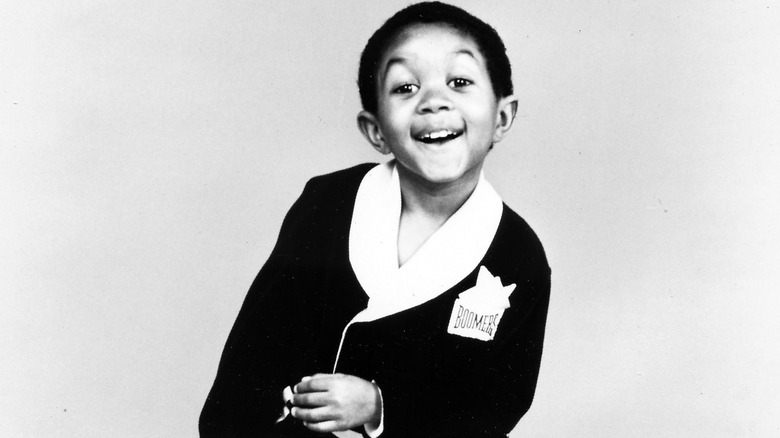
While Emmanuel Lewis was a key factor in the success of "Webster," he was not originally supposed to be part of the sitcom. Initially, Stu Silver wanted to base the series on Katharine Hepburn's and Spencer Tracy's characters in the movie "Woman of the Year." The show was to be called "Another Ballgame," and would star Susan Clark and her husband, NFL player Alex Karras. However, after seeing one of Lewis' Burger King commercials, Lew Erlicht wanted to make a sitcom starring the child actor as soon as he could. Rather than create a new show for the child actor, ABC decided to incorporate him into "Another Ballgame."
The show was retitled "Then Came You," and would focus on Karras' character adopting his orphaned godson. Then, ABC decided the show should focus even more on Lewis, changing its title to "Webster." The sitcom essentially became a leading vehicle for the young actor, and the rest is history.
Diff'rent Strokes led to the creation of Webster
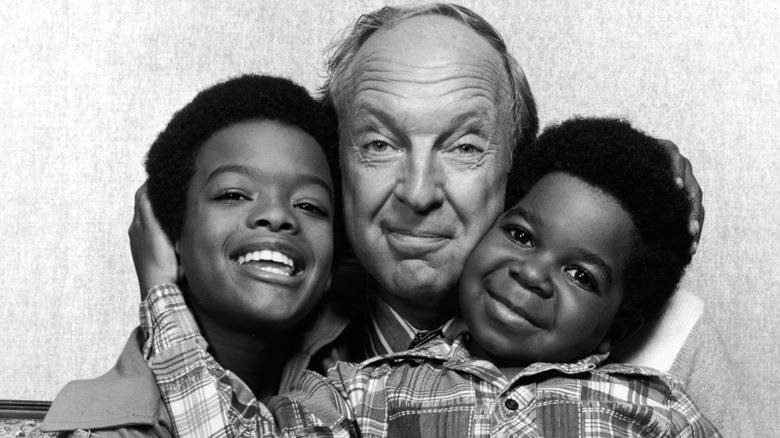
Fans of "Diff'rent Strokes" and "Webster" can point out the similarities between the two shows — it was orchestrated that way. "Diff'rent Strokes" is a sitcom about a white man (Conrad Bain) who adopts two Black children, Willis (Todd Bridges) and Arnold (Gary Coleman). During a 2025 episode of Allison Interviews..., Bridges discussed the importance of "Diff'rent Strokes." "It's interesting, because sometimes they bring up Black shows and they don't talk about 'Diff'rent Strokes,'" he said. "And I'm like, 'How could you not talk about 'Diff'rent Strokes?' That was a pivotal point for a lot of other shows to start happening. It paved the way for a lot of other Black actors to come into this business and to push further."
ABC created "Webster" to capitalize on the success of "Diff'rent Strokes." In addition to the similar premises, both shows derive a lot of its humor from the talent of their child stars. However, in a 1984 interview with Ebony, Lewis said he did not view Coleman as competition, as their shows aired on different days of the week. He said the only competition was between their respective networks.
"Diff'rent Strokes" ran for 181 episodes between 1978 and 1986. Meanwhile, "Webster" ran for 150 episodes between 1983 and 1989. While "Webster" was not as popular as "Diff'rent Strokes," it became a classic sitcom in its own right.
The show's name was controversial
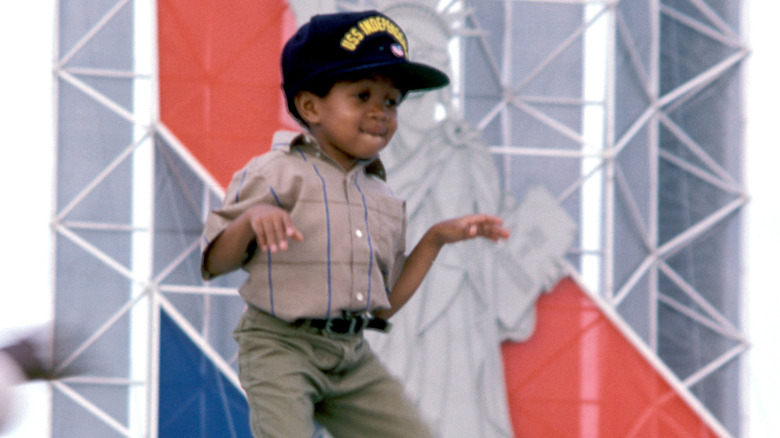
On the surface, "Webster" does not seem like the sort of show that would cause a lot of controversy. Even compared to its most obvious contemporary, "Diff'rent Strokes," "Webster" was not as concerned with social issues. Despite that, "Webster" was the subject of a lot of behind-the-scenes strife.
When ABC first decided to work Emmanuel Lewis into the show, his co-stars, Susan Clark and Alex Karras, accepted the change. Then they realized the show would center on Lewis. The show's title was a particular bone of contention. Clark and Karras were upset the sitcom's name was changed from "Then Came You" to "Webster." The title change was so last-minute that the show's final theme song was still called "Then Came You."
Clark and Karras fought with the network during the first season of "Webster" over creative differences. Sadly, Lewis believed the conflicts were his fault. However, these tensions were resolved, and the show lasted a long time.
Jerry Seinfeld was supposed to write episodes of the show
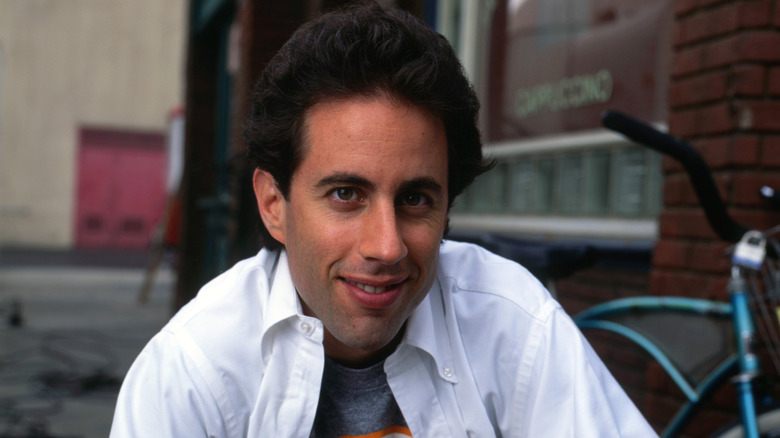
"Webster" had a connection to another iconic sitcom actor: Jerry Seinfeld. Seinfeld was hired as a writer on the show only to be fired after a single week. None of the material he wrote for the show made it into the finished product. Why was Seinfeld removed from the writing staff so quickly? The producers of "Webster" did not like the material he wrote for the program. Upon reflection, Seinfeld revealed his firing was one of the most degrading experiences of his life.
Fortunately for Seinfeld, he found success writing his self-titled show, which is one of the most beloved television sitcoms of the 1990s, if not the entire history of the medium. During a 2014 episode of "Here's the Thing with Alec Baldwin" via (Medium), Seinfeld explained his approach to writing. "Let me tell you why my tv series in the 90s was so good, besides just an inordinate amount of just pure good fortune."
He continued, "In most tv series, 50 percent of the time is spent working on the show, 50 percent of the time is spent dealing with personality, political, and hierarchical issues of making something. We spent 99.9 percent of our time writing. Me and Larry [David]. The two of us. The door was closed. It's closed. Somebody calls. We're not taking the call. We were gonna make this thing funny. That's why the show was good." While Seinfeld's writing style was not appreciated by the creators of "Webster," he eventually found his audience.
Emmanuel Lewis memorized Webster scripts very quickly
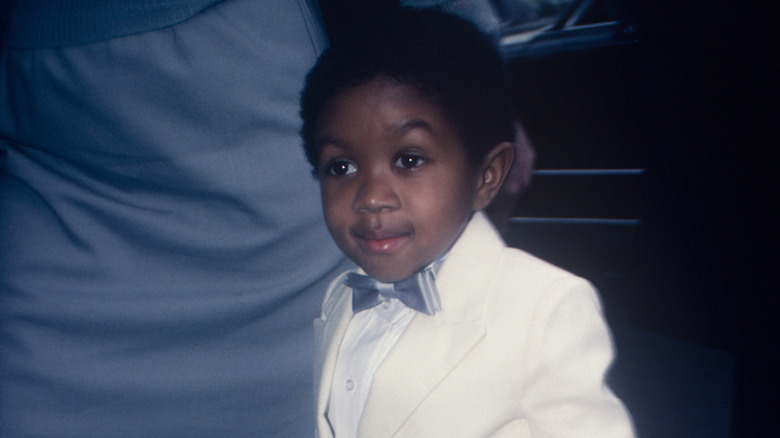
One of the defining aspects of "Webster" was the incredible comic talent Emmanuel Lewis displayed at a young age. During a 1985 interview with Ebony, Lewis discussed his method of memorizing lines. "I get into a place where there is no television, no anything, and I look at the script and say, 'Emmanuel, you better learn this script, because nobody's going to learn it for you!'" he revealed. "I have the script memorized in about half an hour or less."
Lewis took his job very seriously. The way he explained it, he had an agreement with his mother, Margaret Lewis, who gave up her career in computer programming to work as his manager. "My mom takes care of everything," he said. "Our deal is for me to work and her to worry."
Lewis' discipline paid off. For his role on "Webster," the child star was nominated for Young Artist Awards in 1984, 1985, 1986, and 1987. Meanwhile, he won the People's Choice Award for Favorite Young TV Performer for each of those years. In addition, "Webster" won the 1984 People's Choice Award for Favorite New TV Comedy Program, which was a testament to Lewis' acting prowess as well as the chemistry of the show's entire ensemble.
Emmanuel Lewis was humble despite his success on Webster
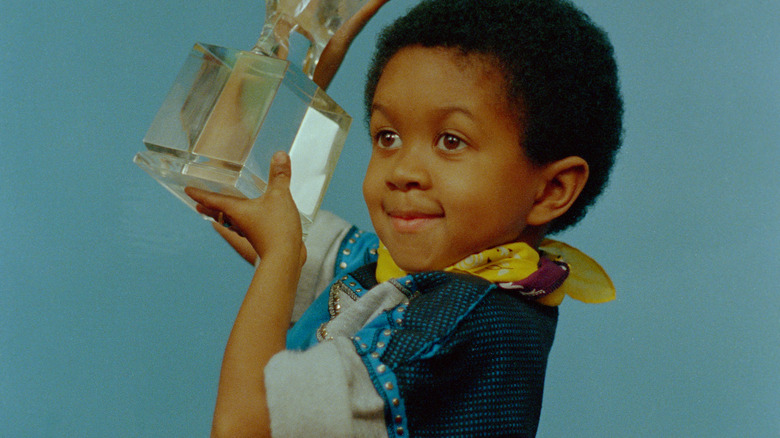
Emmanuel Lewis became successful very early in life and won many awards. The popularity of "Webster" drew him into the orbit of several major celebrities, including Sammy Davis Jr. and Patti LaBelle. Lewis even released a song called "City Connection," which reached No. 1 on the pop chart in Japan. When he went to school, other children would put him in the spotlight. "They ask me a lot of questions, like how to make a commercial, how much money do you get, and what are you going to do next," he told Ebony Jr. in 1983. Given his string of accomplishments, Lewis could have let fame go to his head.
In contrast, Lewis remained down-to-earth. During a 1985 interview with Ebony, the child star revealed he was a born-again Christian. He thanked God for his career and went to church every Sunday when his schedule would permit. In addition, he used his platform to draw attention to people who were suffering from food insecurity. "I wish something could happen to let them have a better life," he said. "If it were up to me, I would let it rain food and medicine so that the people would get nice and healthy." Lewis also had some kind words for his co-stars. During a 1984 interview with Ebony, Lewis called Alex Karras a "big, big teddy bear," adding, "I really like him and Susan [Clark].
The show was supposed to have a country music-themed spin-off
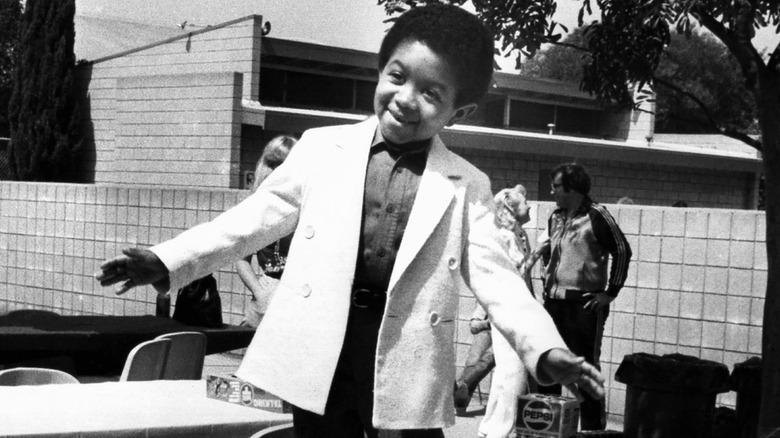
Countless successful television shows have inspired spin-offs. "Webster" was nearly one of them. The episode "Almost Home" was about a country star named Uncle Jake who decided to open a foster home. Uncle Jake was portrayed by Mac Davis, a musician who began his career writing songs for Elvis Presley — including the all-time classics "In the Ghetto" and "A Little Less Conversation" — before releasing hits of his own such as "Baby Don't Get Hooked on Me" and "Stop and Smell the Roses." The episode was intended as a backdoor pilot about Davis' character. However, the spin-off was never produced.
During a 2020 interview with Songfacts, Davis regretted his career as an actor. "I look back on it now, and I was never an actor," he said. "It just wasn't my thing." Davis compared his acting career to Presley's, which he did not mean as a compliment. Considering Davis didn't love acting, it might be for the best that his "Webster" spin-off was never made.
The show caused Michael Jackson to become friends with Emmanuel Lewis
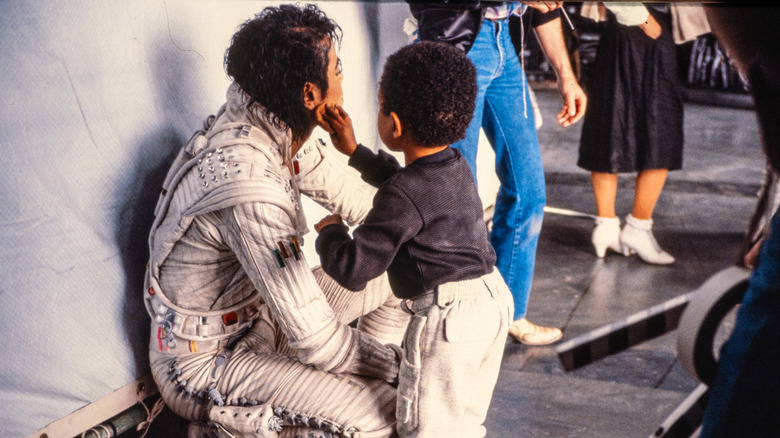
The success of "Webster" led to Emmanuel Lewis becoming friends with the biggest star of the 1980s. While "Webster" was still in its original run, Lewis had the incredible experience of watching Michael Jackson film the iconic music video for "Thriller." Lewis' friend invited him to an event without telling him what it was. Lewis initially declined the offer, knowing he had to work the next morning, but his mother said he should go. Lewis arrived on the set and had the privilege of watching Jackson perform his famous zombie dance. The two stars became friends. Notably, in a 1983 Jet interview, Lewis said he couldn't listen to Jackson's hit "Beat It" without dancing.
During the American Music Awards (via Jet), Jackson said: "An important chemistry in writing songs is inspiration." He revealed Lewis influenced some of his music. During a 2024 interview with The Atlanta Journal-Constitution, Lewis said he didn't believe his ears when he heard the "Billie Jean" singer had died. "When I heard the news, I thought it was a joke," he said. Ultimately, Lewis decided not to attend Jackson's funeral, as the experience would have been "too emotional" for him.
Webster crossed over into the Star Trek universe
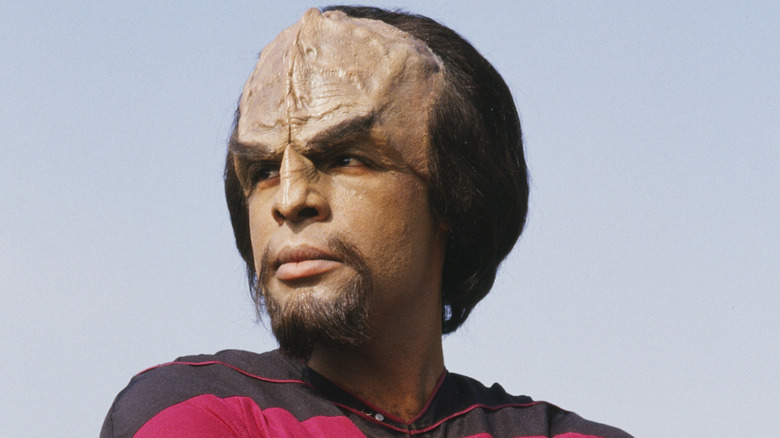
On the surface, "Webster" would not appear to have much in common with "Star Trek." However, the 1989 "Webster" episode "Webtrek" was a crossover with "Star Trek: The Next Generation." The only main actor from "Star Trek: The Next Generation" to appear in the episode was Michael Dorn, who played his signature role of Lieutenant Worf. Notably, "Webster" and "Star Trek: The Next Generation" were both filmed on the same Paramount backlot.
During a 2026 interview with "Dropping Names with Brent and Jonny", Dorn said the crossover happened because Paramount thought it would be funny for "Star Trek" to enter the world of "Webster." "Webtrek" revolved around Webster being beamed aboard the Starship Enterprise due to a lightning strike and teaching Worf about the concept of fun. Webster wakes up and thinks his experience was all a dream, before realizing he had a memento from the Starship Enterprise.
In retrospect, Dorn did not have much fondness for "Webtrek." "It was one of those shows that I shouldn't have done, just because ... you know, you didn't want to, like, cross-contaminate shows," he said. Dorn regretted starring in the episode immediately after filming. Regardless of Dorn's feelings about "Webtrek," the episode remains a fascinating combination of two very different shows.
Webster prepared Matt Shakman to be on Wanda Vision
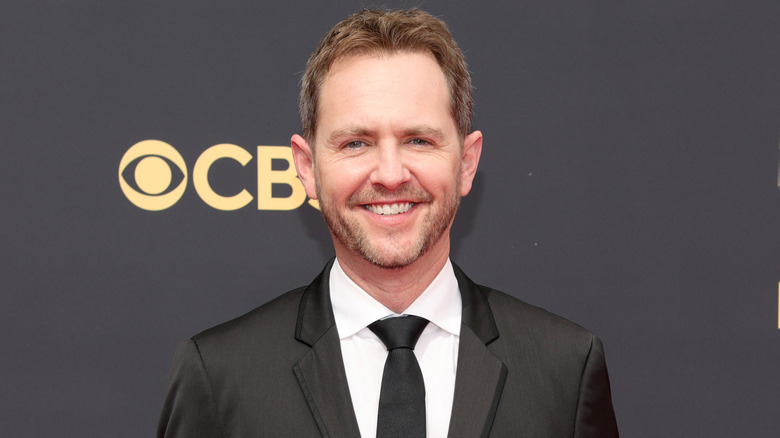
Matt Shakman played Jeffrey on "Webster." During a 2021 interview with AwardsWatch, Shakman discussed whether it was daunting for him to act on "Webster" and other shows as a child. "Well, as a little kid, I don't know that I was aware of the situation as much," he explained. "Being on those shows, was just a part of my life. I started as a child actor at three and a half years old, and it was just the rhythms of my everyday existence."
In the same interview, Shakman said his work on "Webster" prepared him for directing episodes of Marvel's "WandaVision" starring Elizabeth Olsen. Notably, "WandaVision" pays homage to different eras of sitcom history. "We didn't want a spoof or parody and so the fact that I have, in my body, basically '80s and '90s television as something that I experienced firsthand and lived through, definitely impacted how we built those different eras," he said. Shakman said he wanted the sitcom elements of "WandaVision" to feel authentic rather than parodic.
In Shakman's opinion, it was his destiny to go from acting on sitcoms such as "Webster" to directing a show about sitcoms. He also felt this tied into "WandaVision," which revolves around the theme of destiny.
Emmanuel Lewis is retired from acting, but he still respects Webster

During the heyday of "Webster," Emmanuel Lewis was chased by paparazzi all the time. Lewis grew tired of facing the press, so he moved to the suburbs of Atlanta in 1987 to have some peace and quiet. While he never reprised his role as Webster in a spin-off or continuation of the original show, he did poke fun at his career as a child star in the comedy film "Dickie Roberts: Former Child Star."
During a 2024 interview with The Atlanta Journal-Constitution, "I'm retired from acting," Lewis said. "It was never about staying at one thing. I like to grow and move toward different areas I find intriguing."
While Lewis is not an actor anymore, he still respects "Webster." In Lewis' opinion, messages in the show still resonate. For example, Justin Bieber's mother, Pattie Mallette, said the show had a huge impact on her life. Lewis doesn't completely eschew the fame "Webster" brought him. "I make personal appearances around the world. I do conventions," he said.