

11 Cast Exits That Changed Everything For These '70s Shows
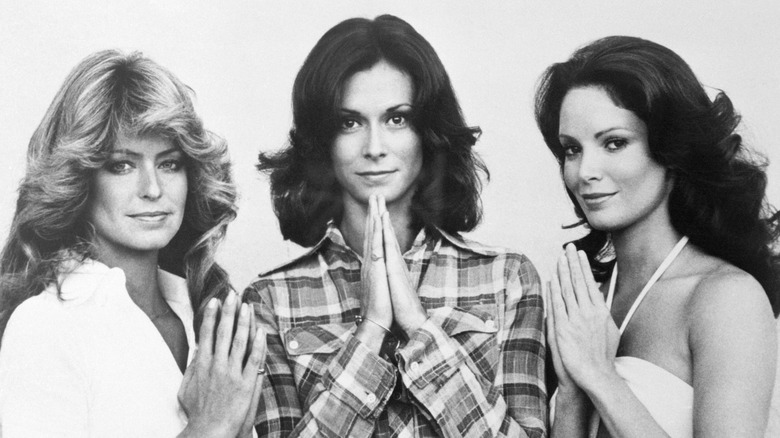
The '70s were a sensational time in Hollywood and on the small screen, as many of the industry's brightest and most buzzed-about stars first rose to prominence in the groovy decade. Some of the television world's biggest talents emerged during the period, as famous faces like Farrah Fawcett, John Travolta, and Rob Reiner all kickstarted their enduring careers and forever changed the pop culture world.
Despite starring on beloved TV shows and earning the adoration of millions, these actors (and countless others) opted to walk away from the security of these popular gigs to pursue their other creative dreams, many of them finding overwhelming success. Their departures from their respective roles and projects had an undeniable impact on the longevity of the shows, as some crashed and burned following their exits.
Before he was one of the cinema's most celebrated leading men, Michael Douglas starred in the crime series "The Streets of San Francisco," the drama introducing him to audiences everywhere and helping propel his career. His absence spelled doom for the show, and it was canceled shortly after, proving that a cast member's exit can change everything when it comes to television.
Farrah Fawcett's shocking exit stunned Charlie's Angels fans
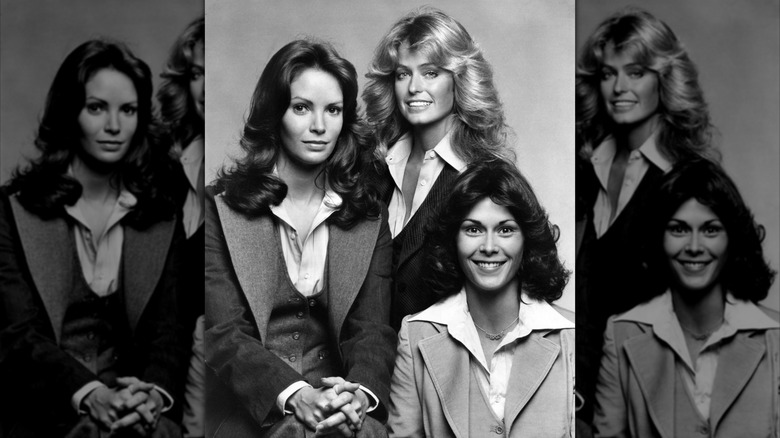
Farrah Fawcett became an overnight sensation when she starred alongside Jaclyn Smith and Kate Jackson on "Charlie's Angels," the blond beauty playing private investigator Jill Munroe. Fawcett became a pop culture icon right out of the gate but walked away from the hit series after just one season to pursue new creative opportunities. Cheryl Ladd ultimately replaced her, playing Jill's younger sister Kris.
Ladd felt extreme pressure after joining the popular series and initially turned down the offer to star. "Well, that was pretty daunting when Aaron asked me to do it the first time I said, 'No thank you.' But he wasn't taking no for an answer," she said to Fox News in 2020 of her conversation with executive producer Aaron Spelling. "So he called me in and he said, 'Why don't you want to do it, Charlie, this is for you?' And I said, 'Well, first of all, what would I play? Because nobody can walk in there and try to be Farrah Fawcett.'"
While "Charlie's Angels" continued for four more seasons, the tone of the series shifted, and it lost some of the magic that the original trio had. Though she returned for guest appearances in the subsequent years, many devoted fans missed Fawcett (and her iconic '70s mane), as she was the series' breakout star. As Spelling wrote in his autobiography, "Aaron Spelling: A Prime-Time Life," "But her hair helped make the show. It became one of our signatures."
McLean Stevenson left M*A*S*H to be a leading man
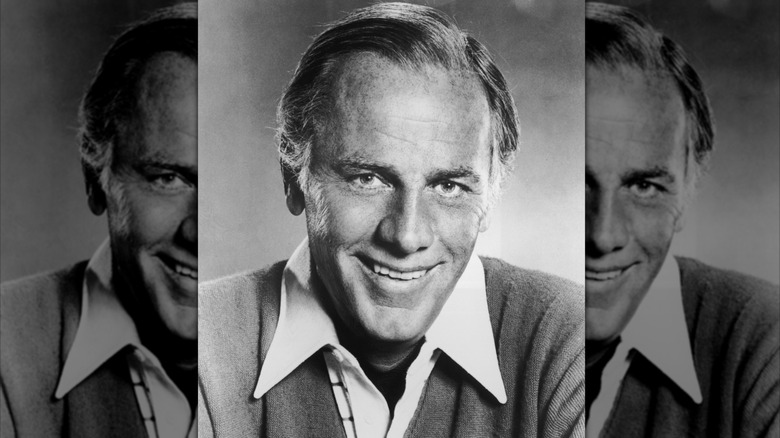
Arguably one of the most notorious cast departures in TV history, McLean Stevenson's stunning exit from "M*A*S*H" in 1975 devastated viewers. Stevenson had won a Golden Globe and the adoration of fans for his performance as the down-to-earth Lt. Col. Henry Blake.After growing resentful of co-star Alan Alda — who'd become the show's main star — Stevenson asked to be released from his contract.
His character was heartbreakingly killed off in the third season finale and his death took away some of the show's heart, as he had major chemistry with Gary Burghoff's Radar and his fellow cast members. Loretta Swit revealed that Stevenson had been openly frustrated with his spot on the call sheet. "A week or two before leaving, Mac said to me, 'I know I'll never be in anything this good again, but I have to leave,'" she recalled to The Hollywood Reporter in 2018. "He said, 'I want to be No. 1 of six. I'm No. 3.'"
After leaving the dramedy, Stevenson tried to replicate his former success with the short-lived sitcoms like "The McLean Stevenson Show" and "Hello, Larry," though he was unable to achieve the same career heights. "I made the mistake of believing that people were enamored of McLean Stevenson when the person they were enamored of was Henry Blake. So if you go and do 'The McLean Stevenson Show', nobody cares about McLean Stevenson," he confessed to The Baltimore Sun in 1990.
Lyle Waggoner was replaced by Tim Conway on The Carol Burnett Show
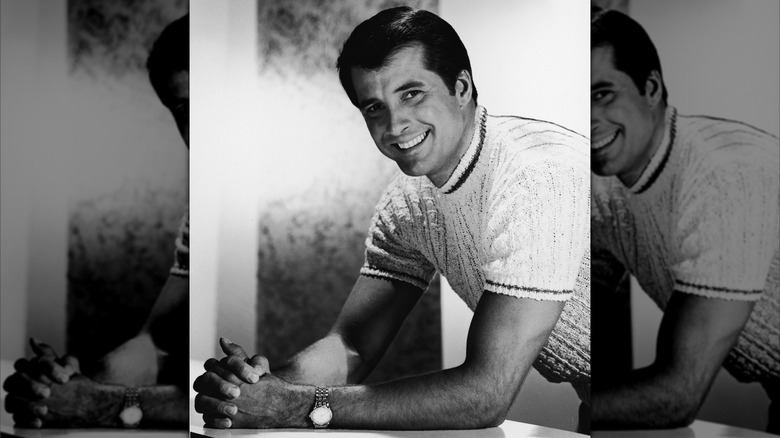
"The Carol Burnett Show" was a trailblazing sketch comedy series that featured the iconic titular star collaborating with performers like Vicki Lawrence and Lyle Waggoner. When Waggoner decided to expand his career horizons, he left the show in 1974 after seven seasons, shocking longtime viewers. "I really enjoyed working on 'The Carol Burnett Show.' But I had to leave for reasons of illness and fatigue — I got sick and tired of it," he told Lexington Harold-Leader (via MeTV).
"Don't get me wrong, I really enjoyed the show. But my part was very limited and it was frustrating as an artist because I really had no place to go. It was really a big decision to make to leave, but after a while, I decided I had to get out and try." Waggoner went on to portray Steve Trevor Jr. in "Wonder Woman" and made additional appearances in shows like "Happy Days" and "Murder, She Wrote" before branching out and starting a luxury trailer business.
Tim Conway eventually became his permanent replacement and the show helped propel his career, earning him four Emmy Awards and the adoration of audiences while Waggoner's career failed to reach the same heights. Conway's ad-libs constantly made his co-stars crack-up in sketches, specifically Harvey Korman, who apparently wet his pants due to laughing too hard. "I'm very proud of that, too, because I owned a cleaners at the time," Conway quipped on a 2013 episode of "Conan."
Gavan O'Herlihy's Happy Days departure coined a famous TV syndrome
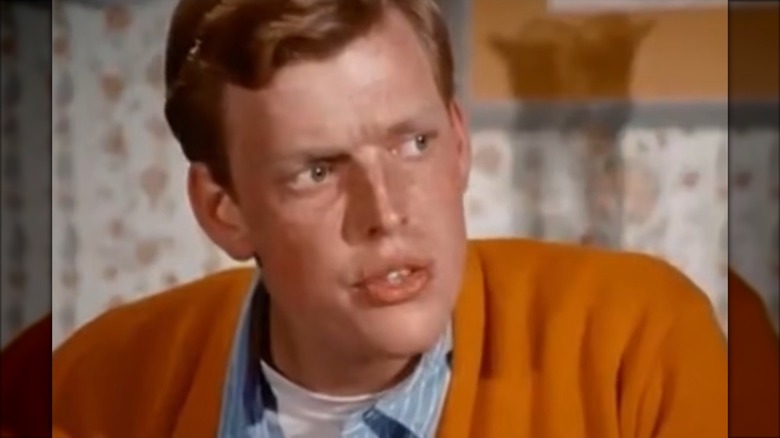
Fans of "Happy Days" may have forgotten about eldest sibling Chuck Cunningham in the series, who was played by Gavan O' Herlihy during the first season of the beloved sitcom... until the character's existence was retconned out of the show entirely. O'Herlihy walked away from the role in 1974 and the character's abrupt disappearance effectively established Ron Howard's Richie Cunningham as the show's main presence, paving the way for his character arc and friendship with Fonzie.
O'Herlihy never regretted leaving as he had wanted to focus more on his film work than TV projects. "I hung around for the first half-season, then asked out of the contract. It wasn't my cup of tea. It raised some eyebrows, but I'm glad I did," he told OnMilwaukee in 2013 of his decision. The show's handling of O'Herlihy's departure inspired the phrase "Chuck Cunningham Syndrome," which is now used to describe characters who suddenly disappear from shows without an in-universe explanation.
The actor found further success with performances in movies like "Never Say Never," "Superman III," and "Willow" (directed by his former co-star Howard) and also appeared in shows including "Lonesome Dove" and "Twin Peaks." The decorated filmmaker mourned O'Herlihy's death in 2021 on social media. "RIP Gavan," Howard wrote on X. "I knew him as the 1st of 2 Chucks on #HappyDays & then as Airk in #Willow where I had the pleasure of directing him. A talented actor with a big free spirit."
Wayne Rogers felt underutilized while on M*A*S*H
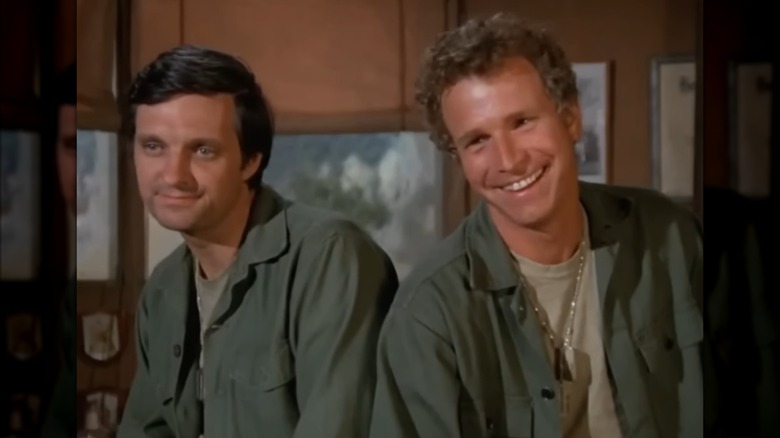
Much like McLean Stevenson, "M*A*S*H" alum Wayne Rogers didn't like that the series had become primarily about Alan Alda's Hawkeye Pierce while his character Trapper John McIntyre became second fiddle. Rogers left at the same time as Stevenson at the end of Season 3, forever shifting the tone of the acclaimed show. After their respective departures, Alda officially became the lead star and the rest of the cast largely became secondary characters to Hawkeye.
Contract disputes also contributed to Rogers leaving the show, and he was later sued by producers for breach of contract. "I had beef from the first day of shooting. I was promised a contract that never materialized — profits, percentages, billing, money — it was all lip service," Rogers said to Dayton Daily News in 1978 (via MeTV). "I left after three years and they sued me for three and a half million dollars." The lawsuit was eventually thrown out as Rogers had never signed a formal contract.
Mike Farrell was brought on to replace Rogers as B.J. Hunnicutt, portraying Hawkeye's close friend for the eight remaining seasons. "I remember being just as nervous as a cat, just scared stiff. Talk about wanting to be part of something that was something," he said on a 2026 episode of the "Still Here Hollywood" podcast about joining the series. "It was a dream to be part of a show like that. And then it became for me an eight-year dream. It was just a fabulous experience."
John Amos was fired from Good Times for his disparaging comments
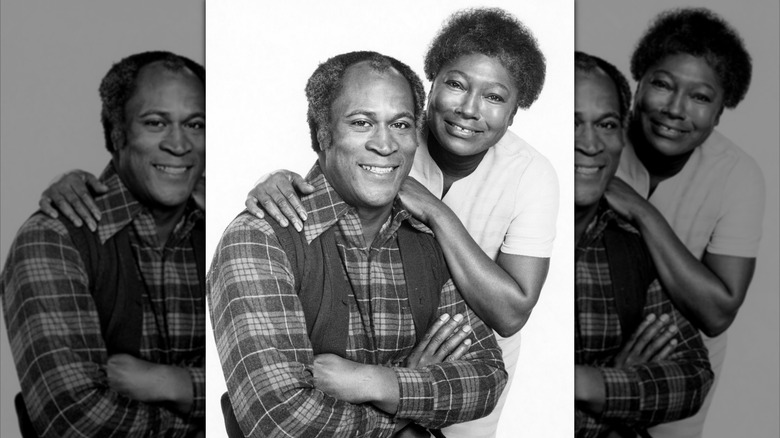
The celebrated sitcom "Good Times," a spinoff of "Maude," focused on George and Florida Evans as they raised their three children and experienced life's many hurdles while living in the housing projects of Chicago. John Amos notably starred as the hard-working family patriarch but was fired by executive producer Norman Lear after two seasons over his disparaging comments about both the show and Jimmie Walker's character, J.J.
George was subsequently killed off in the premiere of the fourth season, his absence taking away much of the heart the original storyline featured. The chemistry between Amos and his on-screen wife Esther Rolle was a main draw for viewers, as she had fought to have him join her in the series after working together in "Maude." Like Amos, Rolle had also grown frustrated with J.J.'s popularity and his borderline cartoonish characterization, which she felt took precedence over more serious subject matter.
"I felt too much emphasis was being put on J.J. in his chicken hat, saying 'Dy-no-mite!' every third page," Amos told the Television Academy in 2014. "But I wasn't the most diplomatic guy in those days, and [the show's producers] got tired of having their lives threatened over jokes. So they said, 'Tell you what, why don't we kill him off? We can all get on with our lives! Life's too short.' So that taught me a lesson — I wasn't as important as I thought I was to the show or to Norman Lear's plans."
John Travolta left Welcome Back, Kotter to become a Hollywood superstar
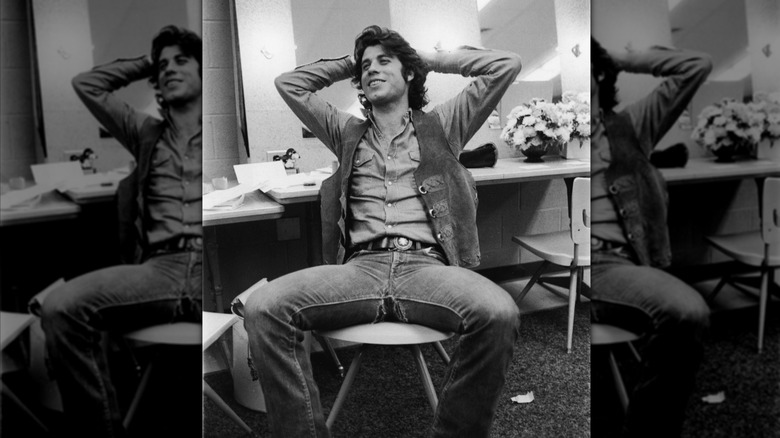
John Travolta became a certified heartthrob when he first began portraying Vinnie Barbarino in "Welcome Back, Kotter" in 1975, the sitcom giving Travolta his big break and paving the way for him to headline the blockbusters "Saturday Night Fever" and "Grease." Travolta was undeniably the sitcom's biggest star, and he was written out of the series during its fourth (and ultimately final) season to accommodate his blossoming film career.
Despite his eventual departure, the Golden Globe winner did appear in 10 out of 23 episodes of the fourth season before continuing to pursue his cinema dreams. "What really happened was that Farrah Fawcett was on 'Charlie's Angels,' and she left after one year of superstardom and got in trouble for it," Travolta told Yahoo! Entertainment of why he stuck with the show. "I got the memo pretty quickly that if you become big from a TV series, don't leave it, because your movie career might get hurt."
Travolta's exit all but doomed "Welcome Back, Kotter" as it was already facing a major dip in ratings and struggled to combat additional casting shakeups. Co-creator Gabe Kaplan's lead character Gabe Kotter only appeared in a select few episodes of the last season due to contract disputes, and Della Reese was brought on to help the struggling sitcom. However, Travolta's Barbarino and his fellow Sweathogs were never given a proper ending when the series unceremoniously canceled in 1979.
Susan Saint James' exit from McMillan & Wife doomed the series
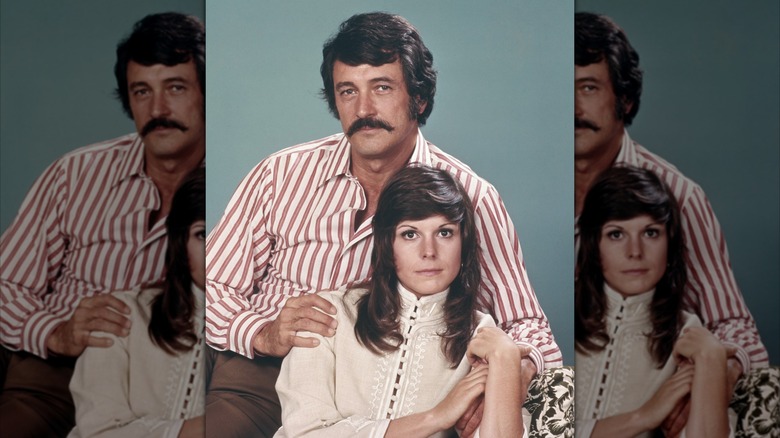
Susan Saint James memorably appeared alongside Hollywood legend Rock Hudson in the procedural "McMillan & Wife," the series largely centering on the relationship between police commissioner Mac and his spirited wife Sally. Saint James received three Emmy nominations for her performance but was shockingly written out of the series in 1976 following contract disputes, her character being killed in an off-screen plane crash. The drama was then rebranded under the aptly named title "McMillan."
Saint James' absence deeply affected audience viewership, as her magic chemistry with Hudson and their characters' contrasting personalities is what kept fans tuning in; the series ended just a year after her departure. The actor quickly bounced back and went on to star opposite Jane Curtin in the sitcom "Kate & Allie" and in the horror comedy classic "Love at First Bite" with George Hamilton.
Though her time on "McMillan & Wife" may have ended on a sour note, Saint James had nothing but wonderful things to say about Hudson. "We had so much fun. From the day I met him, I can't remember a time when he was ever unpleasant," she told Closer two years before her death in October 2026. "He never came to the set unprepared — never, not once. He never made me feel intimidated — other than I never wanted to screw up! I didn't want to miss my mark or miss a line."
Sally Struthers and Rob Reiner left All in the Family together
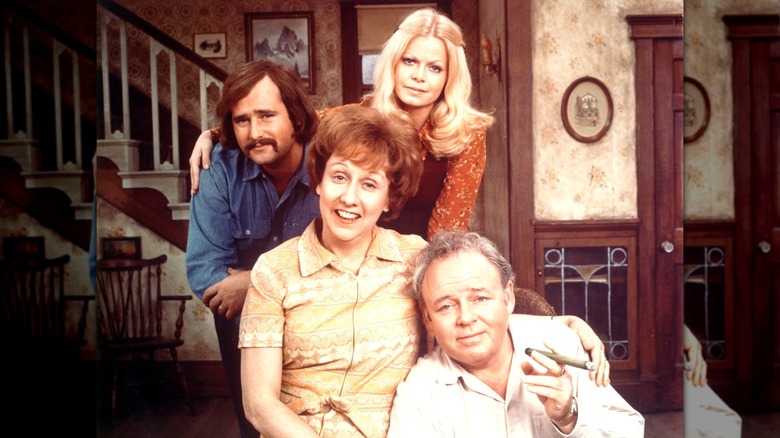
Sally Struthers and Rob Reiner portrayed Gloria and Michael Stivic in "All in the Family," the lovable couple who stole the hearts of fans everywhere while butting heads with patriarch Archie Bunker. When Struthers grew frustrated with her character's lack of development and Reiner wanted to pursue his directing dreams, the pair left the show after the eighth season ahead of its final season in 1978.
Their absence shifted the fiery spirit of the sitcom, as Archie always sparred with Gloria and "Meathead" Michael over any topic under the moon and their conflicts kept fans laughing. Struthers had previously attempted to leave the show after Season 5 and even spent $40,000 during the legal process, only to be contractually obligated to return. Danielle Brisebois was brought on as Archie and Edith's young niece Stephanie Mills in an effort to breathe new life into the series.
Struthers spoke about her fellow "All in the Family" star Reiner before his tragic death in 2025 and revealed how he helped her cope with her frustrations. "If you could change your mindset, Sally, if you could make the show more important than your part, then you would not only be fine if a line or two of yours was cut, but you might even offer up yourself, knowing that's not an important line and it could go. I hope you can do that," she told the New York Post of Reiner's advice.
Richard Thomas left The Waltons at the height of his popularity
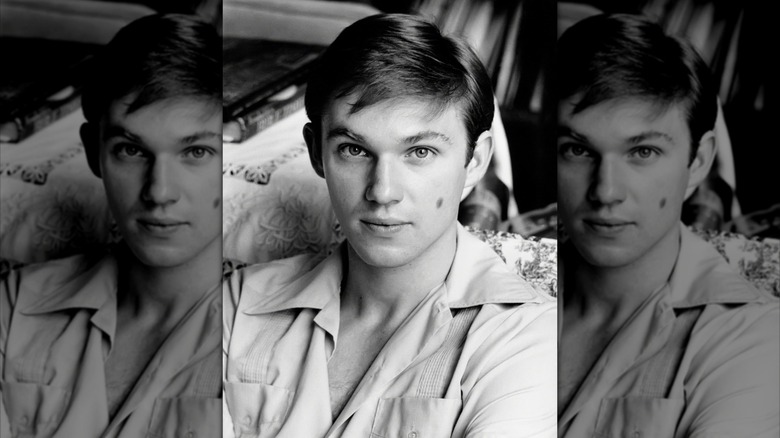
Richard Thomas famously starred as John-Boy Walton in "The Waltons," the actor headlining the series for its first five seasons before causing massive waves with his exit in 1977. Thomas felt ready to move on from the historical drama when his contract was up as he hoped to pursue new creative opportunities. "When I signed my contract I decided then that I would remain with the series no longer than five years," he said to The Montreal Star (via MeTV). "That's long enough to be tied up with one project and I want to go on to other things."
Instead of simply writing the character out, producers opted to replace him with Robert Wightman beginning in Season 8, the decision outraging devoted viewers who felt John-Boy was irreplaceable. Both fans and Thomas' former castmates were stunned by the recasting, and his on-screen mother Michael Learned later said she recognized how unfair the whole situation was to Wightman.
"I felt sorry for him," she told Smashing Interviews in 2022. "How do you fill those shoes? I mean, John-Boy. And here's the new John-Boy. We all hated it. Taking the bandages off, and here's a new face on John-Boy and a new voice. I hated it. We all did. So we tried very hard not to take it out on this poor kid. It wasn't his fault. He's just an actor who was given a job."
Michael Douglas left The Streets of San Francisco amid his cinema success
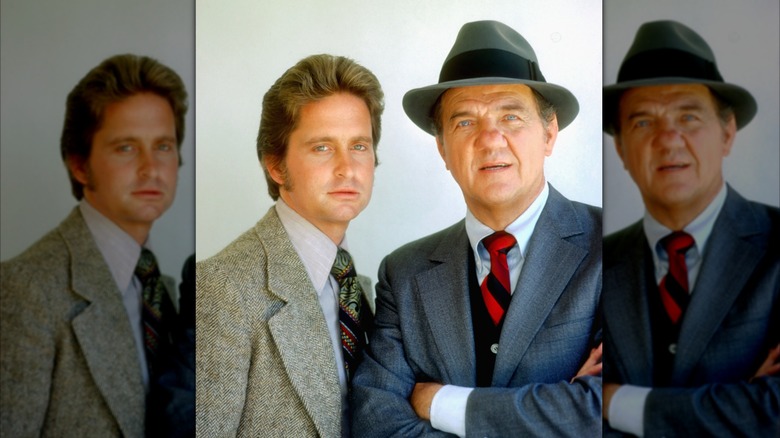
Even some diehard Michael Douglas fans may have forgotten that before he was a massive movie star and married to Catherine Zeta-Jones, he headlined the crime series "The Streets of San Francisco" opposite Karl Malden. When Douglas' film career took off, he departed the show after four seasons and Richard Hatch was brought in as a replacement character for its fifth and final season. Audiences were less than enthused with the casting shakeup and his exit played a hand in the show's eventual cancellation in 1977.
The show suffered a decline in viewership following Douglas' departure and Malden had been up for a new (and potentially lofty contract), so ABC opted to instead opted to pull the plug on the drama. Douglas went on to have a decorated cinema career, winning an Academy Award for his performance in "Wall Street" while making subsequent appearances in hits like "Romancing the Stone," "Fatal Attraction," and "Basic Instinct."
In the many decades since its initial run, the seasoned star has continued to praise the show and everything it taught him about showbiz. "I was fortunate to get the show, and I will be eternally grateful for the experience," Douglas told the Television Academy in 2022. "'The Streets of San Francisco' made way for my entire career, including as a producer. I applied the wonderful lessons that I learned on that show to all the other projects that happened after."