

Fans Have Spoken: These Are The 12 Best Episodes Of Classic '70s TV Shows
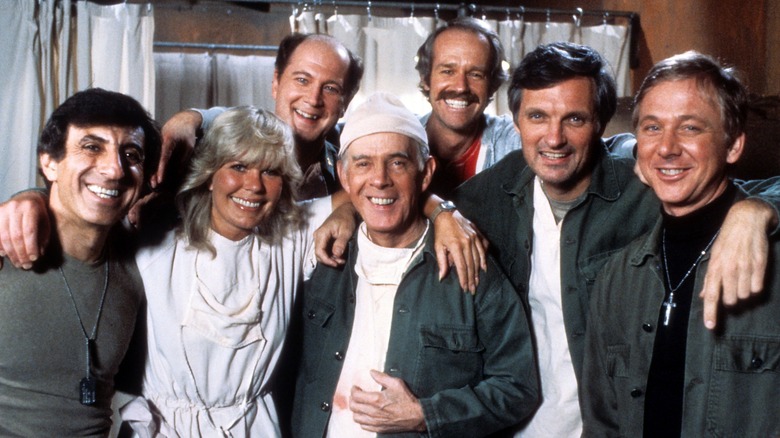
The '70s were a pivotal decade in the entertainment industry as the television world launched countless classic hits that resonated with millions. From acclaimed dramedies such as "M*A*S*H" to feel-good sitcoms like "Happy Days" and "All in the Family," the small screen was thriving in Hollywood at the time, and audiences were happily reaping the benefits.
Fans of these popular shows flocked to their living rooms and TV sets to tune in and see what legendary characters like Fonzie, Hawkeye Pierce, and John-Boy Walton were up to each week. With so much talent and creativity propelling these programs, it can be difficult to establish a definitive list of the best episodes to come out of the far-out decade.
However, fans have been extremely vocal in the many years since these shows first premiered and have taken to social media, online polls, review websites, and beyond to make their opinions known. Whether it's poignant episodes of "Good Times" and "The Rockford Files" or side-splitting installments of celebrated comedies like "The Mary Tyler Moore Show," the '70s were jam-packed with iconic TV episodes.
The Mary Tyler Moore Show: Chuckles Bites the Dust
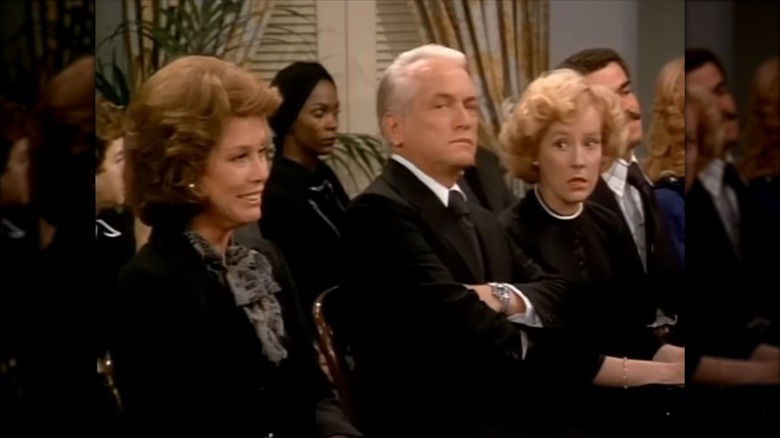
The WJM-TV staff find themselves in a hilarious predicament while attending the funeral of Chuckles the Clown, as Mary (Mary Tyler Moore) and the newsroom crew attempt to fight back against inappropriate laughter in an attempt to cope with the jarring event. The episode won a Primetime Emmy for outstanding writing for a comedy series and claimed the top spot on TV Guide's 100 Greatest TV Episodes of All Time list.
The classic 1975 installment was voted the all-time favorite episode of the comedy series in an online poll audience conducted during the 2002 special "The Mary Tyler Moore Reunion," and it currently holds a 9.4 out of 10 rating on IMDb, where one user declared it "probably the show's most famous episode, for good reason." Fans all agreed that the episode was a masterclass in comedy writing, and they praised how the actors and creative crew were able to handle heavy subject matter like death and infuse it with dark humor.
"It's not every sitcom that can make comedy gold out of someone's death, but they pull it off flawlessly here. Everything is just letter perfect: the writing, the directing, the acting," another IMDb user wrote. Similarly, a Facebook user declared, "No matter how many times I watch this episode, it's still hilarious ... Mary at her absolute best!"
M*A*S*H: Abyssinia, Henry
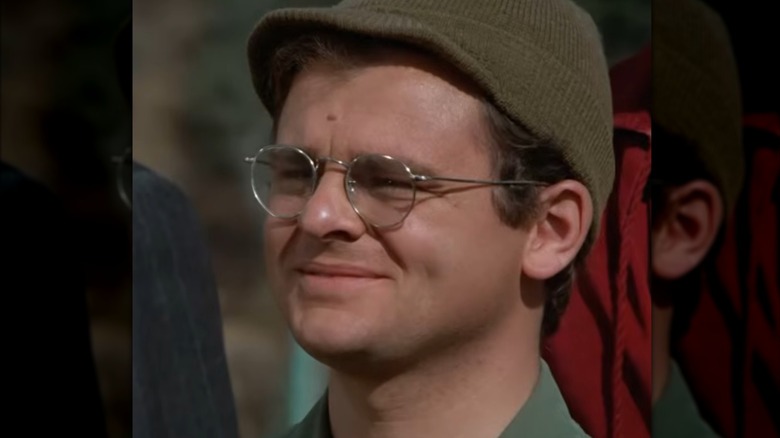
"M*A*S*H" caused a fan uproar with its poignant 1975 episode "Abyssinia, Henry," during which the series shockingly killed off beloved character Lt. Col. Henry Blake (McLean Stevenson). Both audiences and Stevenson's fellow cast members (aside from Alan Alda) had no idea producers planned to kill off Blake, and Radar's (the talented Gary Burghoff) gut-wrenching grief and shock of delivering the stunning news made for a truly impactful TV moment.
Stacker ranked "Abyssinia, Henry" the show's No. 1 best episode based on IMDb user ratings as of April 2025, which averaged 9.5 out of 10 over 1.8K reviews from fans. "No matter how many times I watch this episode, it gets me every time. It brings a reality to the series and to war as a whole," one IMDb user wrote. "When the laughing and the comedy stops you feel like you're in another series, a well acted and rightly deserved top rated episode," another said.
Reddit users also agreed that it is a top episode of the timeless series, and Blake's devastating death was one of the saddest in television history. "Easily a top 5 episode. The silence, filled only by the clang of a tool hitting the ground ... that is the moment the show really started to grow from an overt comedy with some serious messaging to something far more complex," one Redditor shared.
Maude: Maude's Dilemma
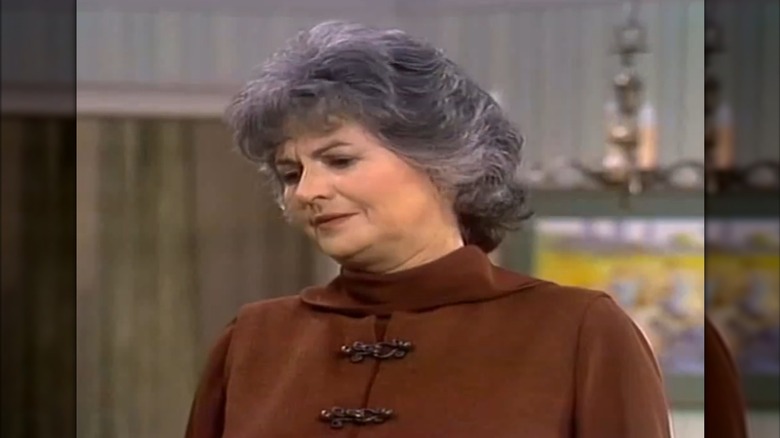
Bea Arthur delivered a tour de force performance in the 1972 groundbreaking "Maude" episode "Maude's Dilemma," which involved her titular character discovering she is pregnant at 47 and subsequently struggling to decide what to do. The episode ventured into heavy subject matter and was deemed a watershed moment in TV history, with a sensitive storyline that impressed both critics and audiences alike.
The episode has been heavily dissected by fans and has been praised for its refreshing honesty and its sensitive handling of pregnancy and abortion, as YouTube commenters have pointed out how relevant a topic it was to discuss and that the episode was well ahead of its time from the '70s to today's modern world. "It's depressing that 50 years after this episode, women's fertility rights have been completely reversed. What a step backwards in this country of the free," one YouTube comment reads.
Reddit users also lauded the sitcom and Arthur for her powerhouse portrayal. As one Redditor keenly wrote, "Bea Arthur was a trailblazer in so many ways beyond television." Upon its premiere, "Maude's Dilemma" also caused controversy and received thousands of complaints because it aired two months before Roe v. Wade. However, creator and TV icon Norman Lear remained adamant about depicting the true realities of what older, pregnant women faced.
All in the Family: Sammy's Visit
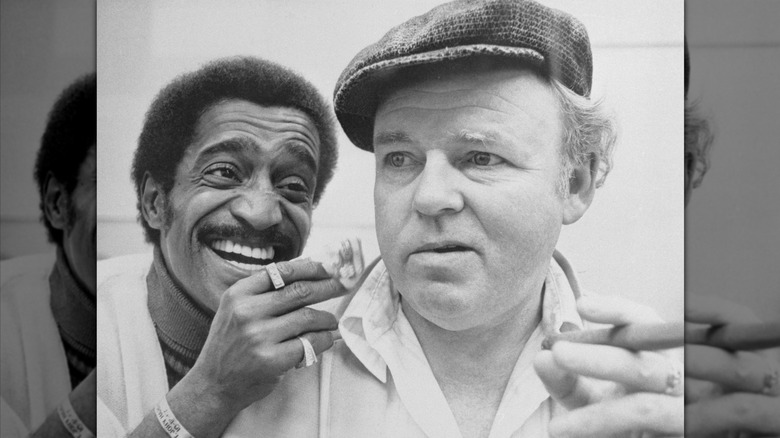
World-famous star and Rat Pack member Sammy Davis Jr. memorably appeared with the cast of "All in the Family" in the 1972 episode "Sammy's Visit," in which the performer hilariously went toe-to-toe with infamous bigot Archie Bunker. Davis iconically planted a large smooch on Bunker's cheek, and it became one of the most buzzed-about TV moments of the decade. Davis and Carroll O'Connor were close friends, and it was allegedly O'Connor's idea to have the unforgettable peck included.
The kiss caused what was said to be the longest, genuine laughter from a sitcom in decades, and Facebook fans agreed it was one of the sitcom's greatest episodes of all time. The episode has a 9.2 IMDb user rating and was rated No. 1 on its Top 10 Episodes list. "Sammy Davis Jr's insults flying over Archie's head is amoung [sic] the series' funniest lines. The way SDJ was crafted into the episode was perfect. He was used for Archie to bury himself deeper and deeper in bigoted remarks. The perfect American sitcom episode," one IMDb user said.
Likewise, a Facebook fan page comment declared it, "The most hilarious 30 minutes in television history!" while another read, "Truly the funniest sitcom episode ever! Even after 54 years, you can watch it and find yourself laughing out loud."
Good Times: The Big Move: Part 1
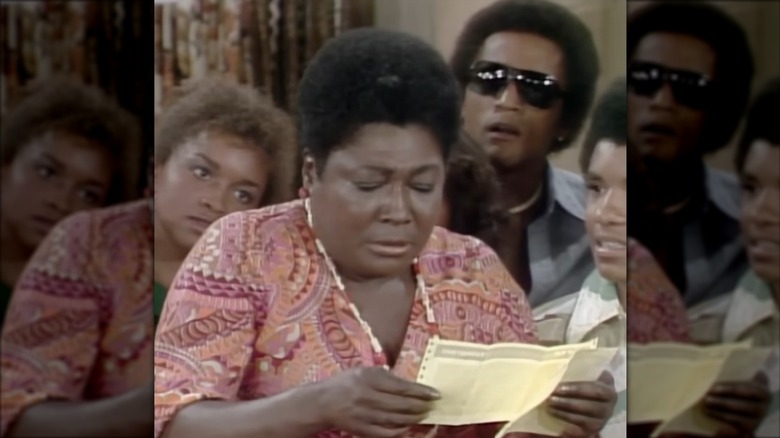
The celebrated sitcom "Good Times" has never shied away from tackling challenging issues, and in 1976, the show left audiences brokenhearted when "The Big Move: Part 1" killed off beloved Evans family patriarch James (John Amos). The character's death left his loved ones facing financial and economic uncertainty and was one of the sitcom's most devastating moments.
Amos was infamously fired by executive producer Norman Lear for his disparaging comments about the character J.J. and the series, and the episode marked a huge shift in tone for the comedy following his departure. Fans ranked the episode an 8.3/10 on IMDb, with one user declaring that it set the tone for the fourth season and beyond. "'The Big Move,' broadcast in two parts, kicked off the fourth season in stunning fashion, its impact still felt decades later," one user wrote on IMDb.
YouTube users also acknowledged the episode's impact on the sitcom. One comment called it the "Most heartbreaking moment in TV history," while another shared their own recollections of the TV moment. "An episode that went down in television history. Millions must have been watching because it was all anyone talked about that week, at both school and work. This man who became a part of everyone's family was now gone."
The Brady Bunch: Her Sister's Shadow
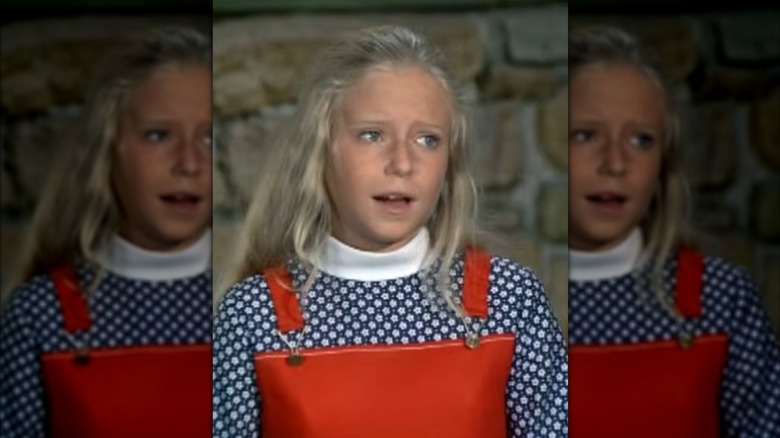
"Marcia, Marcia, Marcia" is one of the most iconic quotes from "The Brady Bunch," and younger siblings everywhere sympathized with Jan (Eve Plumb) in 1971's "Her Sister's Shadow." The episode explores Jan's frustration with constant comparison to her big sister Marcia (Maureen McCormick), and she has a battle with her conscience after she wrongly wins an honor award at school.
The episode has been widely included on power ranking websites and IMDb as one of the best episodes of "The Brady Bunch," as it currently holds a 7.9 user rating on IMDb based on 273 fan votes. "Her Sister's Shadow" was ranked by Comfort TV as one of the six most classic "Brady Bunch" episodes, noting that it was "one of the series' definitive shows, and the one that forever branded Jan as the poster girl for sibling envy."
Jan's legendary quote from the episode has also been singled out by longtime fans of the sitcom. As one comment on YouTube reads, "Little did Eve Plumb realize how iconic her 'Marsha, Marsha, Marsha,' [sic] would become." Despite becoming synonymous with the show and character, the quote was only spoken once by Jan throughout the entire series. Interestingly enough, Plumb later said it took two decades for the line to become famous after "Saturday Night Live" parodied the episode and sitcom.
Happy Days: Richie Almost Dies
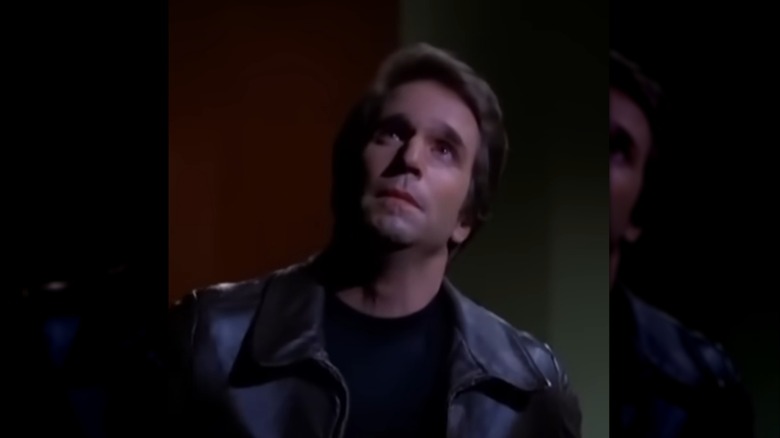
Henry Winkler became an overnight sensation when he played the lovable mechanic Fonzie on "Happy Days." In the 1975 episode "Richie Almost Dies," he showcased his dramatic side after Richie Cunningham was involved in a serious motorcycle accident. Winkler broke down in tears as his character Fonzie, and his co-star Ron Howard later reflected on the episode's impact. "I thought it was really good writing. It wasn't a hard episode for me," he told the Television Academy.
"But what I was most pleased with was that it gave Henry a really great moment, and I thought it also was good because it shifted the tone of the show a little bit." In the 50 years since the episode premiered, audiences continue to hold Fonzie's emotional hospital scene in high regard and can't help but compliment Winkler. "Henry Winkler should have earned an Emmy for this episode," one person wrote in a YouTube comment.
The episode has an 8.1 IMDb rating, with one fan appreciating how the show allowed Winkler to truly shine as Fonzie and ventured into emotional territory without it being overly sappy and cringey. The user described it as "one of the better 'sentimental' episodes of "Happy Days" and added that "it is pal Fonzie who gets to do all the emoting–praying and grieving at Richie's hospital bedside."
The Carol Burnett Show: Went With the Wind
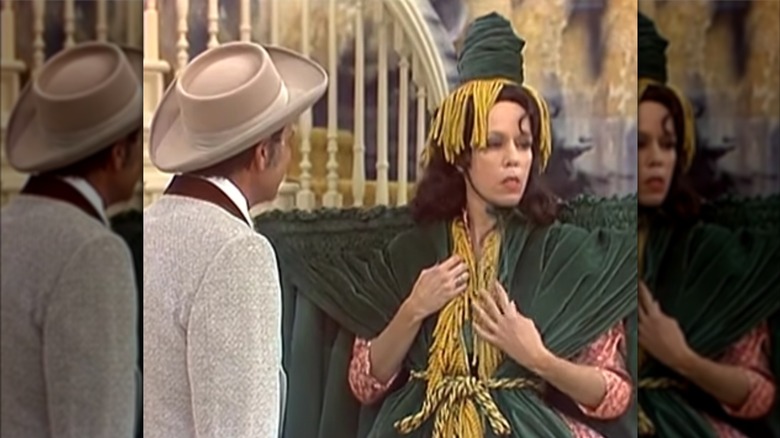
The 1976 episode of "The Carol Burnett Show" was a parody of the classic film "Gone With the Wind" that featured the comedian extraordinaire as Starlett O'Hara in a kooky curtain dress made by legendary designer Bob Mackie. In 2009, Burnett and Mackie donated the gown to the National Museum of American History, and the episode was named one of the funniest TV moments of all time by TV Guide.
Harvey Korman hilariously portrayed Captain Ratt Butler in the skit, and audiences marveled at just how much he sounded like Clark Gable. According to the Television Academy, the funny man was able to embrace the outlandish character only after donning his costume and putting on Gable's signature mustache. The episode has been cited on Facebook fan pages for the comedy series as one of its most loved sketches/episodes, many appreciating the visual gag featured and the infamous curtain rod bit involving Burnett.
"One of the best TV skits EVER!" one Facebook user wrote. One of the show's fans on YouTube also took to the comments to praise the unforgettable episode, writing, "This skit just never gets old, it just gets better."
The Waltons: The Burn Out
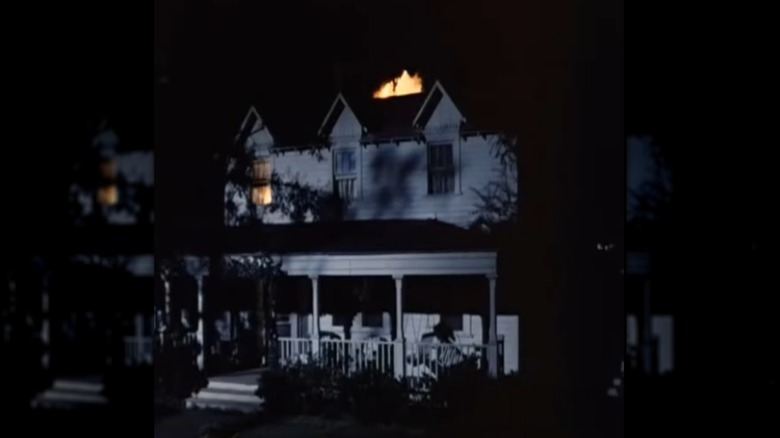
The wholesome series "The Waltons" centered on the titular family as they tried to navigate life and economic uncertainty in a rural community during the Great Depression and World War II. The 1976 episode "The Burn Out" explores the aftermath of the family's home catching on fire and John-Boy (Richard Thomas) grappling with the guilt that he may have inadvertently caused the tragedy because of his lit pipe.
Audiences mourned the damaging fire right along with the beloved characters, and they rated the episode an 8.5 out of 10 on IMDb based on 213 reviews. "This is an example of the EMMY WINNING SERIES when it was TOP NOTCH... The Story, The Performances, The Emotions... ALL ARE AT THEATRICAL MOVIE LEVELS," one enthusiastic fan wrote on IMDb. Other websites like The Federalist have listed "The Burn Out" as one of the drama's top 10 episodes, and YouTube users have also raved about the episode's impact.
"That's the best TV show housefire I've ever seen! Usually, the fire is implied through special effects. But, in this case, the production obviously burned the exterior shell of the Walton home," one person commented on YouTube, commending the episode's production value.
The Rockford Files: So Help Me God
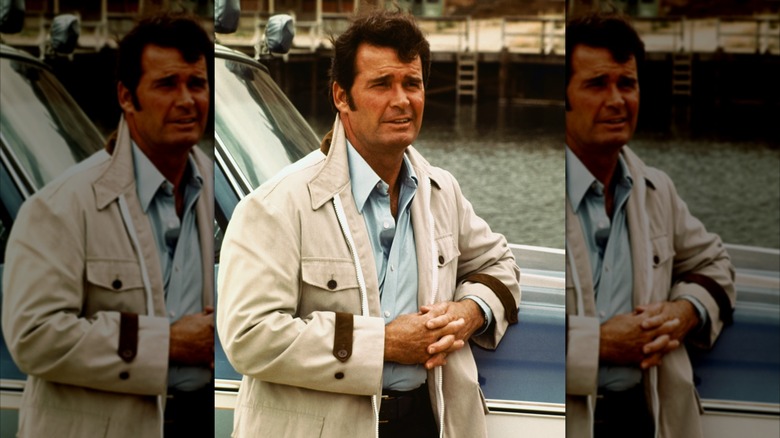
Private investigator James Rockford (James Garner) finds himself on the wrong side of the law when he is unjustly accused of bribing a public official in the 1976 "Rockford Files" episode "So Help Me God." Garner served up an impressive performance in the tense episode as his character was thrown behind bars for contempt, the installment exposing the injustices of the grand jury process.
It was named one of the best episodes of the show on Episode Hive and IMDb, as it holds an 8.9 rating from 470 reviews. One IMDb user wrote, "In my humble opinion, 'So Help Me God' is the single greatest episode of television entertainment ever filmed." Another IMDb comment said, "One of the best 'Rockford Files' episodes ever done and it still has a valuable point to make about our criminal justice system." Back in Time Today, which features pop culture commentary from TV enthusiasts and historians, among others, named "So Help Me God" one of the "20 Most Iconic '70s TV Episodes."
They lauded the episode for shaking up its usual storyline formula and commended the writer behind the powerful entry. "Writer David Chase (later creator of 'The Sopranos') crafted a tense examination of prosecutorial overreach that felt surprisingly modern."
M*A*S*H: The Interview
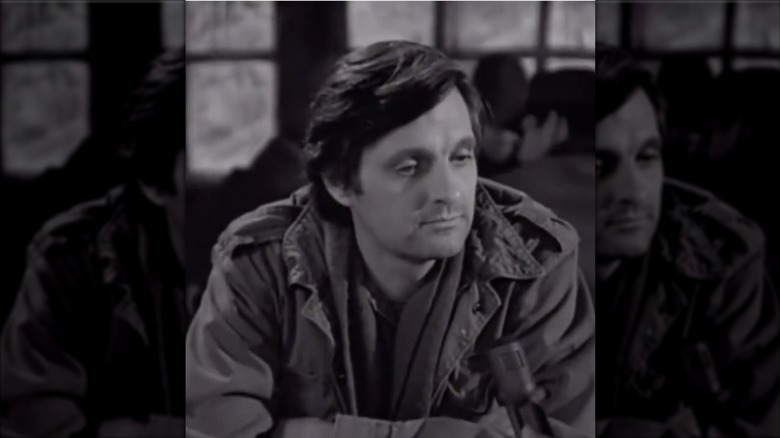
"M*A*S*H" was known for delivering heart and humor in each and every one of its 256 episodes, and in the 1976 installment "The Interview," a news correspondent sits down and interviews the 4077th to hear their honest feelings about the war. The episode was notably filmed in black and white and in a documentary style, and it marked a major tonal shift for the dramedy. It was also the end of a television era, proving to be the last episode helmed by creator Larry Gelbart.
The episode has an 8.7 IMDb rating and has been spotlighted on entertainment websites as a true standout because of its insights into how the characters truly felt about the Korean War. The somber feel of the episode and its lack of comedy truly resonated with devoted audiences and left a lasting impression. One "M*A*S*H" fan took to their blog on Mash4077TV to analyze the episode with their followers.
"It wasn't written the way regular episodes of television shows are written. It doesn't feature any sort of plot or storylines. It is a masterpiece and one of the best episodes of 'M*A*S*H.'" One comment on the article mirrored this sentiment, noting, "This was a very good episode, and way ahead of its time."
Rhoda: Rhoda's Wedding
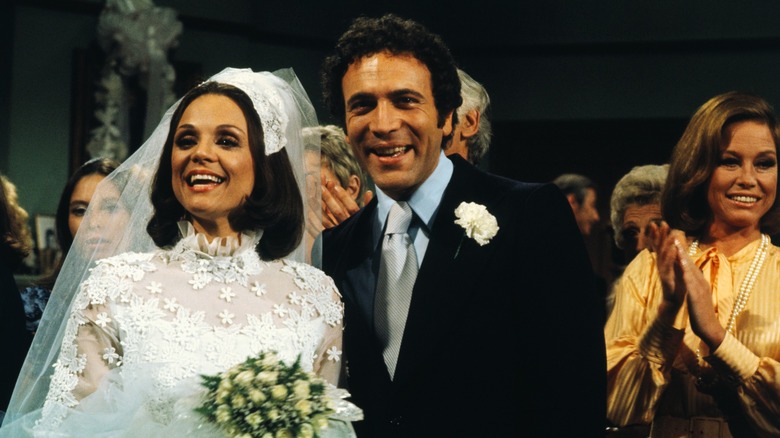
Fans all around the country rejoiced when Valerie Harper's spunky fashionista Rhoda Morgenstern walked down the aisle in the 1974 episode "Rhoda's Wedding," marrying charming divorcé Joe Gerard (David Groh). The two-part special event attracted a whopping 52 million viewers (almost 60% of American households) and featured dazzling appearances by the cast of "The Mary Tyler Moore Show," who attended the nuptials as guests.
The episode has been lauded on Substack, Reddit, and FilmBoards as one of the sitcom's best installments, and Episode Ninja named it the best after taking a poll of its fans. "Rhoda's Wedding" also has an impressive 8.8 out of 10 on IMDb, and fans of the sitcom couldn't help but marvel at Harper's gorgeous gown and performance in the episode. "The scenes of Rhoda dressed in her wedding dress running in the streets of New York and in the subway are brilliant," one YouTube user commented.
Another user pointed out how "Rhoda's Wedding" was truly a spectacle and a standout moment of the '70s zeitgeist. "It was one of the most talked about sitcom episodes to ever air at that time. How we all sat around our television sets and watched." The episode was indeed a historic small-screen wonder that became one of the highest-rated TV moments of the decade.