

Strict Rules Olympic Figure Skaters Are Forced To Follow
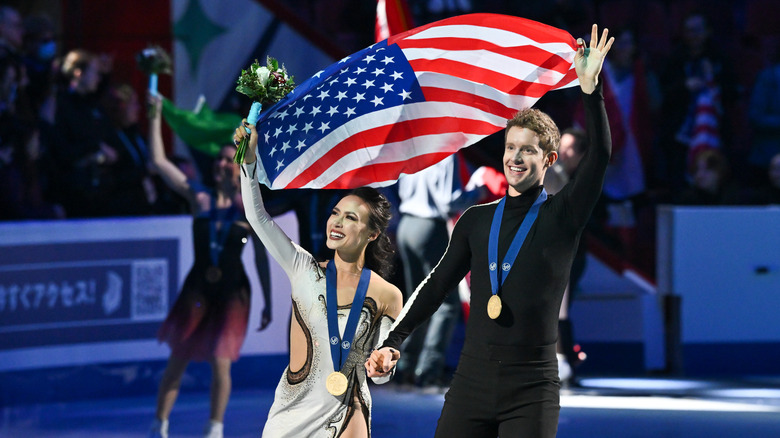
Figure skating is the crown jewel of the Winter Olympic Games. Interestingly, the sport first made its appearance during the Summer Olympics in 1908, which took place in London. Figure skating became the first winter sport to be featured in any Olympics. It's fitting that figure skating shifted to the Winter Olympics at its first event ever, held in 1924. Since then, it has become one of the most followed winter sports. It's so popular that past Olympic figure skaters have shifted into the mainstream pop culture world. Former Olympians Johnny Weir and Tara Lipinski appeared on Season 4 of the reality show "The Traitors," showing how popular skaters are, even after they aren't competing anymore.
Ice skaters who reach the Olympics are at the top of their field. The 2026 Olympic U.S. figure skating team is reportedly one of the most promising teams assembled. The team of single and pair skaters will take on the world in Italy, but just because they've made it to the top competition doesn't mean it gets easier from there. With the prestige of the Olympics also comes a set of guidelines for all competing athletes. Much like the gymnasts who follow strict rules, ice skaters must also abide by rigid guidelines both before and after joining the Olympic team.
For Olympic figure skaters, age matters
Over the years, figure skating has become a younger athlete's sport. However, the governing body that sets the rules for skating in the Olympics changed the rules recently to ensure competitors weren't too young. In 2022, the International Skating Union (ISU) decided it would raise the minimum age from 15 years old to 17 years old. The rule would take effect for the 2026 Winter Olympics and for all events after that. The ISU stated it found an increased probability of younger athletes pushing themselves too hard, resulting in eating disorders, a higher rate of burnout, and major injuries. ISU's findings also discussed how competing in elite sports at a young age exposes athletes to danger. This relates to both physical risks and psychological or social issues.
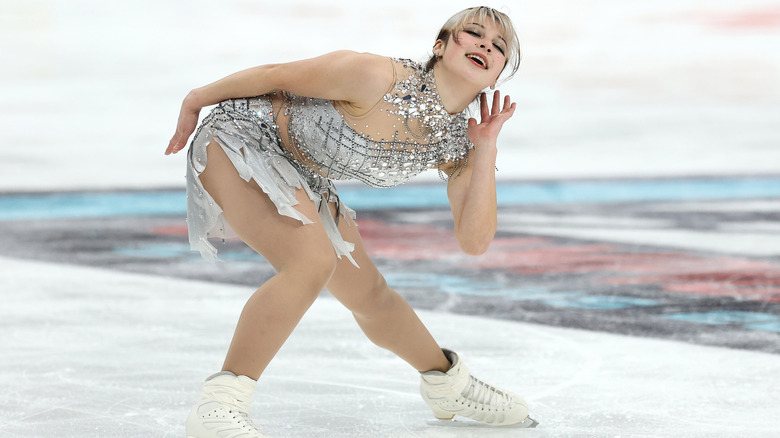
During an interview with "60 Minutes," figure skater Alysa Liu discussed how difficult her life was as a young skater, even though she was winning championships. "I skated every day when I was, like 13, 14. It was a very abnormal childhood," Liu said. In 2026, Liu is on her way to the Milan Olympics for figure skating at 20 years old after taking a two-year break from it during the COVID-19 pandemic. Between winning a championship at 14 in 2019 and returning to skating at 18 in 2024, Liu grew 7 inches, showing how much these young skaters are still growing in their teens.
Figure skaters need several accolades to be considered for the Olympic team
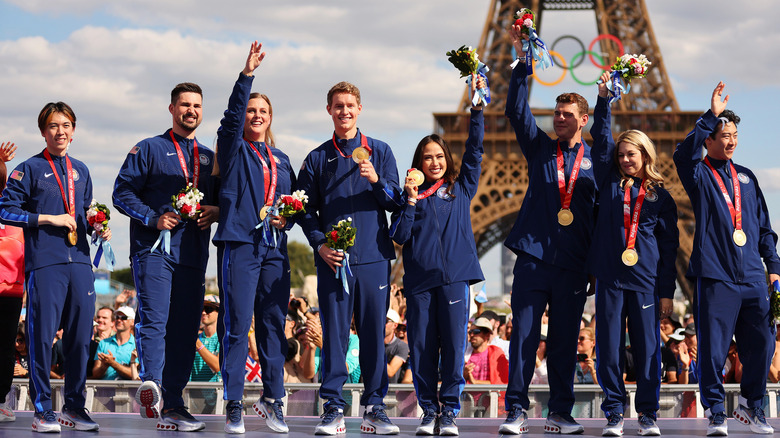
Skaters from every country must meet highly demanding qualifications to earn a place on an Olympic team. Each country's process is slightly different, but the qualifying events all fall under the requirements set by the ISU. The first step is ensuring skaters have a high enough score to become eligible for the International Selection Pool. For the United States team, figure skaters must earn a quota, or spot, with their National Olympic Committee. The quotas are determined by performances in the ISU World Figure Skating Championships and the ISU Figure Skating Olympic Qualifying Competition.
For a competing group to earn enough points to qualify for the team event, skaters must also perform at the ISU Grand Prix of Figure Skating. Because spots are limited, skaters must be at the top of their games to qualify for an Olympic place. All entries must also be filed by a specific deadline. Although the Olympics are still on the horizon, the achievement of joining the U.S. team is a victory in itself. After women's single skater Amber Glenn made the team, she said to NBC, "It doesn't feel real. I've been working toward this for so, so long."
Five different events set the requirements for routines
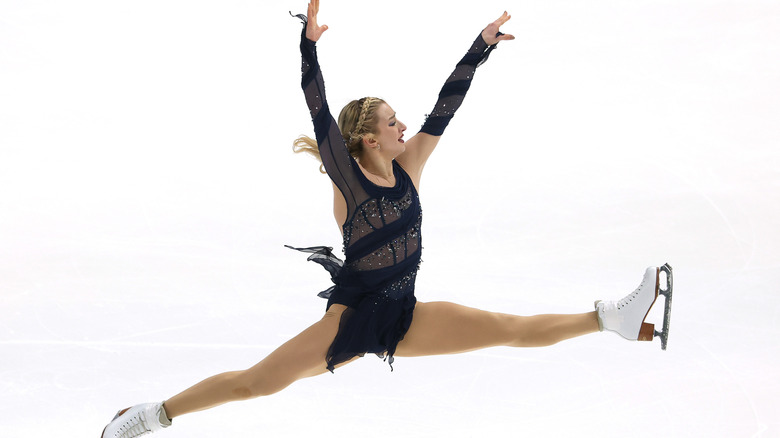
Figure skating at the Olympics isn't just one event. The sport is actually broken up into five different medal earning events. Olympic figure skating is broken up into women's singles, men's singles, pairs, ice dance, and the team event. Each event has both a short program, around two minutes and 40 seconds, and a free skate or long program that clocks in at around four minutes. The men's and women's singles are for individual skaters. Singles events focus on jumps and spins worked into a choreographed routine.
Pair skating features a male and female skater performing together. Having two skaters adds more elements, such as lifts, death spirals, spins, and highly choreographed synchronized movements. Ice dancing also features pairs, but highlights connection to the music for something more like a ballroom dance routine. Instead of lifts or twists, ice dancing is known for "twizzles," in which the skaters move in unison through sets of complicated spins.
The team event is a little more complicated than the others. After the singles, pairs, and ice dancing events are completed, the team event starts. Ten countries compete against each other by picking up to six skaters to represent them in another round of singles, pairs, and ice dancing events. Those skaters are awarded points in the short forms. If they earn enough points, the team advances to the long form. Team points are calculated for both the short and long events to determine who scored high enough to earn a medal.
The costumes must follow a strict set of rules
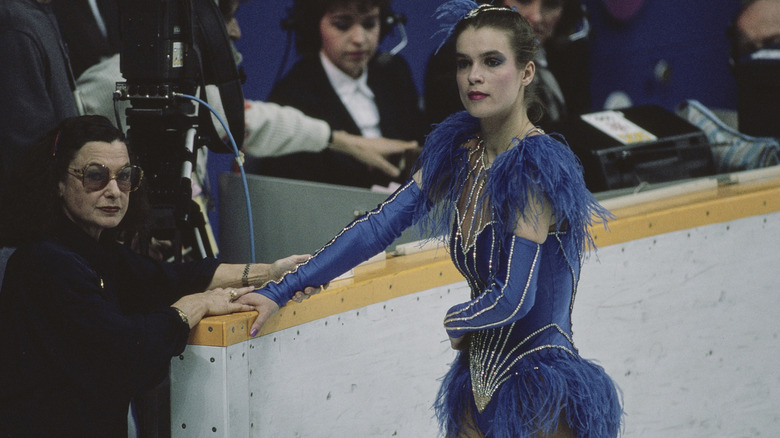
Unlike most other sports, figure skating does not require any kind of protective gear during competitions. Besides a pair of sharp skates, the only other thing skaters can bring to the ice is an eye-catching outfit. As flashy as the outfits are, they still must stick to certain guidelines set by the International Skating Union (ISU). Clothes can't be too theatrical or over the top. Men must always wear pants. Women, on the other hand, have a little more freedom between pants or a skirt and tights. Even though women are allowed to wear pants now, many female skaters opt for a skirt because that is considered the more traditional and acceptable look for figure skaters.
Although skaters are encouraged to wear outfits that complement the music they use for the routine, skaters must also keep in mind how much skin their costumes show. The ISU's bylaws state that costumes cannot present the illusion of nakedness. This rule, sometimes referred to as "The Katarina Rule," came about after a wardrobe scandal during the 1988 Winter Olympics. East German skater Katarina Witt wore a Broadway-inspired outfit that the skating world felt was a bit too revealing. The blue one-piece was adorned with feathers around the collar and hips to act as a skirt of sorts. However, a glimpse of Witt's butt cheek was a bit too much for judges, and the rule went into place to prevent any costume misunderstandings in the future.
Wardrobe malfunctions lead to a loss of points
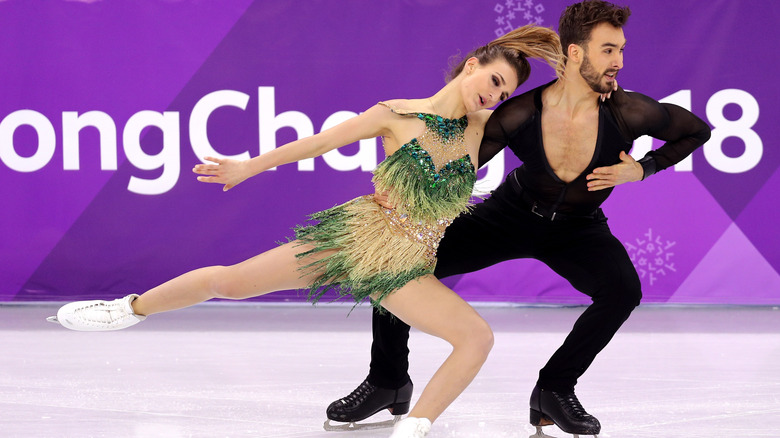
Even though a figure skater's outfit might look perfect before they hit the ice, it is just as important that it stays that way for their entire routine. Any wardrobe failures or anything touching the ice will result in points lost. All sequins and embellishments need to stay on their costumes. Skaters go to painstaking lengths to ensure their costumes stay perfectly in place, even though they are twirling and jumping through the air. Brad Griffies, a skating costume designer, told "Today" that some skaters will sew their leotards and tights together to prevent any kind of costume slip or wedgies while performing. Griffies also said that female skaters sewing their hair in place is fairly common. "They put it in a bun, then take a really thick yarn and a big needle, and thread it through a couple times, just to keep it down and together," he said.
Although figure skaters take many precautions, unfortunately, the occasional wardrobe malfunction can still occur. In the 2018 Olympics, French ice dancing duo Guillaume Cizeron and Gabriella Papadakis found out just how much a small slip could cost them. During the routine, Papadakis' top unclasped and slipped down to reveal part of her breast, creating an awkward Olympic figure skating moment. Their score was lower than anticipated and pushed them down to second place. At the time, former Olympian figure skater Meryl Davis tweeted, "For something like a costume malfunction to hinder this moment for them is utterly devastating."
Routine music must be chosen carefully
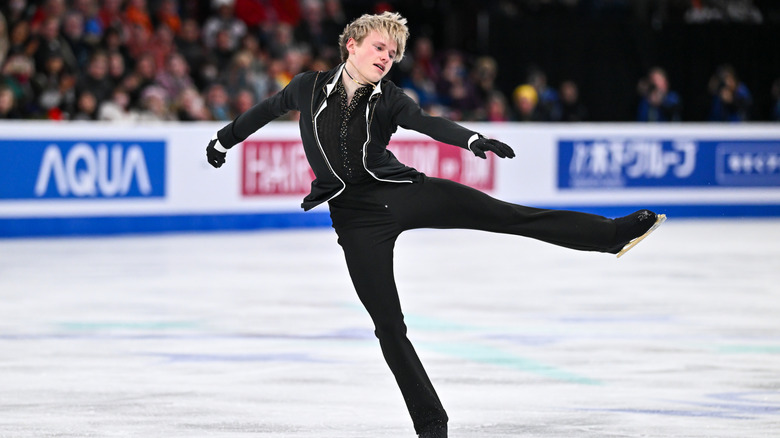
Music is an important component of any figure skating routine. Their outfits and performance must work in harmony with the music selection. Oftentimes, classical music is chosen to evoke the traditional feel of the sport. Some of the most commonly chosen songs in figure skating are by famed composer Pyotr Ilyich Tchaikovsky. His "Swan Lake" and "Nutcracker Suite" are heard during many routines, as are pieces by Beethoven and Bizet.
Part of the reason these songs have been used again and again is that the ISU had long allowed only instrumental music. However, in recent years, skaters have started to shift toward contemporary musical choices. Even with that strict rule in place, some skaters opted for instrumental versions of popular songs or newer songs that packed a punch but didn't have lyrics, such as the theme song for HBO's "Game of Thrones." During her 1998 Olympic routine, Tara Lipinski chose an instrumental track from the animated movie "Anastasia." Starting in the 2018 PyeongChang Winter Olympics, the ISU changed the rule to allow songs with words in them. Although some critics feel skating to popular songs takes away from the sport, many see it as an opportunity to add freshness to the sport. In the short time this new rule has been in effect, Olympic skaters have skated to songs by Coldplay, Elton John, and Beyoncé.
Judges use a complicated system to score each figure skater
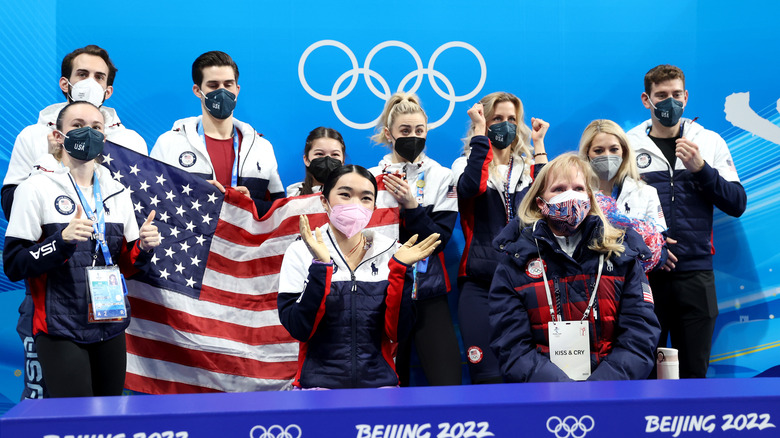
Watching Olympic figure skating at home is fun, especially when deciding on your own scores for the talented athletes. This may seem like an easy task, but Olympic judges have a lot to keep in mind as they grade each performance. U.S. Figure Skating outlines how the International Judging System (IJS) works. There is a technical panel that determines scores based on the technical elements displayed during a routine. Judges must closely watch the skaters to determine whether they are hitting or missing their technical marks. In addition to the technical score, there is a separate score for the elements of the program presented. These components are broken down into composition, presentation, and skating skills. So there is a Technical Element Score (TES) and a Program Component Score (PCS) that determine the overall score.
Scoring is based on a scale from 0, "not skated," to 6, "outstanding," and judges can give scores between those ranges in increments of 0.25. After an event, the judges add the two scores together, then average them out among themselves to present the final score. For the Olympics, there is a panel of up to nine judges, including a technical panel to ensure scoring is as fair and transparent as possible.
Drug violations lead to heavy consequences
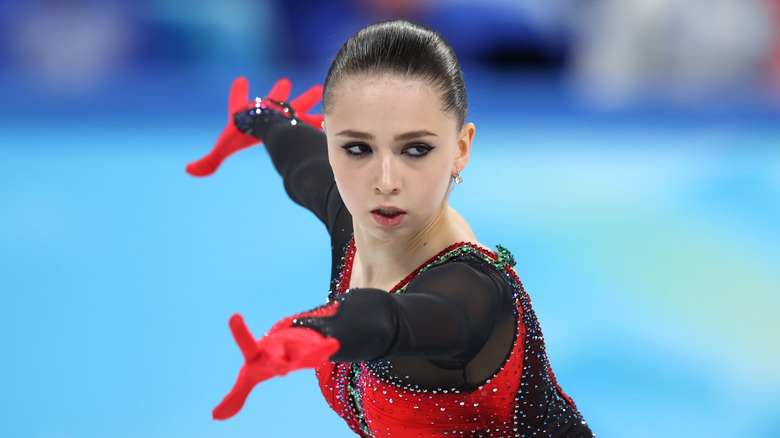
It's kind of a no-brainer that performance-enhancing drugs are strictly prohibited for Olympians, but Olympians also face their own struggles. To combat the temptation of using drugs to increase their performance, figure skaters face a strict set of anti-doping rules. Skaters convicted of using prohibited drugs are punished severely. Over the years, Russia has faced several doping scandals involving its athletes, resulting in a ban on Russian Olympians competing under the Russian flag. Instead, they can participate only as part of the Russian Olympic Committee (ROC).
After the 2022 Winter Olympics in Beijing, a Russian skater named Kamila Valieva tested positive for the performance-enhancing drug trimetazidine. Because of the positive test, her scores were called into question. After arbitration and appeals, Valieva was banned from competing in the Olympics again, and her scores were stripped from the ROC's overall score. This adjustment knocked the Russian team's scores down enough that they no longer qualified to receive the gold medals. Even with her scores removed, the ROC did score high enough to place in the top three. Other than Valieva, whose Olympic medal was taken away, the ROC received bronze medals. The American figure skating team became the highest-scoring group and was awarded gold medals for the team event.
Skaters must stay away from illegal moves
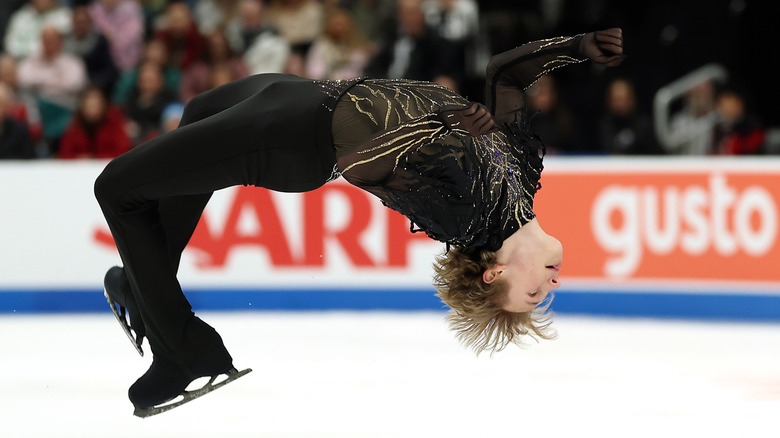
Figure skating moves are quite daring and breathtaking to watch. Yet, even some moves are still considered too dangerous to perform, and if they show up in a routine. The International Skating Union's bylaws say that for every illegal move, a point shall be deducted from the skater's score. Some skaters, even at the Olympics, have decided that they would rather do a stunning move than obey the rules. In the 1998 Olympics, French skater Surya Bonlay knew she wasn't going to earn a medal due in part to an injury. Bonlay still wanted to give a memorable performance in her last Olympics. Bonlay did a backflip and landed on one leg. Although it was an amazing feat, it was illegal at the time.
According to the newest edition of the ISU's bylaws, there are currently no illegal moves for single skaters, so Bonlay's backflip would be allowed now. Pairs, however, have a few rules to keep in mind when they are choreographing their routines. Skaters cannot lie down on the ice, but sliding on the ice as a controlled part of the event is acceptable. Skaters cannot sit on their partner's heads or shoulders, lift a partner in an upside-down split pose, or swing a lifted partner around by the skate or leg with fully extended arms, among other maneuvers. Jumps and throws with more than one revolution are also not allowed.
Figure skaters can be banned from the Olympics for harassment or abuse
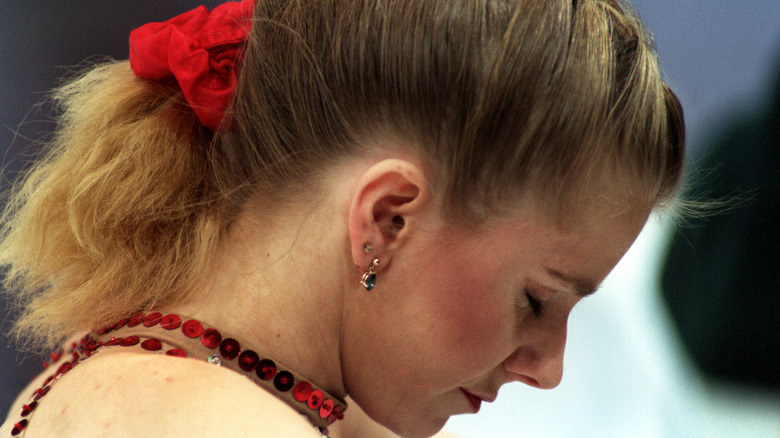
Harassment and abuse in Olympic sports or committed by Olympians are taken very seriously. The rules put in place by the International Skating Union are very clear in outlining what behaviors are prohibited. According to the ISU, harassment and abuse include sexual harassment, sexual abuse, neglect or negligence, and physical or psychological abuse. The organization even covers online abuse, detailing how harmful it is and what forms it takes, such as outing, flaming, and cyberstalking. If it finds a figure skater to be an abuser, the penalties are harsh and can end their career.
One infamous example of this was what happened to Tonya Harding after her Olympics drama with fellow skater Nancy Kerrigan. After Harding was found to have been involved in the injury of her rival, Kerrigan, in 1994, Harding was banned from competing as a professional skater. In 2024, Nikolaj Sørensen, a Canadian ice dancer, was banned from the Olympics and other worldwide skating events for at least six years after he was accused of sexual assault. The ISU told CNN, "The ISU firmly believes that all athletes have the right to participate and develop in sport within a safe, inclusive, and respectful environment — free from any form of discrimination, harassment, abuse, violence, neglect, or exploitation."
Pair skaters must be in sync with their partners
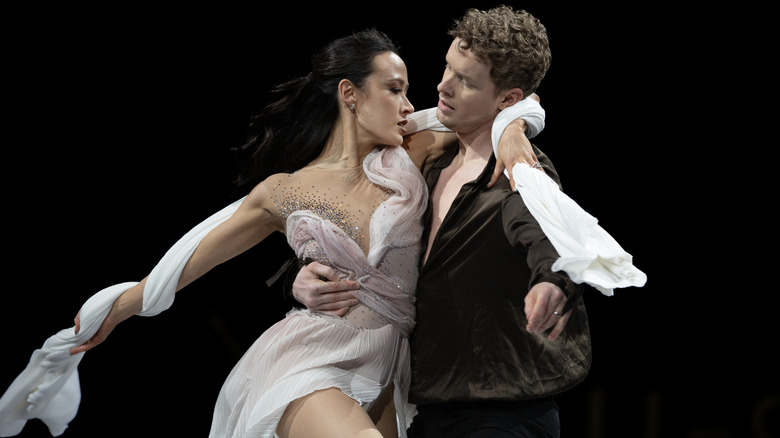
Anyone who watches pair skaters perform knows how important the partners' connection is to their routine. In pair skating, the partners must be able to handle lifts seamlessly. With ice dancing, the duo have to move in perfect sync with the music and with each other. Moving together is so important that the International Skating Union names "unison" along with other criteria such as balance and flow. Grading for moving in unison is defined by how well the skaters perform edges, steps, turns, and body movements while keeping their style similar to their partner's.
Because connection and chemistry are so important in pair skating, how close some skating pairs are personally shouldn't be too surprising. During the 2022 Winter Olympics, everyone questioned whether or not ice dancing duo Madison Chock and Evan Bates were dating. After winning a gold medal for their skating, the pair tied the knot in 2024 and hoped to earn another Olympic gold medal in 2026. Chock told Us Weekly that when Bates admitted his feelings for her, she realized how deep their connection really was. "I knew we always had an incredible chemistry," Chock said. "We had so much fun together. We were great friends. Training was always fun because we always just got along. We had the same work ethic. But when he told me how he felt, I was so surprised because I didn't see it coming at all."