
Maggie Gyllenhaal's Full Stunning Transformation
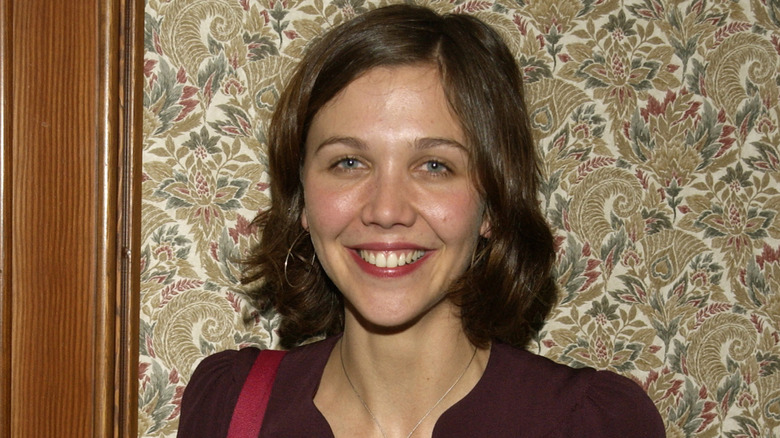
Actor, director, and writer Maggie Gyllenhaal has proven time and time again that she's a creative force to be reckoned with. After stepping onto the scene and establishing herself as an indie film darling, she went on to become a major movie star and filmmaker. And much like her career, her personal life has transformed time and time again. All the while, she has not only managed to stay true to herself as an artist, but has embraced aging gracefully — which is not necessarily the norm in her industry. As she said on a 2024 episode of "The Long Game with Tracy Anderson," "The older I get, the gentler I am on myself."
Gyllenhaal's secret sauce is her continued craving for authentic storytelling, and finding roles that'll allow her to grow into her own. "I get magnetically pulled towards a project because there's something in it that offers me the opportunity to explore the edge of my understanding about myself," she told Vulture in 2018. Now a filmmaker in her own right, here are the career highlights and the overall transformation that got her where she is today.
Maggie Gyllenhaal was raised by filmmakers
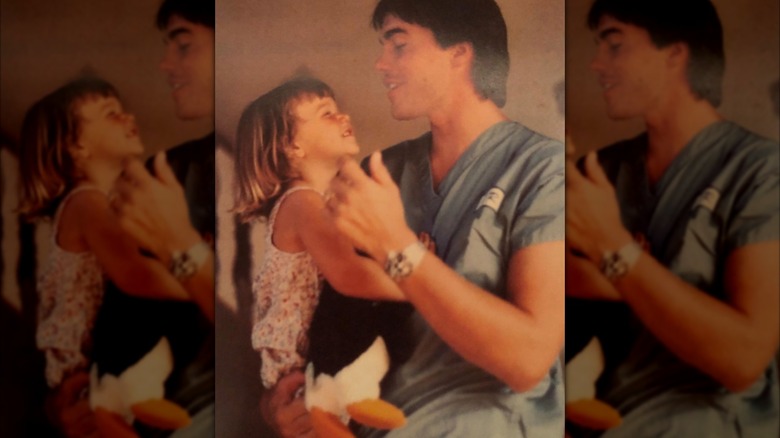
The saying "it runs in the family" is a fitting description of the Gyllenhaals. Maggie Gyllenhaal's parents were both in the industry before her first foray into the silver screen. Her mother, Naomi Foner Gyllenhaal, got her start as a screenwriter, and her dad, Stephen Gyllenhaal, has directed episodes of TV and movies. They got hitched in 1977, and Maggie was born that same year. They were married for over 30 years before calling it quits in 2009. Maggie's parents have both built successful careers and have received awards buzz: Naomi was up for the Oscar for best original screenplay for her 1988 film "Running on Empty," and Stephen won an Emmy for directing the limited series "A Killing in a Small Town."
Stephen and Naomi's kids ran in A-list circles from an early age. For starters, Maggie and her brother, fellow actor Jake Gyllenhaal, share a very famous godmother: Jamie Lee Curtis. Maggie and Jake also inherited their parents' love of filmmaking. While promoting her directorial debut, 2013's "Very Good Girls," Naomi spoke to ABC News about how her relationship with Maggie and Jake evolved throughout the years. "I can't say that there's anything that gives me more pleasure than to get to the point where my children are my friends. I adore my kids. They are spectacular," she said.
She made her onscreen debut in her father's film Waterland
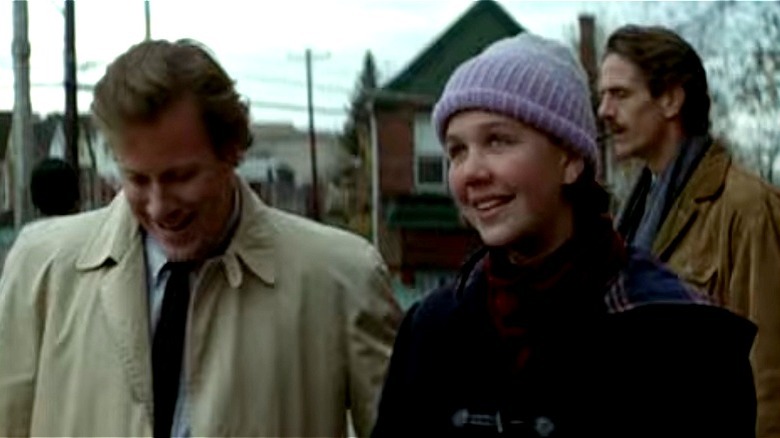
This probably comes as little surprise, but Maggie Gyllenhaal's first onscreen contributions were in her parents' films. Her early acting credits include "Waterland" and "A Dangerous Woman," both directed by her father with the latter being co-written by her mother. She might've only had a couple of lines in the aforementioned titles, but the actor has nothing but fond memories of those on-set experiences. In a 2019 chat with Vanity Fair, Gyllenhaal said that when it came time to film her scene for 1992's "Waterland," she was excited to get a chance to spend more time with her father. And no, it didn't hurt that Ethan Hawke was in the cast.
"There was nobody cooler and sexier to me at the time, and he hung out with me all day!" she told VF. She went on to star in two other projects made by her father in 1998, "Homegrown" and "The Patron Saint of Liars." Still, it was only when she shared the screen with real-life brother Jake Gyllenhaal in "Donnie Darko" that Maggie's acting chops really began to generate buzz.
Her career took off when she played opposite her brother in Donnie Darko
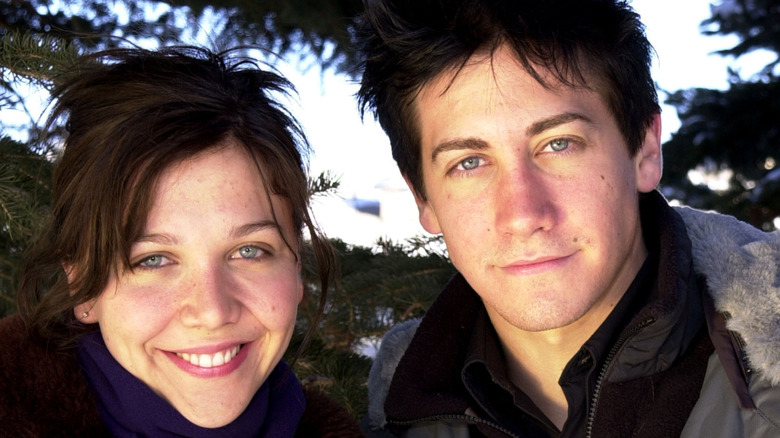
After Jake Gyllenhaal was tapped to play the titular character in the 2004 cult classic "Donnie Darko," director Richard Kelly and casting director Joseph Middleton thought Maggie Gyllenhaal would be perfect for the sister role. However, she wasn't on board initially. "I went and met with Maggie, and immediately, she was like, 'Richard, you're only offering this to me because I'm Jake's big sister,'" Kelly recalled on Vox's "I Think You're Interesting" podcast. "So she was already trying to talk me out of casting her, in a very selfless way."
Kelly was also drawn to how the sibling connection between Maggie and Jake reflected in their characters' dynamic, especially during the dinner scene in which an argument erupts after Maggie's character reveals that her brother hasn't been taking his medication. "I just knew that it was not a substantial role on the page, and the character is sort of tangentially involved in the plot in ways that you discover a little deeper if you look closer at the film," he said. "But her impact and her presence was so important in anchoring the sibling dynamic with Jake, which was significant."
As Jake's star continued to rise in the '00s, Maggie was all the more determined to pave her own path. "In the past, I've had to be separate from my family, from my brother. Like, cool, I've got my own thing going," she told The New York Times in 2026. Unlike some celebrity siblings who can't stand each other, Maggie and Jake are a different story. The two would only collaborate again more than 20 years later on "The Bride!" which was Maggie's second directorial feature.
Her breakout performance in Secretary proved she was a star in the making
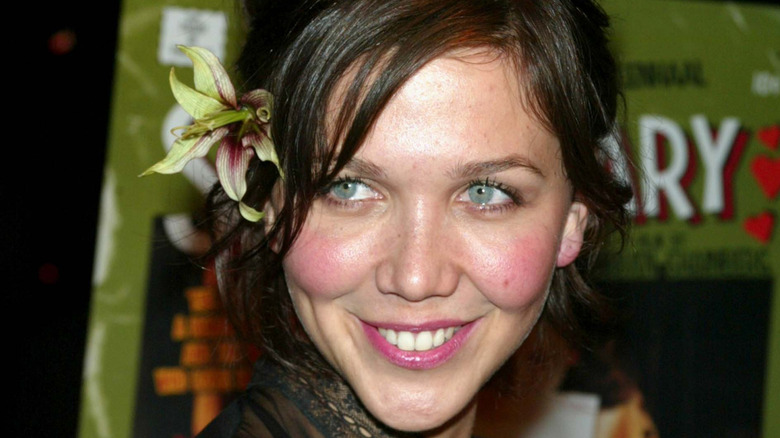
If "Donnie Darko" got Maggie Gyllenhaal noticed, then "Secretary" let her star power fully shine. The psychosexual dark comedy was the first time that the actress read a script and knew that there was something special about it that could not be overlooked. During her career retrospective with SAG-AFTRA, Gyllenhaal shared that several other actors were approached to play Lee Holloway before she got the part. Seeing her bring the character to life, only goes to show how the role was meant for her.
With a transgressive subject matter, Gyllenhaal told the BBC that if "Secretary" were in the wrong hands, it "could easily be an anti-feminist reactionary movie." But the trust she had in director Steven Shainberg allowed her to be protective over Lee's submissive portrayal. When discussing the film's controversial spanking sequence with Vanity Fair, Gyllenhaal shared that she would place her finger on top of James Spader's hand as a small-yet-significant gesture ensuring that Lee was consenting to the power exchange in their relationship. Much like "Donnie Darko," "Secretary" garnered a cult following, with it often being referenced as a "kinky feminine fantasy" in the post-MeToo era.
Maggie Gyllenhaal started a family with Peter Sarsgaard
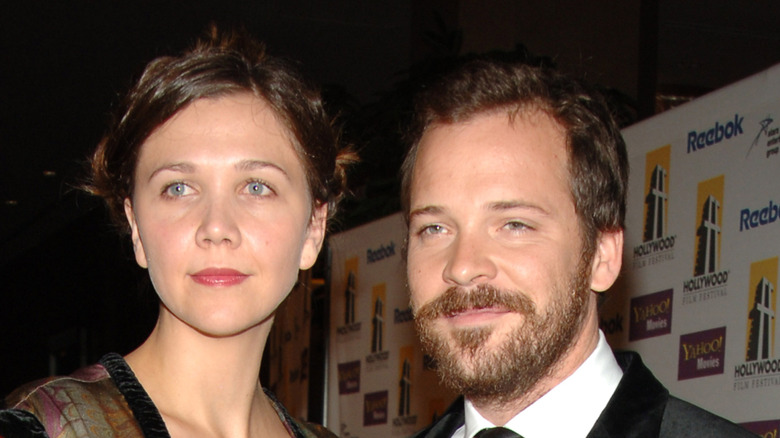
While her career was taking off, Maggie Gyllenhaal began a quiet romance with actor Peter Sarsgaard, who later went on to be her gorgeous celebrity husband. The couple's first interaction was at a dinner in 2001, sharing the screen shortly after in "In God's Hands." During The Hollywood Reporter's 2024 actors roundtable, Sarsgaard shared that the unreleased title marked the first and only time he and Gyllenhaal acted opposite each other in a feature film. The project, in which they supposedly shared a steamy love scene, was scrapped due to it being entirely shot out of focus.
In spite of that, the duo ignited their long-term relationship in 2002, remaining mostly outside the public eye with occasional red carpet appearances. The pair were reportedly engaged in 2006, with Gyllenhaal already pregnant with their first child, Ramona Sarsgaard. On May 2, 2009, they tied the knot in an intimate ceremony in Brindisi, Italy, where only 40 people were in attendance including Jake Gyllenhaal's then girlfriend, Reese Witherspoon. In 2012, their second daughter, Gloria Sarsgaard, was born.
In the 2000s, Maggie Gyllenhaal generated award buzz and joined The Dark Knight
After "Secretary," Maggie Gyllenhaal was booked and busy, starring opposite Julia Roberts in "Mona Lisa's Smile" and Will Ferrell in "Stranger Than Fiction." She received her second Golden Globe nomination ("Secretary" granted her first nom) for her layered depiction of a recovering addict reconnecting with her estranged daughter in "Sherrybaby." The actor was commended for her research into playing Sherry, having visited halfway houses and speaking with women who were incarcerated for drug possession and robbery.
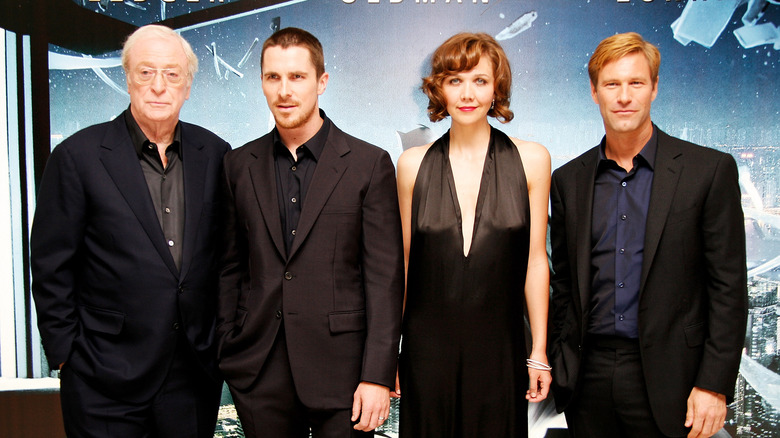
Her career in the mid-2000s reached new heights with her being offered to replace Katie Holmes as Rachel Dawes in Christopher Nolan's "The Dark Knight." Though she was apprehensive about diving into a blockbuster production on this level — for starters, she had only recently given birth to her first child — Gyllenhaal told Interview that she was familiar with Nolan's directing style and was excited about the prospect of collaborating with him. "Every place where I thought, Okay, I need to make sure Rachel is not just the damsel in distress, I'm going to push it a bit, he would push me even further," she said.
She earned her first Oscar nod for her performance in Crazy Heart
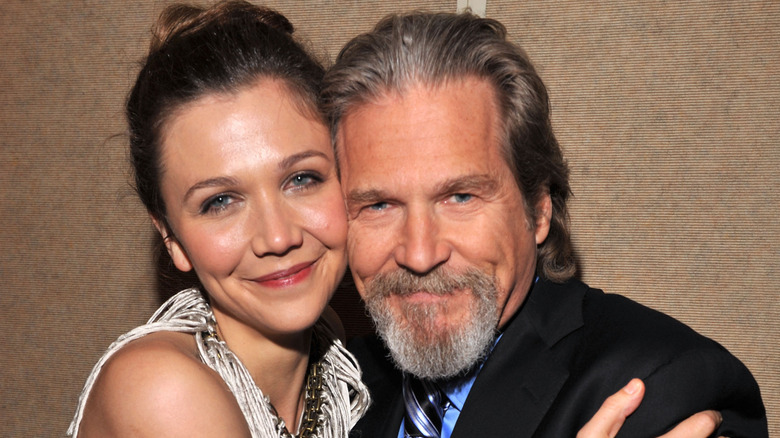
With two Golden Globe nominations in the bag and a blockbuster hit in her indie filmography, Maggie Gyllenhaal wasn't about to slow down. In 2010, she received her first Oscar nod for her supporting role in Scott Cooper's "Crazy Heart." Gyllenhaal told IndieWire that the recognition caught her off guard given how her name hadn't really been in the conversation during award season. "I wasn't nominated for anything. Not anything at all," she said. "So of course I was surprised when I got the Oscar nomination. I'd — in a way — already kind of let go of it."
In "Crazy Heart," Gyllenhaal played a journalist and single mother who falls for a washed-up country music star she's profiling. Though this wasn't her first acting role following the birth of her eldest daughter, it still felt like a milestone for her personally and professionally. Raising her child became an all-consuming endeavor, and Gyllenhaal told HuffPost that "Crazy Heart" arrived right when she needed it.
"I had so much built up and kind of welling in me that needed to be expressed after having become a mom. And it's in the movie," she said. Jennie also represented the actor's shift to playing more introspective and vulnerable characters. Her onscreen chemistry with the endlessly talented Jeff Bridges was also undeniable. "I have never been met by as much openness back at me as I was with him," she told Rolling Stone. "It was just complete availability of his heart. And in a way we were playing people with big open hearts. So we kind of smashed together in that way which is really cool."
Maggie Gyllenhaal's bold hairstyles made waves in the 2010s
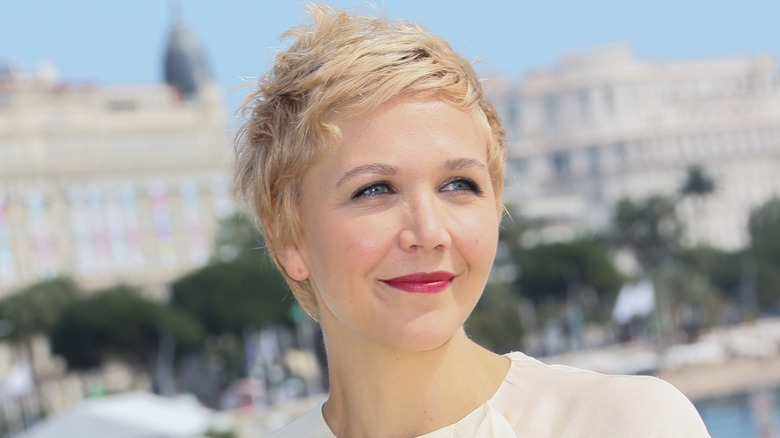
When it comes to Maggie Gyllenhaal's style evolution, it's hard not to zero in on her hair transformation. From embracing a shoulder-length do to adopting a pixie cut, the actor proved that there is no reason to fear a dramatic trim. In 2013, Gyllenhaal debuted a super short hair, and shared with Allure that what prompted her to embrace the new look came from wanting to style it differently than the bowl cut she had in "Frank," a film where her character was part of an indie band. With help from Serge Normant, Gyllenhaal got the quick fix she was looking for. "When I was about 25, I had really short hair and I loved it," she said. "I thought I would never do it again, but it feels great to have short hair now."
In 2014, she stunned us with an even bolder look, dying her hair platinum blond. She told The Independent that there was a reason she decided to let go of being brunette (even if momentarily), and it had nothing to do with her work. "I dyed my hair blonde because I wanted to feel better about myself," she said. Although she did admit to being pleased with the end result, it didn't necessarily elevate her self-esteem as she'd hoped. Shortly after rocking the edgy 'do at Cannes, she went back to her natural hair color growing it out and reducing it to a bob on occasion.
The film darling pivoted to TV with The Honourable Woman and The Deuce
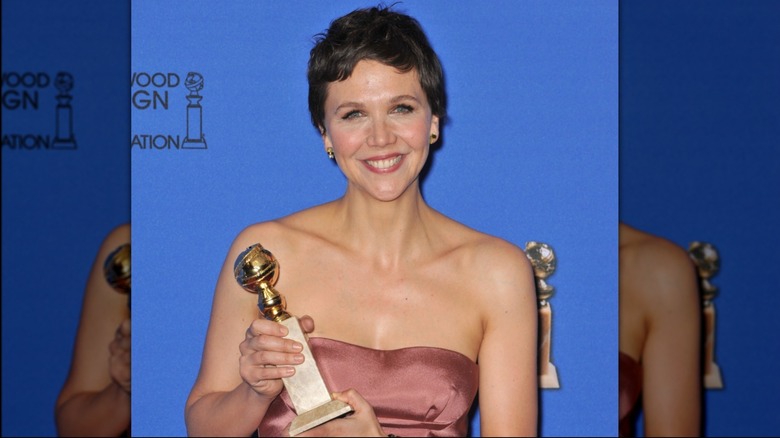
Right around the time that she went blond, Maggie Gyllenhaal decided to veer into the world of TV. Her first role in a series was in the BBC's "The Honourable Woman." As she dished to IndieWire, this project wasn't exactly what Gyllenhaal had in mind, especially while her daughters are growing up. She hoped to land something that let her stay near her home in New York. Instead, she was offered the chance to play Nessa Stein in a production filmed across the ocean. "This is a show in London and Morocco, and it was very disruptive," she said. "Not the kind of steady job I was hoping would fall in my lap. It was something very different." Her performance in the political thriller was acclaimed, and led her to win her first Golden Globe.
After "The Honourable Woman," she boarded an HBO drama called "The Deuce." The series ran for three seasons, exploring the porn industry in New York during the '70s. Gyllenhaal told As If that she was drawn to the material because it intimidated her. It was also filmed during a period of deep political resonance, with Donald Trump's ascension to power. Portraying Candy Merell, a sex worker who eventually becomes a porn director, also prompted the actor to see herself behind the monitor. Having been a producer on "The Deuce" and later on in "The Kindergarten Teacher" allowed her to have more creative input into the projects she was a part of, and became a stepping stone for her transition to directing.
Maggie Gyllenhaal went from leading lady to acclaimed director with The Lost Daughter
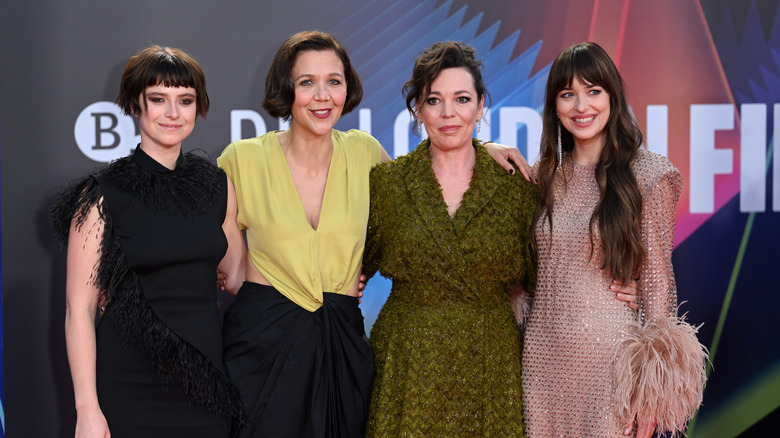
After reading "The Lost Daughter," Maggie Gyllenhaal knew that this tale of motherhood and unfulfilled desire deserved to be experienced in the theatre. After corresponding with Elena Ferrante, the nom de plume of the book's anonymous author, she was granted the rights to adapt the book under one condition. While speaking with the Los Angeles Times, Gyllenhaal revealed that Ferrante said, "Yes, you can have the rights, but the contract that we're making is void unless you direct it." And so, Gyllenhaal took the reins.
With "The Lost Daughter," Gyllenhaal proved her talent behind the camera. The film had its world premiere at the 2021 Venice International Film Festival, where Gyllenhaal was awarded for Best Screenplay. She then earned her second Oscar nomination for the film, all the while Olivia Colman and Jessie Buckley were both in the running for best actress and best supporting actress, respectively. Gyllenhaal told People that everything changed after "The Lost Daughter," showing that there was room for female directors to see their work recognized on a global scale. "I think a conscious effort is being made in our industry to make more space for us. As a united group, we are very powerful," she said.
In The Bride! she joined forces with Jessie Buckley, Christian Bale, and Jake Gyllenhaal
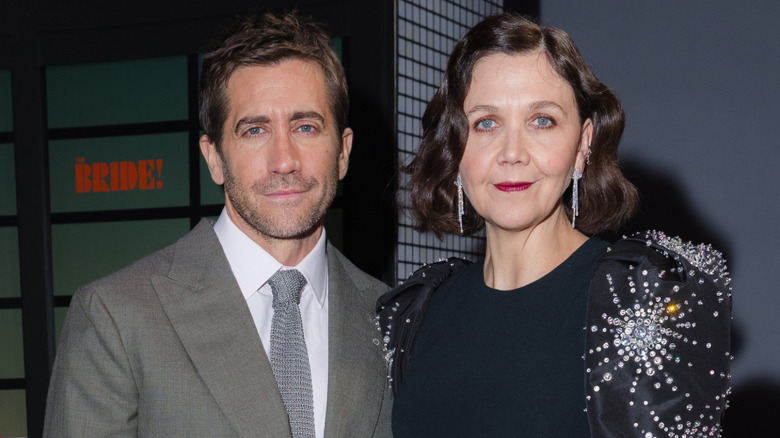
After the success of her feature directorial debut, Maggie Gyllenhaal was excited to make a follow-up. While at a party, she became intrigued by a man's tattoo paying homage to "The Bride of Frankenstein." Those who have seen the 1935 classic know that the Bride doesn't have any dialogue, but Maggie wanted to turn the story on its head. Running with the classic movie as well as Mary Shelley's original source material, Maggie came up with the idea for her second feature film. "I'm not speaking for Mary Shelley, but there must have been some other, naughtier, wilder, more dangerous things that Mary Shelley wanted to say that weren't said in 'Frankenstein.' What else might she have wanted to express?" she said to the Los Angeles Times.
If there is one thing that she learned while making "The Lost Daughter" is that surrounding yourself with people you know and trust makes for the best on-set experience. "The Bride!" cast includes "The Lost Daughter" actor Jessie Buckley, husband Peter Sarsgaard, and former co-stars Christian Bale and Jake Gyllenhaal. By then, it had been over 20 years since she and Bale starred in "The Dark Knight" and 25 years since her and her brother shared the screen in "Donnie Darko". Although Jake joined much later, the director said she envisioned him as 1930s Hollywood matinee idol Ronnie Reed. "The Bride!" might've been met with mixed reviews and bombed at the box office, but it continued to show how passionate Maggie is about championing women's stories.
Maggie Gyllenhaal wants to stay behind the camera some more
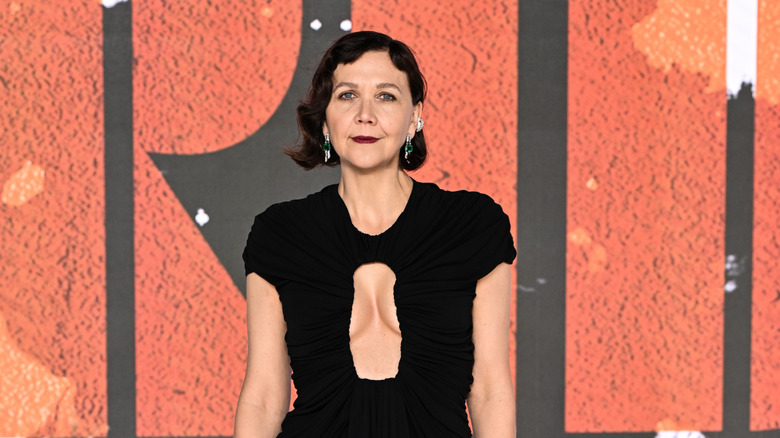
It seems this acclaimed actor has gotten quite comfortable in the director's chair. Although Maggie Gyllenhaal has gotten real about the challenges of being a female director, she is more than happy to continue to break barriers. Gyllenhaal confirmed this sentiment in a 2026 interview with Hollywood Elite. "I've been completely bitten by the bug of this new profession. It feels like a much better fit for me." Prior to "The Lost Daughter," she was set to star in Sony Classics' period drama "Farnsworth House," later being replaced by Elizabeth Debicki. There have been no updates about the production status of that film since 2020.
Frankly, it sounds like Gyllenhaal really isn't raring to get back to acting anytime soon. "I really prefer directing. This is a better job for me," she told the Los Angeles Times in 2026. "I felt as an actress, to be honest, like I always would hit up against a wall of how much I was able to participate or express. ... And then when I moved into writing and directing, I didn't have to play that game anymore." As of this writing, no future projects have been officially announced.