
14 Things Only True Cheers Fans Know About The Hit '80s Sitcom
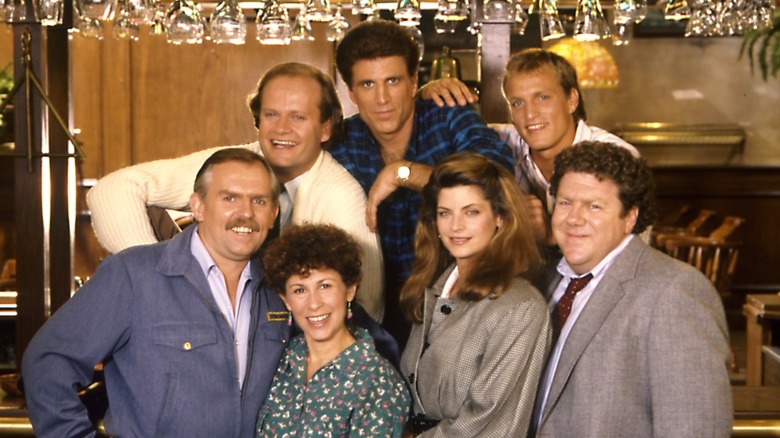
The fan-favorite feel-good sitcom "Cheers" invited audiences everywhere to escape life's endless worries and unwind with a cold drink at the titular Boston bar, "Where everybody knows your name." The celebrated series famously centered on the many misadventures of proprietor Sam Malone and his colorful co-workers, friends, and bar patrons, and it went on to dominate the small screen during its 11-season run from 1982 to 1993.
"Cheers" boasted an impressive cast of Hollywood greats led by Ted Danson, Shelley Long, Woody Harrelson, and Kirstie Alley. It earned 28 Primetime Emmy Awards during its TV tenure. Fans couldn't get enough of the passionate, will-they-won't-they romance of Sam and Diane, and they quickly fell in love with the lovable duo Norm and Cliff and fiery waitress Carla.
In the decades since its conclusion, the beloved classic has remained a must-see for viewers both old and young, the sitcom amassing a reputation as one of the greatest TV shows of all time. The series has a devoted following, and fans still love discovering exciting facts about the '80s hit.
'Cheers' was almost canceled during its first season
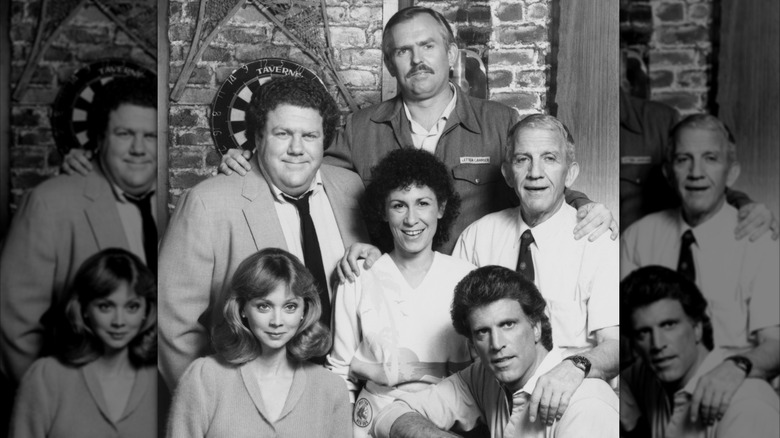
Despite now being regarded as one of the most celebrated TV shows of all time, "Cheers" was almost canceled during its debut season. Though the show received praise for its clever writing and talented cast, it failed to make a splash in the ratings department and ranked 77th out of 100 TV shows during its premiere week on September 30, 1982.
However, NBC's entertainment president Brandon Tartikoff was a massive fan of the sitcom and went to bat for the series, giving it a quick renewal and staying in its corner during its rocky first few seasons. Tartikoff was known for fighting for struggling new shows, having also done so for TV staples like "Seinfeld," "Family Ties," and "The Cosby Show."
"Critics loved us. Everyone around us — Paramount, the writers, everybody was so positive. 'Don't pay attention, just keep doing it,' kind of feedback, which was lovely," series star Ted Danson said on the "Dinner's On Me with Jesse Tyler Ferguson" podcast. "But we were dead last one week in the ratings. We were like, Jimmy [Burrows] likes to say we were 75th outta 70. There were only 70 shows."
Nicholas Colasanto wrote his lines all over the set amid his health struggles
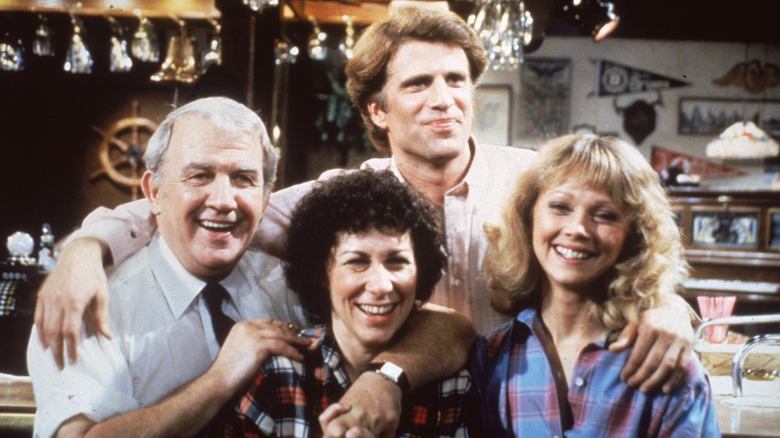
For the sitcom's first three seasons, Nicholas Colasanto portrayed the beloved Ernie "Coach" Pantusso, Cheers' friendly bartender who always lent a listening ear. Colasanto had suffered from heart disease following a battle with alcoholism and was considering retiring when he was offered the iconic role of Coach; the character has now become synonymous with the actor.
Colasanto's health began to decline rapidly during the third season, and his castmates noticed he was losing weight, though he kept his illness private. Colasanto even had to write his lines and cues on props and all around the set to combat his deteriorating health; he sadly passed away on February 12, 1985, at 61 from a heart attack.
"After we found out, we got the entire cast together and made the announcement. Everyone was heartbroken," the show's executive producer Les Charles said via the Los Angeles Times after Colasanto's tragic death. "We'll have to do something. The one thing we know for sure is we won't try to have another 'Coach' or anything like that character. He's irreplaceable."
Norm and Cliff weren't initially supposed to be regular characters
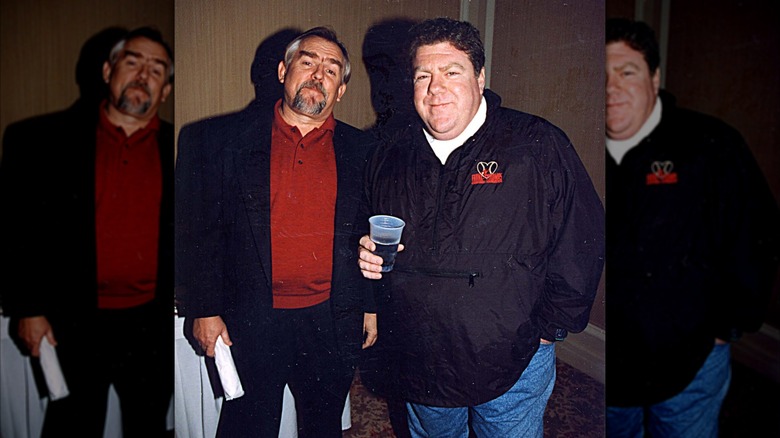
Though they are now regarded as one of the small screen's most memorable duos, TV pals Norm Peterson and Cliff Clavin weren't intended to be series regulars in "Cheers." George Wendt and John Ratzenberger were supposed to be in only one episode, and the character of Norm hadn't even been created yet when Wendt came to audition.
"I was having a hard time believing I was right for the role of 'the guy who looked like he wanted a beer.' So I went in, and they said, 'It's too small a role. Why don't you read this other one?' And it was a guy who never left the bar," Wendt said to GQ. Similarly, Ratzenberger was brought in to audition for the minor role of George in the pilot, who ultimately evolved into Wendt's Norm.
Ratzenberger had actually pitched the idea of a bar having a resident know-it-all, with the actors helping create their unforgettable characters. "I can remember sitting there and saying to George Wendt, 'Do you realize that we get paid to sit at a bar and crack jokes? That's our job.' And we just sort of laughed at, well, the dreamlike quality of it," Ratzenberger told The Hollywood Reporter.
Hollywood legend Carl Reiner helped Kirstie Alley land the role of Rebecca
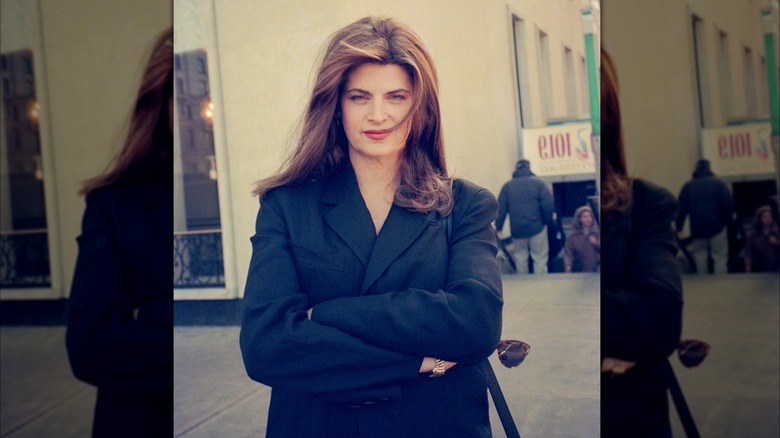
Famed Hollywood legend Carl Reiner helped play a role in Kirstie Alley being cast as Rebecca Howe for the sixth season in 1987. While casting director Jeff Greenberg pushed for Alley to land the gig, it was Reiner's recommendation that ultimately sealed the actor's fate and helped her join the hit sitcom.
Producers had worried that Alley didn't have the comedic chops to play the endearingly neurotic character, as she had largely been known for her dramatic work on screen. Reiner had worked with Alley in the comedy "Summer School" and vouched for her, assuring producers that she would be perfect for the role. Alley's co-stars even gave the rising star a wild gift when she signed onto the series: a shotgun.
George Wendt and John Ratzenberger were the masterminds behind the hilarious welcome present for Alley, who went on to become a series staple. Being the replacement for Shelley Long's Diane, Alley knew she had big shoes to fill, so she playfully dressed up like her predecessor on her first day of filming. "I wanted to break the ice and get off to a fresh start," she said to People.
John Ratzenberger improvised a lot of Cliff's fun facts
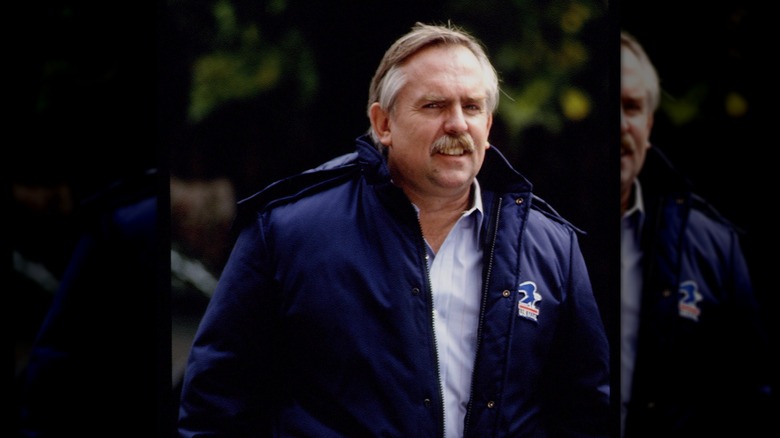
Cliff was known for his endless supply of frivolous facts, the mail carrier trying to regale his fellow bar patrons with his random knowledge and unapologetic, know-it-all attitude. John Ratzenberger used his improvisational skills not only to help create his famous character but also to craft his memorable tidbits, revealing how producers eventually trusted his judgment to come up with the commentary on his own.
"He was based mostly on a cop I knew in my hometown. He was a nice guy but a know-it-all. All people who wear uniforms and have keys hanging from their belts tend to be that way," Ratzenberger told The Day in 1985. "So I was hired to play Cliff. I was signed for seven shows the first season but ended up doing them all. That first year was my tryout period."
For his performance as the Boston braggart, Ratzenberger was nominated for two Primetime Emmy Awards, the sitcom helping pave the way for his enduring career. The funny man became a go-to voice actor in Hollywood, appearing in hit animated franchises like "Toy Story," "Cars," and "Inside Out" throughout his many years in the industry.
Rhea Perlman's father appeared in more episodes than Diane and Lilith
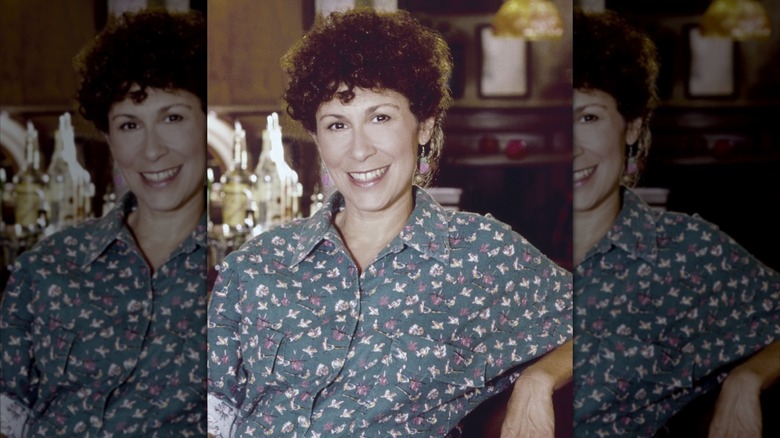
Fans of "Cheers" couldn't get enough of Rhea Perlman's feisty waitress Carla Tortelli, the wise-cracking character who kept audiences and her friends on their toes. Some may not realize that Rhea also shared a screen with her father, Philip Perlman, who appeared as the aptly named bar patron Phil throughout the sitcom.
Philip had roles in films like "Throw Momma from the Train" and "Out of Sight," and he was an extra in a whopping 142 episodes of the sitcom while being prominently featured in 33. Though he was largely a background actor, Philip still appeared in more episodes than fellow favorite characters like Shelley Long's Diane (122 episodes) and Bebe Neuwirth's Lilith (81 episodes).
Philip would visit his daughter on set, and his easy-going demeanor helped him land the role of the Cheers regular in 1986. According to Rhea, her father "went up to [director] Jimmy Burrows and said, 'Think I could be an extra?' Jimmy said, 'Sure! Anyone can sit at the bar," (per The Hollywood Reporter). When Philip died in 2015, Rhea's famous Hollywood husband, Danny DeVito, called him "a helluva guy."
Jay Thomas' character met an amusing demise because of his controversial comments
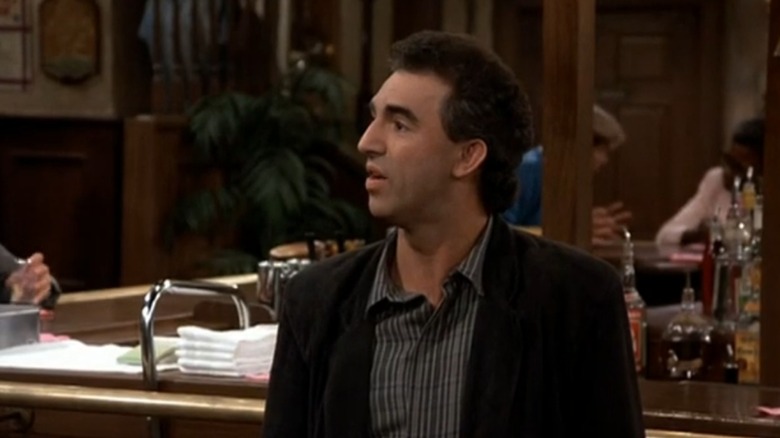
Actor and radio personality Jay Thomas appeared as Boston Bruins goalie Eddie LeBec, the love interest and eventual second husband of Carla. Thomas portrayed the character from Seasons 5 to 7, until a Zamboni killed him. Eddie's demise was a direct result of the shocking public comments he made on his morning radio show after a caller asked what it was like being on "Cheers."
His response? "It's brutal. I have to kiss Rhea Perlman," (via Best Life). Thomas crossed a line with his jarring answer, and series creator James Burrows came up with a hilarious way to get revenge and kill off Eddie. "That was it. He insulted Rhea, which meant he insulted all of us," Burrows wrote in his memoir "Directed by James Burrows."
"He crossed the family. Jay was fired unceremoniously. Since he was no longer on the show, Eddie also had to go. In our world, you don't wind up sleeping with the fishes; you die a violent yet comedic death," Burrows continued. Though Thomas bounced back and won two Emmys for his work on "Murphy Brown," his on-air blunder remains infamous.
John Lithgow was supposed to play Frasier
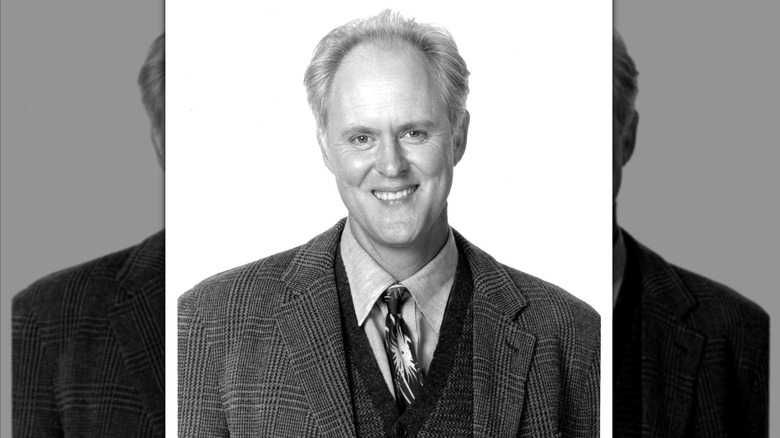
Though he has now become synonymous with the role of Harvard graduate Dr. Frasier Crane, Kelsey Grammer was not the first choice to play the quirky psychiatrist. John Lithgow was originally chosen to portray the character but ultimately turned down the offer because he felt doing TV work wasn't the right path for his career at the time.
"When it came up, it was my early years in Hollywood, and I'd had two Oscar nominations in two years," he told Radio Times. "There was this chance to play a supporting role on 'Cheers' and my agent and I agreed, 'Let's not think about episodic TV.' I can't help but wonder about the road not travelled." Lithgow expressed his conflicted feelings about turning down the role, but he headed to the small screen, joining the cast of the comedy series "3rd Rock from the Sun."
Lithgow won three Primetime Emmys for his performance as the alien Dick Solomon in the sitcom, which ran for 6 seasons from 1996 to 2001. Grammer also made out well as Frasier, playing the pompous doctor for two decades after nabbing a spinoff and winning numerous accolades, including two Golden Globes.
Woody Harrelson playing Woody Boyd was a complete coincidence
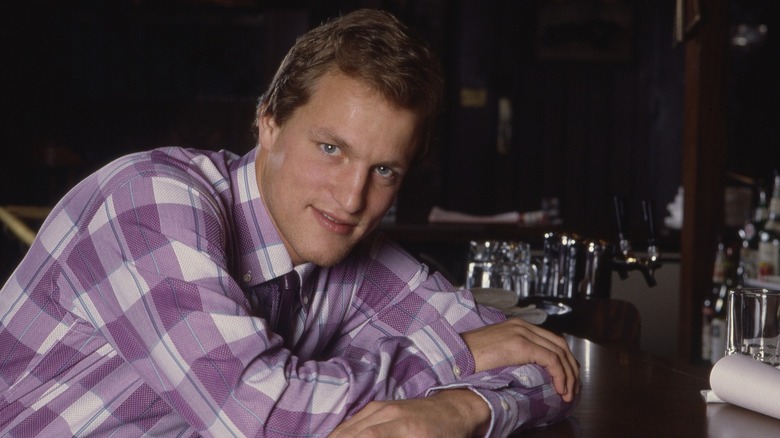
Before he was one of Hollywood's most charismatic performers, Woody Harrelson first made a name for himself in the industry when he began playing the dim-witted-yet-lovable bartender Woody Boyd in Season 4. Given that they shared the same first name, fans quickly believed that the character was created specifically with the actor in mind.
However, it was actually just a pleasant coincidence. Series co-creator Glen Charles shared on Ted Danson and Harrelson's podcast "Where Everybody Knows Your Name" that Woody Boyd was already named long before they met the star, and Danson even helped Harrelson get cast on the show. "Well, the interesting thing is, we had actually named the character Woody before we even read an actor; we named him Woody," Charles revealed.
Harrelson screen-tested with Danson, who pushed hard for him to nab the wholesome role. "You fought like h***. I remember very well you said, 'I know you think you've got your guy, but this guy's more interesting,'" Charles further shared on the podcast. "Cheers" effectively launched Harrelson's illustrious career, and he memorably played the bartender for 8 seasons, his performance earning him an Emmy Award in 1989.
The show's iconic theme song almost didn't happen
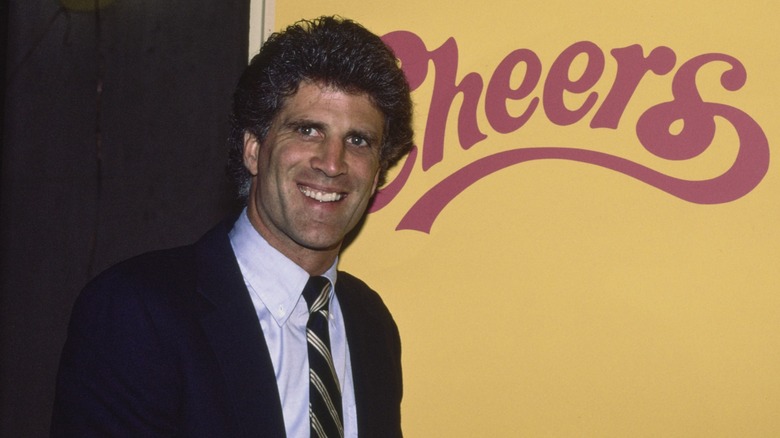
"Where Everybody Knows Your Name" was the iconic theme song for "Cheers," performed by Gary Portnoy, and in 2011 it was named by Rolling Stone fans as the best TV show theme song of all time. However, the tune was almost not recorded for the sitcom over a legal hiccup. Series creators initially wanted the song "People Like Us" from the Broadway musical "Preppies," but it was contractually bound to the stage production.
Portnoy and his writing partner Judy Hart-Angelo returned to the drawing board and eventually penned the famed song fans know and love. The duo even read the pilot script to gain inspiration. "The writing was so crisp, and it was funny, but it was also insightful. I grew up on sitcoms, and it just seemed to be a class act from the first word," he told Yahoo! TV, before reflecting on the song's longevity.
"I think there's a universality to it. I think the first part of the song really connects with people's angst, and then the chorus says, 'There's hope. There's help.' There's some warmth, some connectivity, some hope that there's a place where things are a little better."
Sam and Diane actually got hitched in the Season 5 finale
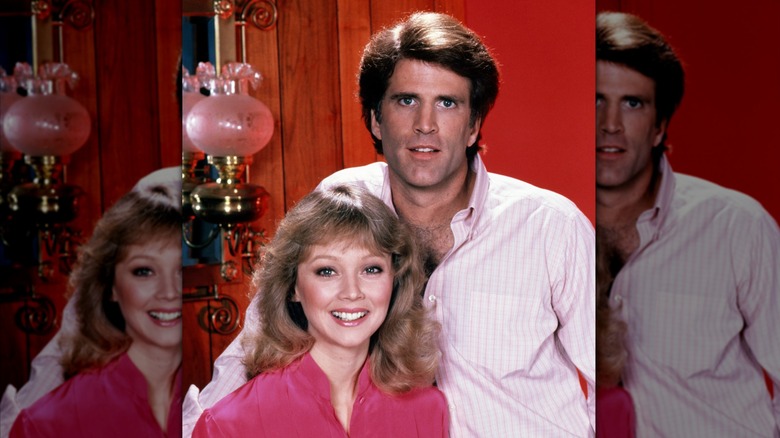
The ultimate will-they-won't-they couple, Sam and Diane, kept audiences on their toes for 5 seasons, their rollercoaster romance becoming a major storyline throughout the series. When Shelley Long shockingly decided to depart the sitcom in 1987, producers got sneaky and filmed an alternate ending in front of the live studio audience, one in which the pair tie the knot.
The actual ending that aired featured Diane leaving Boston (and Sam) to finish her book, a conclusion filmed on a closed set. Fans of the hit sitcom were stunned that Long walked away from such a successful project. The "Modern Family" alum wanted to dedicate more time to her family and pursue new creative opportunities.
"I didn't want to keep doing the same episode over and over again and the same story," Long told Australian TV of her decision. "I did miss them; I missed them very much. You know, working at 'Cheers' was a dream come true. It truly was, and it was one of the most satisfying experiences of my life. So yes, I missed it. But I never regretted that decision."
The cast and crew got extremely drunk after the series finale (and taped a live show)
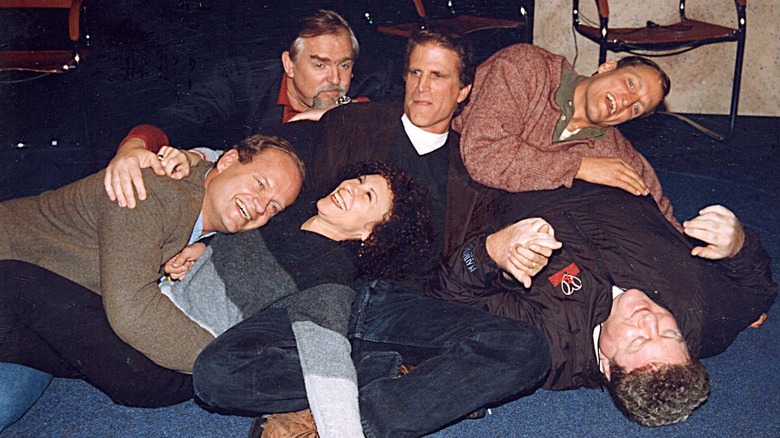
The series finale of "Cheers" aired on May 20, 1993, marking the end of an era on television, as viewers said goodbye to their beloved characters after 11 seasons. While "Cheers'" final send-off had the cast in a disastrous drunken state at Boston's Bull & Finch Pub, it was a lavish affair, as hundreds of fans gathered to watch the last episode.
According to show writer Ken Levine, the cast drank heavily as they cried and reminisced, becoming extremely inebriated in the process. They had to then appear on "The Tonight Show with Jay Leno" and were clearly too drunk to go on camera. "The show ended at eleven. The next half-hour was an emotional tsunami. Everyone was hugging and crying and doing a lot of drinking. We were all completely wrecked," Levine wrote in an article for Vulture.
"The cast, in no condition to face anybody, much less 40 million people, dutifully trooped downstairs to do the live show. Us non-celeb types stayed back and watched on TV ... in horror. They were so drunk they needed designated walkers. They giggled like schoolgirls over nothing," he said of the amusing ordeal.
Woody Harrelson turned down an opportunity for his own spinoff
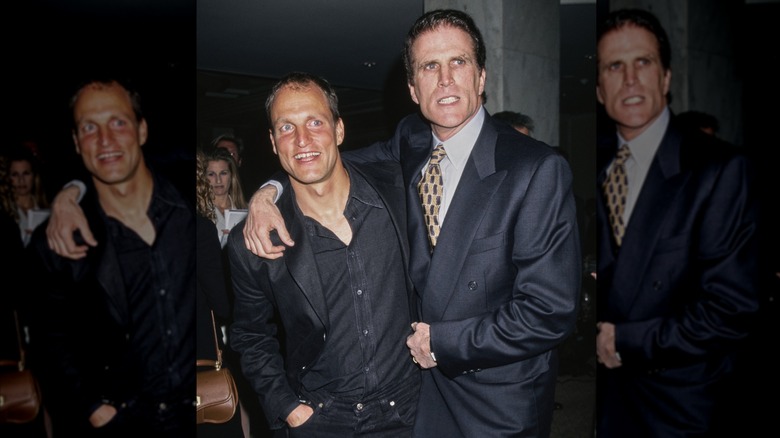
When Ted Danson announced he would be leaving the series after the 1992-1993 season, effectively ending the sitcom, producers attempted to figure out how to keep the magic going. They honed in on Woody Harrelson and his fan-favorite character, entertaining the idea of a spinoff surrounding the lovable bartender. However, Harrelson did not want to do a show without Danson's Sam Malone, and he was more invested in working on his blossoming film career.
The show spawned the massively successful spinoff "Frasier," which ran from 1993 to 2004 and won a staggering 37 Primetime Emmys, setting a record for a scripted series at the time. "I think Frasier and Woody were the two logical possibilities," co-creator Les Charles told Variety about the creative discussions surrounding potential spinoffs.
"Both good leading men, both funny, both terrific actors. I don't know who else you could've based a series around who would've been an anchor to the series." While Harrelson passed on his own spinoff, he went on to dominate Hollywood and had memorable roles in endless hits like "No Country for Old Men," "Zombieland," and "True Detective."
Norm racked up a 6-figure bar tab by the end of the sitcom
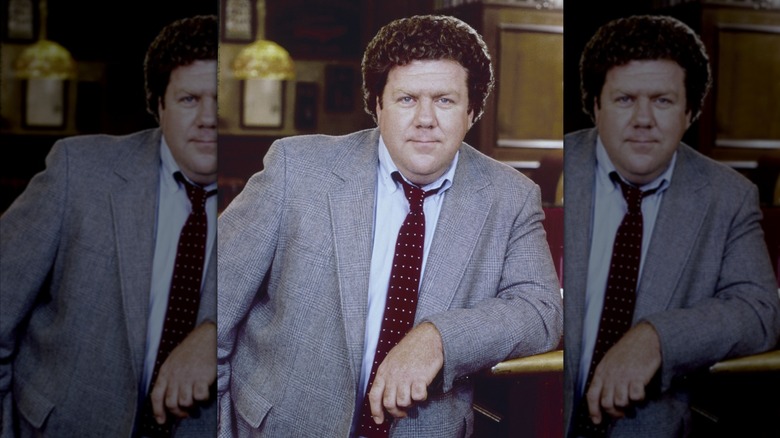
Resident barfly Norm spent a lot of time patronizing Cheers, and fans had long wondered just how much money he spent on beer throughout his many years hanging out at the bar. Many viewers attempted to figure out the dollar amount, and even George Wendt gave his two cents, the actor helping MEL Magazine figure out his tab in a Cameo video.
Based on Wendt's unique insight, Norm would have racked up a jaw-dropping $123,953.98, though the publication dug even deeper and incorporated more factors, finally settling on the whopping $124,406.90. The publication's writer Brian VanHooker took into account that Wendt was 33 when "Cheers" first premiered in 1982 and likely patronized the bar for a decade.
The late actor stated in the Cameo, "The show ran for 11 seasons. That's 11 times 365 ... [at] 10 beers a day. So I'll let you do the math." VanHooker included other elements like the average cost of beer and specific clues disclosed in the sitcom to settle on the jaw-dropping six-figure amount, finally giving fans a logical answer about Norm's legendary tab.