

Bewitched Star Elizabeth Montgomery's Full Transformation
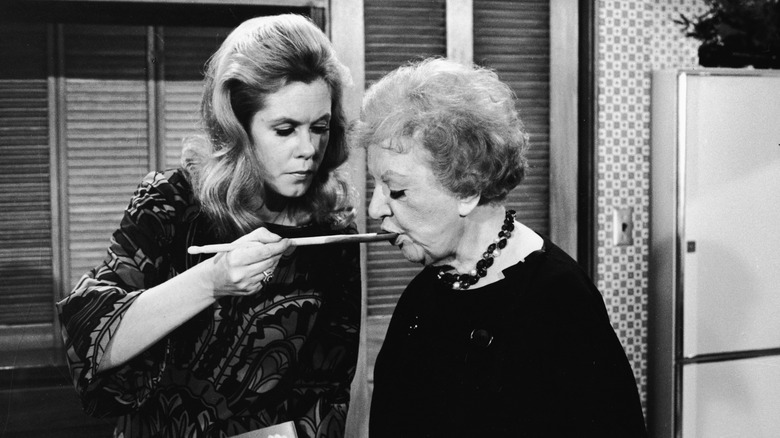
Elizabeth Montgomery is remembered as the woman who could solve any problem with the twitch of her nose. In her major role as Samantha Stephens in the famous American sitcom "Bewitched," Montgomery played a TV mom who could actually do magic. Whenever Samantha wanted to wash dishes, fix her garden, or charm one of her husband's clients, all she had to do was wriggle her nose. While Montgomery's on-screen life was enchanting, her real life was a little bit more complicated.
Born to a father who opposed her Hollywood dreams, Montgomery spent considerable time convincing him of her acting ambitions. When she finally had the chance to work, she was a hit; however, behind the scenes, her tumultuous love life introduced personal challenges. It wasn't until Montgomery was in her 40s that she finally achieved a balance between acting, motherhood, and romance. While her journey to fulfillment was imperfect, it reflected the beauty of a life well-lived.
Elizabeth Montgomery was born into Hollywood royalty
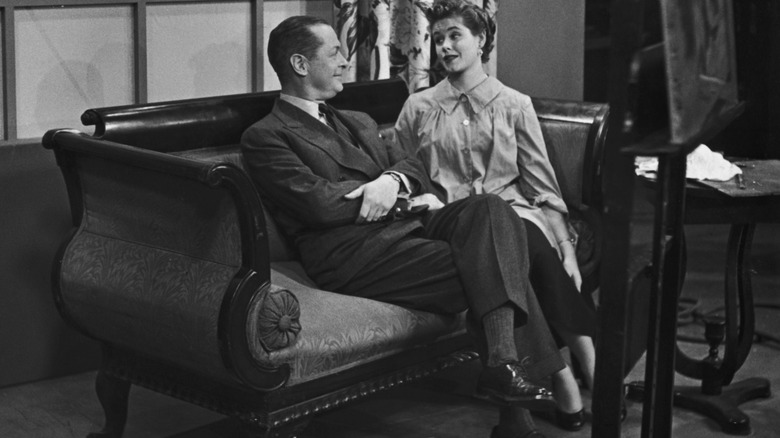
Acting coursed through Elizabeth Montgomery's bloodstream from the minute she took her first breath on April 15, 1933. The future "Bewitched" star was born to two successful actors. Her mother, Elizabeth Allen, had been a Broadway actor before settling down and starting a family. Her father, Robert Montgomery, meanwhile, continued to pursue a life in the spotlight long after tying the knot. Originally known for films like "Lady in the Lake" and "Night Must Fall," Robert achieved lasting fame through the show "Robert Montgomery Presents," which ran for seven seasons.
Although Elizabeth's pedigree may explain her passion for acting, it's fair to say that her father was less than supportive of her Hollywood dreams. Because he didn't want her to pursue acting, the actors tried not to talk shop in the home. Years later, the "Bewitched" lead confessed that she hadn't understood the nature of her father's job until a classmate clued her in. As she explained in a 1992 interview on "One on One with John Tesh," "It was kind of like finding out there was no Santa Claus ... it never occurred to me that he was doing something odd."
The Bewitched actor was shielded from Hollywood
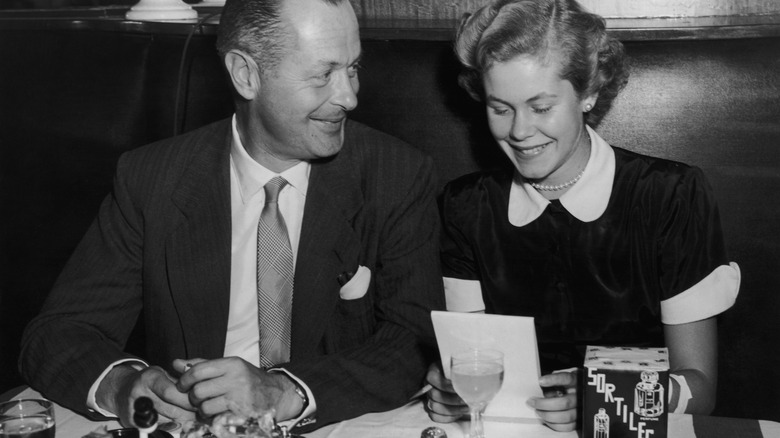
Elizabeth Montgomery's father was originally so opposed to her theatrical dreams that he mostly kept her away from the spotlight and his immense celebrity, rarely bringing her to industry events. When it came to simple things like going to the cinema, Montgomery's parents were hardly supportive. "I was never allowed to go to the movies at all," she revealed in the 1992 interview with John Tesh. As she explained, whenever she asked her parents for permission, they would respond sternly: "You've got much better things to do than go sit on a Saturday afternoon — lovely day like this — and watch a movie."
Rather than spending her days dreaming of the lights and cameras, the young Montgomery was encouraged to go outside and play. Given her extremely privileged background, she frequently enjoyed the sports that naturally went with her quiet luxury, old-money wardrobe. Montgomery rode horses, played tennis, and spent time outdoors. That said, as much as Montgomery benefited from the perks of Hollywood money, she did not grow up with a Hollywood lifestyle — at least not in the traditional sense.
She made her TV debut on Robert Montgomery Presents
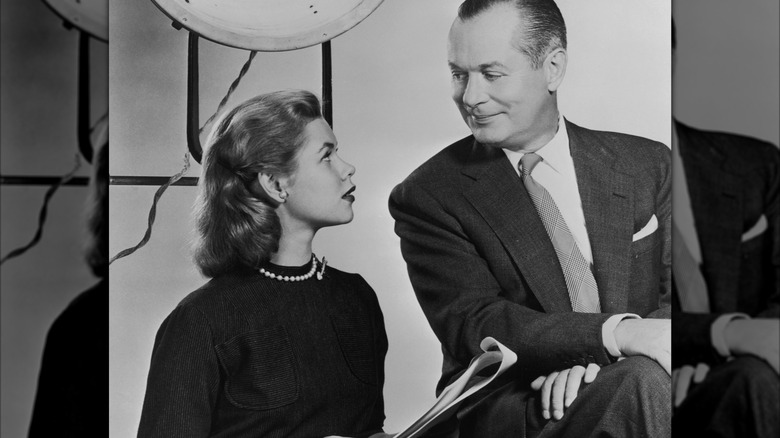
Although it took some time for Elizabeth Montgomery to secure her father's support for her career, he eventually gave her a chance. In 1951, Elizabeth officially gained celebrity nepo baby status when her father, Robert Montgomery, invited her to join him on the set of his show, "Robert Montgomery Presents." The young actor had an undeniable stage presence, which Robert simply had to accept.
Robert's support, however, was extremely reluctant. As noted by Elizabeth's friend and biographer, former actor Herbie J. Pilato, in conversation with Pretty Magazine, tensions between the father and daughter remained high throughout their lives. "They had a real love-not-like relationship. He didn't want her to become an actress at first, but when he realized he couldn't stop her, he embraced it and gave her her first role on his show," Pilato clarified.
For Elizabeth, though, appearing on her dad's television show was absolutely exhilarating. She found it exciting yet nerve-wracking to show up on live TV. As she would later reveal on KNTV Channel 11's "The Lu Ryden Show," "I can't tell you how often, when they'd say, '30 seconds to air,' I'd think to myself, 'Oh, what am I doing here?'" Luckily, Elizabeth's nerves rarely showed, and a star was born.
Elizabeth Montgomery took her career to Broadway
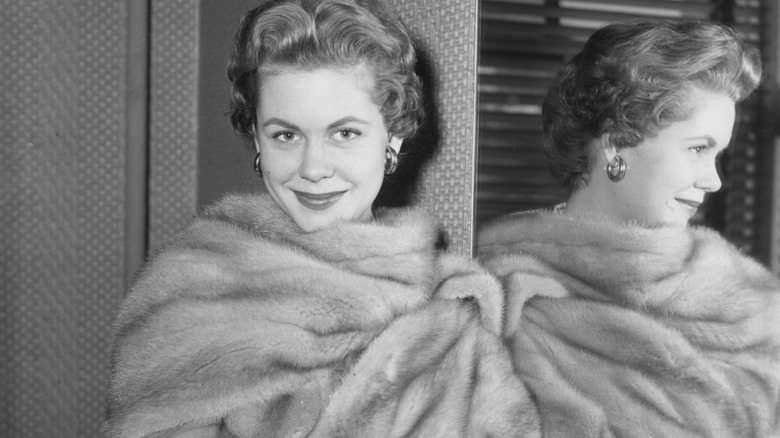
Robert Montgomery may have given Elizabeth Montgomery a great start in television, but that doesn't mean the young actor was not keen to explore different mediums. During her school years, she focused on theater, and following her graduation from Spence School, she studied at the American Academy of Dramatic Arts. Elizabeth decided to pursue a role on Broadway, and she was cast in the well-received show "Late Love." Ultimately, this was the best move the up-and-coming actor could have possibly made. Her role as Janet Colby landed her a Theatre World Award, cementing her position as a successful actor in her own right.
While these Broadway pursuits could be viewed as strategic, Elizabeth was quite open about her acting career not being propelled by any particular ambition. As she told journalist Lu Ryden on her titular talk show, "So, I was very lucky that I really didn't have to work, and I really thank my lucky stars for that because I'm not riddled with ambition ... I do do it [acting] because I enjoy it." Following her successful theater debut, Elizabeth was cast as a replacement in another show, "The Loud Red Patrick." That would be the actor's last brush with Broadway for decades.
The Bewitched star had a complicated love life
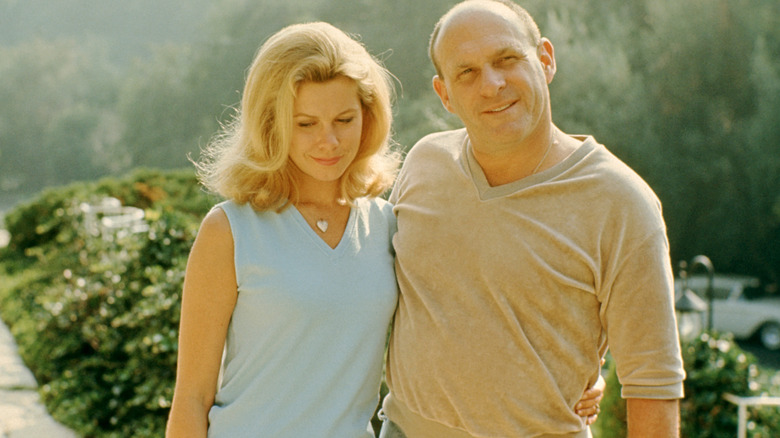
As Elizabeth Montgomery was navigating the early days of her acting career, she was also entangled in a series of unfortunate romantic relationships. Her first love was Frederick Cammann, a wealthy New Yorker who boasted a quasi-aristocratic social circle. At age 20, Montgomery married Cammann in 1954. Reportedly, a lack of sexual compatibility made the marriage impossible to maintain, according to director Griffin Dunne in his 2024 memoir, and the couple sought a divorce approximately one year after tying the knot.
A little over a year after divorcing Cammann, Montgomery married again — this time to fellow actor Gig Young. Sadly, the relationship was incredibly unhealthy, as Young was understood to have been an alcoholic who abused Montgomery. The two actors divorced in 1963. 15 years later, police ascertained that Young had committed suicide after murdering his fifth wife.
After this streak of difficult relationships, Montgomery finally met the future father of her children, director-producer William Asher. The duo tied the knot in 1963 before going on to collaborate on one of the most popular shows of the 1960s. Montgomery and Asher's marriage would change the future of American television.
If you or someone you know is dealing with domestic abuse, you can call the National Domestic Violence Hotline at 1−800−799−7233. You can also find more information, resources, and support at their website.
Elizabeth Montgomery and husband William Asher worked together on Bewitched
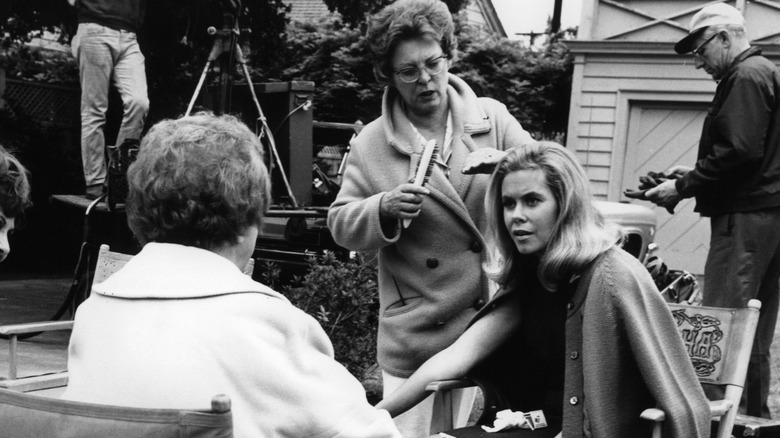
On September 17, 1964, Elizabeth Montgomery watched as the first episode of "Bewitched" hit television screens across America. The show — which featured Montgomery as a witch-turned-housewife named Samantha Stephens — was the product of an extensive collaboration between the lead actor and her then-husband, director-producer William Asher. It would have been impossible for Montgomery or Asher to know just how huge a hit the show would become. However, from the very beginning, the sitcom enticed viewers across the country, and that was before the best Halloween episodes from "Bewitched" gained acclaim.
One of the most unforgettable parts of the show is, of course, the slight twitch of the nose that Samantha used to perform spells. Some fans of "Bewitched" may not know that this element was not originally baked into the script. Asher had the idea after watching Montgomery perform this unconscious movement repeatedly throughout their marriage. As he once told the Archive of American Television (via People), "When I first realized that would make good motivator for the witchcraft, I had told her about it and I tried to do it." Montgomery, though, didn't know that she often twitched her nose and had no idea what he was talking about. It wasn't until he caught the actor twitching her nose while making drinks that he communicated his idea. Montgomery decided to give it a try, and a cultural moment was born.
Elizabeth Montgomery's pregnancies added a layer of complication to the show
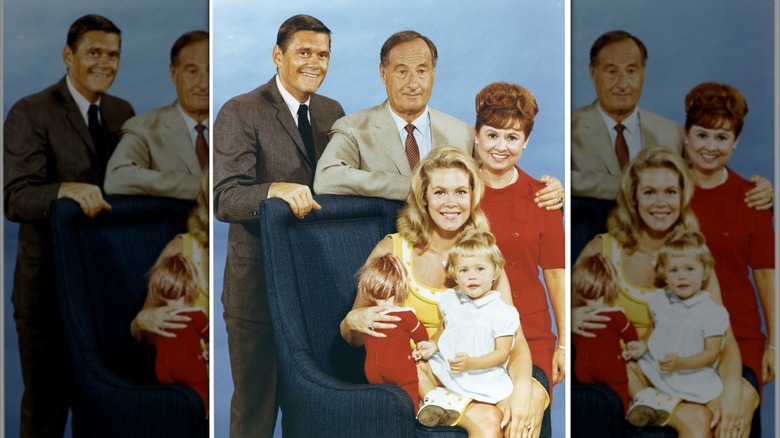
During her marriage to William Asher, Elizabeth Montgomery gave birth to three children: William Asher Jr., Robert Asher, and Rebecca Elizabeth Asher. All three of Montgomery's kids were born during her time on "Bewitched." Because of this, the show's writers had to be creative about either hiding Montgomery's pregnancies or integrating them into the script. Luckily, when it came time for Robert to be born, "Bewitched" writers were actually hoping to incorporate a pregnancy into the sitcom.
Reflecting on this coincidence in a 1966 appearance on "The Mike Douglas Show," Montgomery explained, "Well, luckily, when I found out that I was pregnant with our second little boy ... they wanted Samantha [her character] to have a baby on the show." As the actor pointed out, life does not always imitate art. "It just kind of worked out that I had a boy and Samantha had a girl," Montgomery quipped. Back in the 1960s, the show writers named Samantha's daughter Tabitha. At the time of writing, "Bewitched's" Tabitha is in her 60s and still a natural beauty. Erin Murphy's Tabitha became one of the most beloved characters on "Bewitched" and was even featured in the spin-off show "Tabitha."
Elizabeth Montgomery and William Asher struggled with parenthood
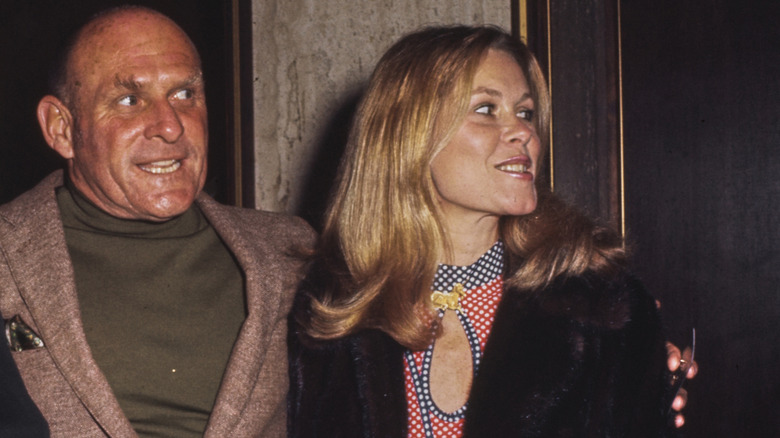
In "Bewitched," Elizabeth Montgomery's on-screen relationship with her TV daughter was the stuff of fairy tales. Her real-life relationships with her biological kids, meanwhile, were a lot more complicated. When William Asher Jr., Robert Asher, and Rebecca Elizabeth Asher were young, Montgomery was not particularly present in their lives.
Because of the intensive filming schedule on the set of "Bewitched," the actor was barely home. Her absence was compounded by the fact that her husband — the show's producer and director, William Asher — held the same long hours she did. As Montgomery put it on "The Mike Douglas Show" in 1966, "We see them every night when we come home. We're up at 5:30 in the morning, which is before they get up." She also admitted that they tended to arrive home quite late, limiting interactions further.
About 25 years later, in a 1992 appearance on "One on One with John Tesh," Montgomery admitted that she hadn't been the most involved mom. When asked about the challenges of balancing a career with childcare, Montgomery replied that it had been difficult, hinting that she'd prioritized her career over parenting. "I will never win any Mother of the Year awards. I hope I'm getting better," she revealed.
Bewitched ended when Elizabeth Montgomery and William Asher's marriage went downhill
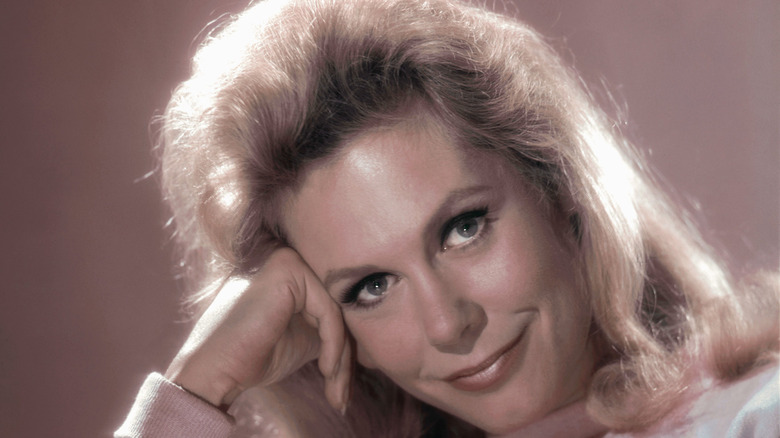
"Bewitched" was one of the most popular shows on American television, but that doesn't mean the sitcom starring Elizabeth Montgomery was destined to last. During the first few seasons of the show, Montgomery enjoyed working with her then-husband, William Asher, on set. As the couple's marriage grew increasingly strained, however, so did their working relationship. While Montgomery played a happy housewife on "Bewitched," her marriage crumbled behind the scenes. Rumor has it that there was infidelity on both sides, and by the time the show reached its final season, Montgomery and Asher were no more.
At first, the network tried to negotiate with the actor and the director-producer. The initial hope was that both parties would continue to work on the show in the wake of their divorce. However, Montgomery refused to work with Asher. Unbeknownst to the adults at the time, Peter Ackerman, the young son of the show's executive producer, was following this drama closely. Years later, he would tell Fox News, "The network wanted to continue with the series. However, she would only do it if my dad would agree to basically fire her soon-to-be ex-husband." Montgomery's request was refused, and "Bewitched" ended in 1972.
Elizabeth Montgomery began to focus on TV movies
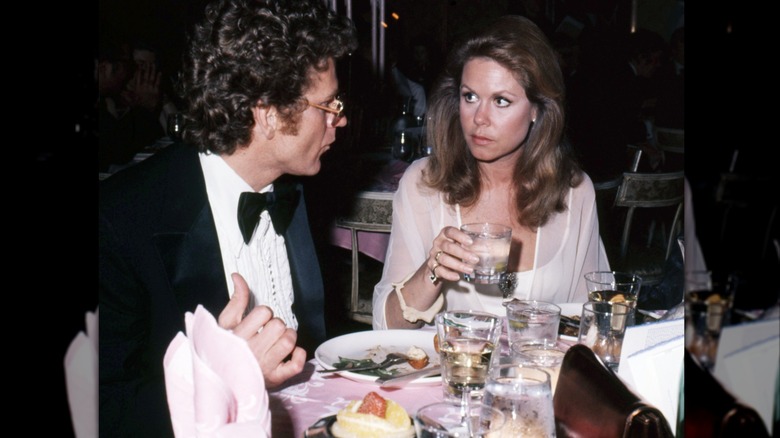
Since Elizabeth Montgomery's role on "Bewitched" had been well-known, there were whispers that she would be typecast following the sitcom. However, Montgomery told journalist Lu Ryden on "The Lu Ryden Show" that she wasn't worried about that. "I suppose typecasting is something that really, you know, you think of a certain type of actor for a certain type of part. No, I don't [think I've been typecast]," Montgomery opined. She went on to gush about how much she appreciates her time on "Bewitched," stating, "This is something that I've really enjoyed doing."
While Montgomery's reluctance to worry about typecasting may have seemed naive, it was actually a great strategy. Following her time on "Bewitched," Montgomery did not hold back from auditioning for all sorts of roles. In the end, she landed a number of great parts in TV movies, most notably the role of Etta Place in the 1974 hit "Mrs. Sundance." The following year, she played Lizzie Borden in the TV movie "The Legend of Lizzie Borden." Montgomery loved the role so much that she adopted the character's name as a nickname among friends. As her friend and biographer, Herbie J. Pilato, told Pretty Magazine, "I later learned that while she'd often gone by Liz, she really had embraced the nickname Lizzie after playing Lizzie Borden in the TV movie."
Elizabeth Montgomery found the love of her life in Robert Foxworth
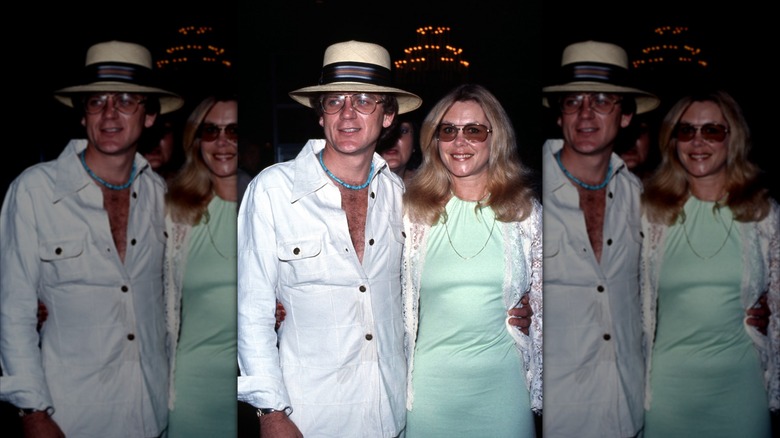
"The Legend of Lizzie Borden" may have brought Elizabeth Montgomery's favorite nickname to light, but it was "Mrs. Sundance" that changed her life. While working on the latter, the actor fell in love with her co-star Robert Foxworth. After a lifetime of strained relationships, Montgomery craved something enduring. Foxworth would ultimately be the person the actor spent the rest of her life with.
Describing her partnership with Foxworth on "One on One with John Tesh," Montgomery gushed about her long-time partner's personality. "He's got one of the most wonderfully inquisitive minds, I think, of anybody I've ever met. And he's compassionate. He cares about things," she noted. These traits kept the lovebirds together for about 22 years until Montgomery's death in 1995.
Although they dated for nearly two decades, Montgomery and Foxworth were in no rush to tie the knot. The couple only married in 1993 — after Foxworth had asked for Montgomery's hand many times. He admired the "Bewitched" star greatly, and in the John Tesh interview, Foxworth was extremely complimentary of Montgomery. "I would describe her as perhaps the most intelligent woman I've ever met," he revealed, before going on to rave about her sense of humor and gorgeousness.
Elizabeth Montgomery died of colon cancer in 1995
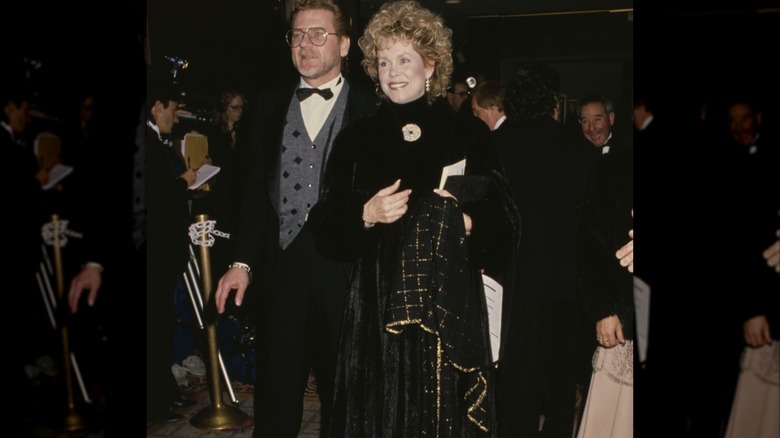
In May 1995, Elizabeth Montgomery died of colon cancer. During her final years, she continued to display her passion for acting by working on a number of incredible projects. Mere weeks before Montgomery's death, her final picture was released. Montgomery had played the fun role of Edna Buchanan in "Deadline for Murder: From the Files of Edna Buchanan," demonstrating her willingness to remain active until the very end of her life. Prior to that, Montgomery starred in the TV movie "Face to Face" opposite the love of her life, Robert Foxworth, in 1990.
Unfortunately, Montgomery became one of the stars we lost too soon. Her death was sudden and unexpected, even though she was 62 years old at the time. Montgomery spent her final moments surrounded by her husband and three children. Montgomery's fans mourned her death — and her groundbreaking role on "Bewitched" continues to be praised today.