

The Most Famous Actors From The '60s, Ranked By Box-Office Success
The Swinging Sixties was a tremendously significant time in the 20th century, ushering in massive changes in pop culture, fashion, and politics. The Civil Rights Act outlawed discrimination. Beatlemania conquered the world. The Super Bowl was born. "Star Trek" made its galactic debut. Neil Armstrong walked on the moon. Everyday fashion became more casual and colorful. In Hollywood, several stars were honored time and time again for racking up an impressive collection of domestic and international commercial hits. So, we bring you a ranking of these beloved actors by box-office numbers, cultural impact, awards, and nominations. You can read more about our methodology at the end of the article.
Many of the feature films that were produced in the 1960s earned wide acclaim and are still referenced and enjoyed today. For instance, the epic drama "Spartacus," which starred Kirk Douglas, Laurence Olivier, Jean Simmons, and Tony Curtis, won four Oscars. "West Side Story," which was remade in 2021, nabbed 10 Oscars. As for the family musical "The Sound of Music," considered a cultural phenomenon back then, it broke box-office records for four years, and it remains one of the highest-grossing movies ever made when adjusted for inflation. But we're not here to rank the box-office success of individual movies. Rather, we're here to rank the box-office success of movie stars. Let's revisit the most talented and influential silver-screen performers from that memorable decade, ranked from least to most successful.
10. Audrey Hepburn starred in four box-office hits
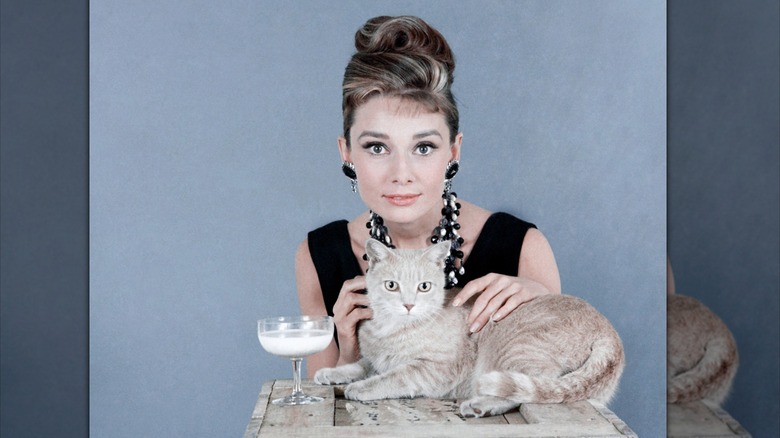
With her heart-shaped face, incredibly expressive doe eyes, and chic outfits, the iconic Audrey Hepburn (no relation to Katharine Hepburn) was celebrated as both a film and a fashion legend in the 1950s and 1960s. In the latter decade, she received a star on the Hollywood Walk of Fame and won two BAFTA Awards for best British actress. Plus, she was nominated for three Academy Awards and six Golden Globes. So, let's take a look at her four main commercial successes from that period.
Released in 1961, the stylish romantic comedy film "Breakfast at Tiffany's" nabbed 12 awards and featured the nostalgic theme song "Moon River," written by Henry Mancini and Johnny Mercer. It earned $9,551,904 domestically. As for the Oscar-nominated romantic comedy-thriller "Charade" (1963), which also starred Cary Grant, it was an even bigger hit that grossed $13,474,588. Then, in 1964, Hepburn played Eliza Doolittle in "My Fair Lady," which won a whopping eight Oscars, not to mention grossing $72 million domestically and earning 4.2 times the production budget globally, according to The Numbers. Finally, Hepburn gave a memorable performance as a blind woman in the 1967 psychological thriller "Wait Until Dark," which made $17,550,741 at the domestic box office.
9. Clint Eastwood was cast in five big earners
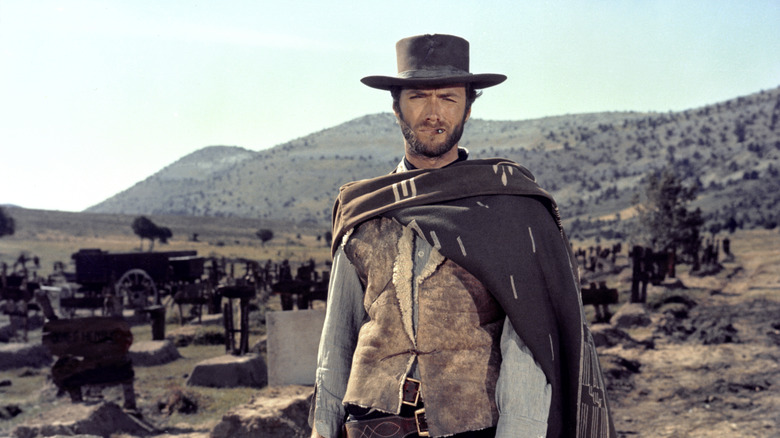
Actor, producer, director, and music composer Clint Eastwood, who officially retired in 2026, has won numerous accolades over the decades, including four Oscars. Like many celebrities who launched their careers with TV Westerns, he also excelled in this genre on the silver screen. Having played cowhand (then trail boss) Rowdy Yates in the series "Rawhide" from 1959 to 1965, he became an international sensation in Sergio Leone's highly acclaimed "Dollars" Trilogy: "A Fistful of Dollars" (1964), "For a Few Dollars More" (1965), and "The Good, the Bad and the Ugly" (1966). The first one, according to The Numbers, made 17.7 times its initial budget worldwide, while the second installment earned 7.2 times more, and the third, 5.1 times more.
Then, in 1968, Eastwood starred in Ted Post's revenge revisionist Western "Hang 'Em High," which earned $6,800,000 domestically — 3.8 times its budget globally, as per The Numbers. That same year, the actor starred in another commercial hit: Brian G. Hutton's "Where Eagles Dare." This celebrated war drama film grossed $7.1 million in the U.S. alone.
8. Five of Sidney Poitier's films performed very well
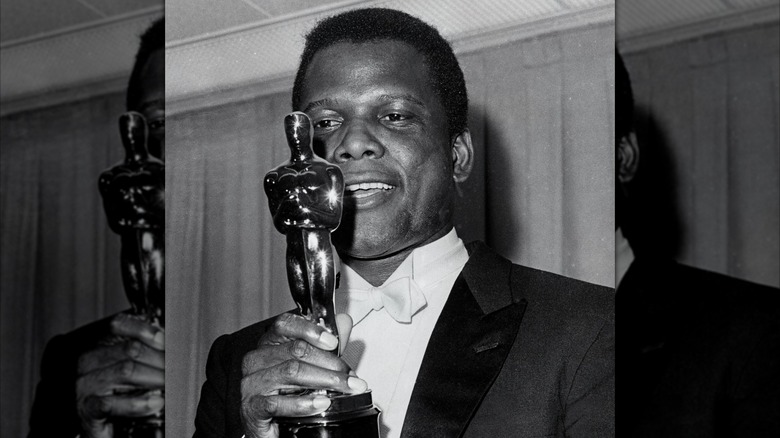
Bahamian American legend Sidney Poitier made cinematic history for playing handyman Homer Smith in the 1963 period drama film "Lilies of the Field." His deeply moving performance earned him an Academy Award for best actor, and he was the very first Black actor to receive that honor. After that, he became one of the ultimate Hollywood icons of the '60s. Then came the romantic drama film "A Patch of Blue," which earned four awards and grossed about $6.8 million globally against a $800,000 budget, according to FilmDB Box Office.
In 1967, three films starring Poitier were hailed as commercial hits and praised their handling of themes like racial discrimination and injustice. The first was "To Sir, with Love," which also featured Judy Geeson and Christian Roberts and earned $42,432,803 domestically. The second was Norman Jewison's thriller "In the Heat of the Night," which nabbed five Oscars and made $24,407,647 worldwide — which was 12.2 times the production budget, according to The Numbers. Finally, Poitier won best foreign performer at Spain's Fotogramas de Plata for playing a Black man who is engaged to a white woman in "Guess Who's Coming to Dinner." This thought-provoking comedy-drama hit won two Academy Awards and performed exceptionally well at the U.S. box office, earning $56,700,000.
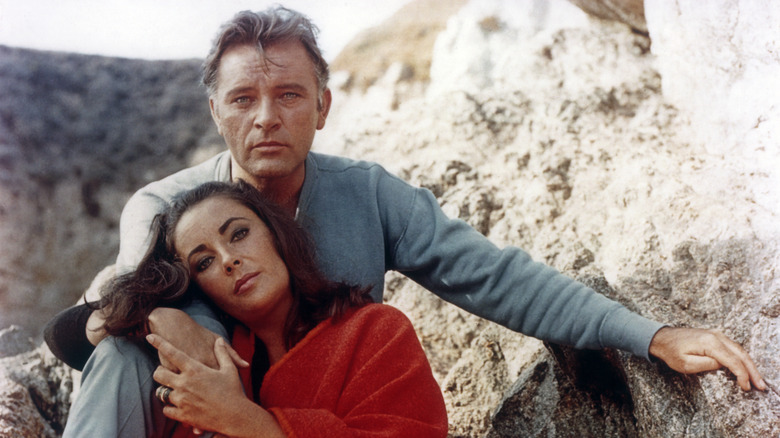
7. Elizabeth Taylor and Richard Burton co-starred in five smashes
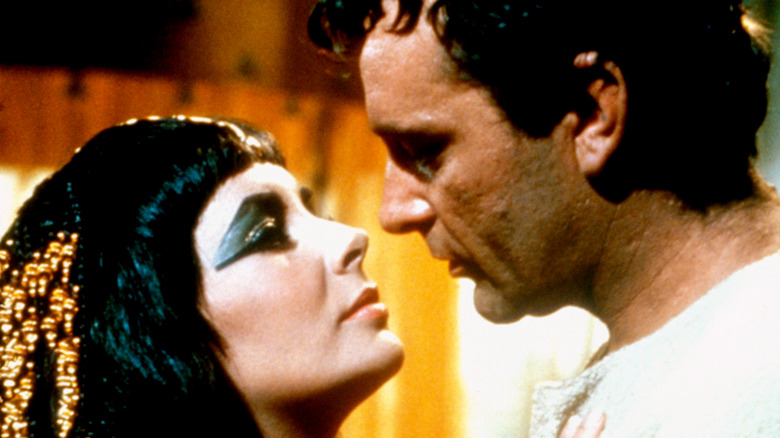
One simply cannot talk about Elizabeth Taylor's tumultuous relationship history without highlighting her two marriages to Richard Burton and their joint professional collaborations. When they first started dating, both were already global stars in their own right. Together, they remained one of Hollywood's most captivating power couples for nearly two decades. These are the '60s box-office hits that showcased their incredible on-screen chemistry and are still revisited today.
"Cleopatra" (1963), which featured Taylor as Queen Cleopatra VII and Burton as her lover Mark Anthony, won five Oscars and earned $71 million internationally. That same year, the pair also starred in the romance dramedy film "The V.I.P.s," which received four awards and made $15 million in the U.S. alone. Their next award-winning hits were "The Sandpiper" (1965) and "Who's Afraid of Virginia Woolf?" (1966). The latter, which centered on hostility and co-dependency in a marriage, was awarded five Oscars and grossed $33,736,689 domestically. Taylor and Burton's last successful title during that decade was Franco Zeffirelli's romance dramedy hit "The Taming of the Shrew," which won seven awards.
6. Sean Connery portrayed James Bond five times in the 1960s
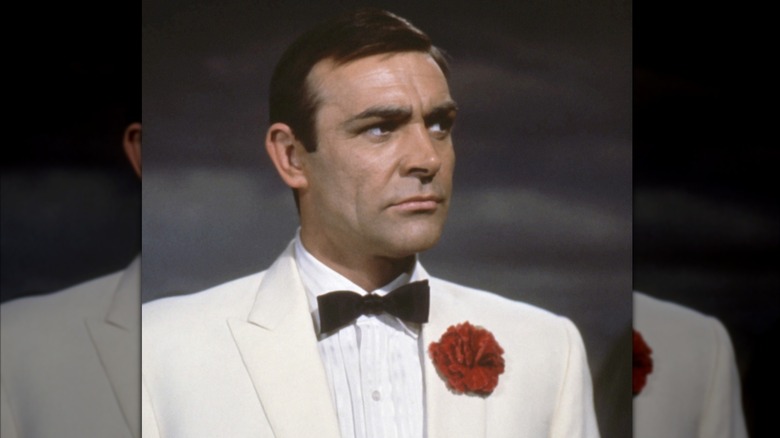
Though Sean Connery didn't quite enjoy playing James Bond, it's the one role that solidified him as a movie star and earned him worldwide acclaim. Not only did the knighted actor, producer, and director grow tired of being typecast, but he also didn't win a single major award for playing 007. Still, some fans and critics would argue that he was the best choice ever for that beloved character, born from the mind of British writer and journalist Ian Fleming. Connery brought the suave and sharp womanizer and MI6 agent to life seven times throughout his career, five of which were between 1962 and 1967.
Of these five colossal titles, "Thunderball" was the top earner internationally with a whopping $141,200,000. According to The Numbers, that's 15.7 times the production budget. "Goldfinger," "You Only Live Twice," and "From Russia with Love" ranked second, third, and fourth, respectively. As for "Dr. No," it made $59,566,680 worldwide — 59.6 times the initial budget, per The Numbers.
5. Julie Andrews enchanted fans and critics with five hits
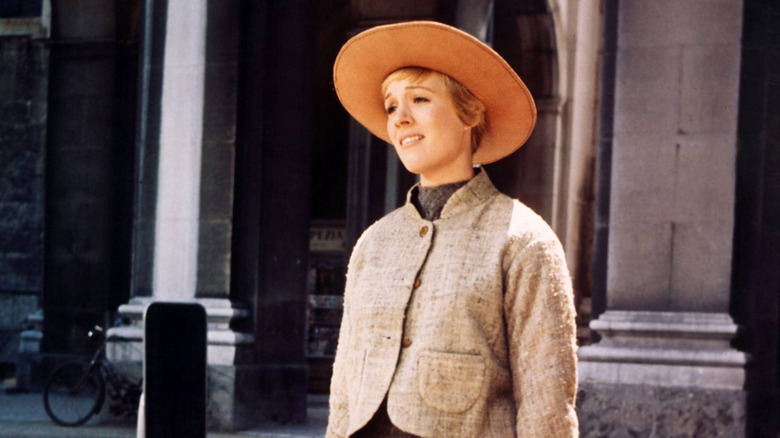
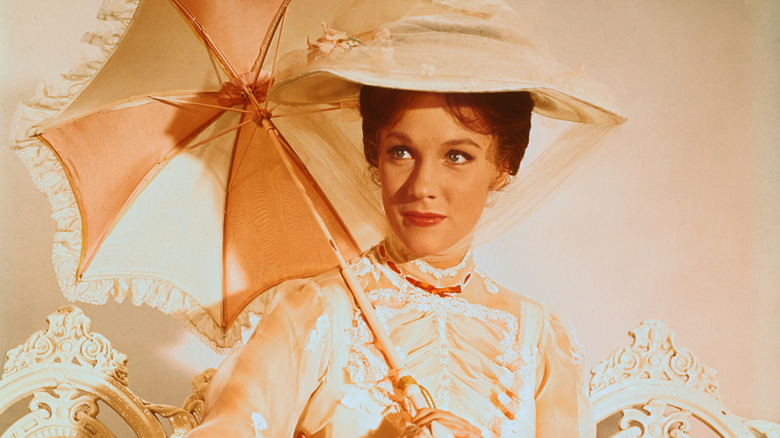
The stunning Dame Julie Andrews is known today as the voice of Lady Whistledown in Netflix's "Bridgerton" series. Back in the Swinging Sixties, though, the actor with the crystalline voice was catapulted to international fame for portraying a quirky nanny/governess in two family-friendly, musical blockbusters: "Mary Poppins" (1964) and "The Sound of Music" (1965). Produced by Disney, the former featured Dick Van Dyke and David Tomlinson. It earned five Oscars — including best actress for Andrews — and $102,272,145 across the U.S. Per The Numbers, that's 17 times the production budget. And "The Sound of Music," which co-starred Christopher Plummer and Eleanor Parker, also racked up five Oscars, though Andrews was only nominated for her role. In theaters, the numbers were even more impressive than with "Mary Poppins:" $164,815,523 domestically and $287,814,441 internationally.
These two titles weren't Andrews' only notable milestones during that decade, though. She also starred in Alfred Hitchcock's "Torn Curtain" (1966), opposite Paul Newman; "Hawaii" (1966), alongside Max von Sydow; and "Thoroughly Modern Millie" (1967), with James Fox and Mary Tyler Moore. Of those three critical and commercial hits, "Hawaii" was the top earner domestically with $34,562,222.
4. Steve McQueen starred in six popular films
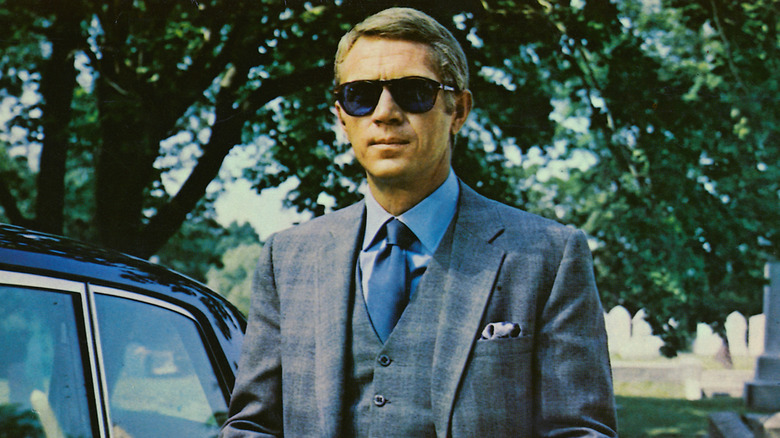
Nicknamed the King of Cool, Steve McQueen was one of the most coveted actors of the 1960s and 1970s. He was nominated for an Oscar and won seven accolades, including two Henrietta Awards for World Film Favorite – Male at the Golden Globes. He was catapulted to fame in John Sturges' Western "The Magnificent Seven," which featured a charismatic ensemble cast including Yul Brynner, Charles Bronson, James Coburn, and Eli Wallach. The film spawned several sequels and made more than $11 million against a $2 million budget, according to Remind Magazine.
Sturges, McQueen, and Bronson collaborated again on "The Great Escape" (1963). The period war drama earned McQueen a best actor nod from the Moscow International Film Festival, cementing him as a global star. It grossed $11,744,471 in the U.S. His performance in "The Cincinnati Kid" (1965) was also met with critical and public acclaim. The prolific actor's remaining hits from that period included "The Sand Pebbles," "The Thomas Crown Affair," and "Bullitt." The latter alone made $42,300,873 domestically. Sadly, shortly after an experimental cancer treatment in 1980, McQueen joined the list of celebrities who died from undergoing surgery. He was 50 years old.
3. John Wayne remained an icon with six massive titles
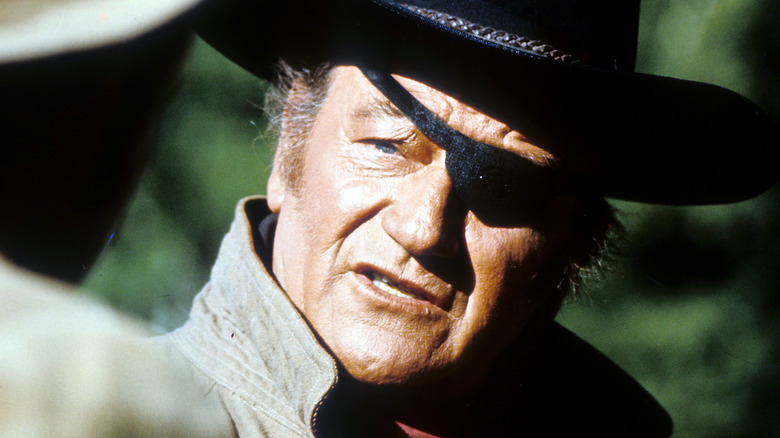
Boasting 184 acting credits attached to his name, John Wayne enjoyed a long and prolific career. Overall, he won 38 awards, including an Oscar for best actor in a leading role for Henry Hathaway's "True Grit." This classic 1969 Western earned $37,659,900 globally, and it was remade by the Coen Brothers in 2010.
Having already achieved icon status in the '40s and '50s, Wayne continued to expand his acting, directing, and producing portfolio in the '60s. One of the most widely acclaimed Westerns he was cast in, for instance, was "How the West Was Won," helmed by John Ford, Henry Hathaway, and George Marshall, and featuring other household names like James Stewart and Gregory Peck. This massive production earned three Oscars and $46,500,000 in the U.S. alone.
Wayne also starred in other commercial hits during that decade, such as "Hatari!" "The Sons of Katie Elder," and "The War Wagon." And there was the award-winning war epic "The Longest Day," which also featured Richard Burton and Robert Ryan, earning $39,100,000 domestically.
2. Paul Newman's versatility spanned at least seven hits
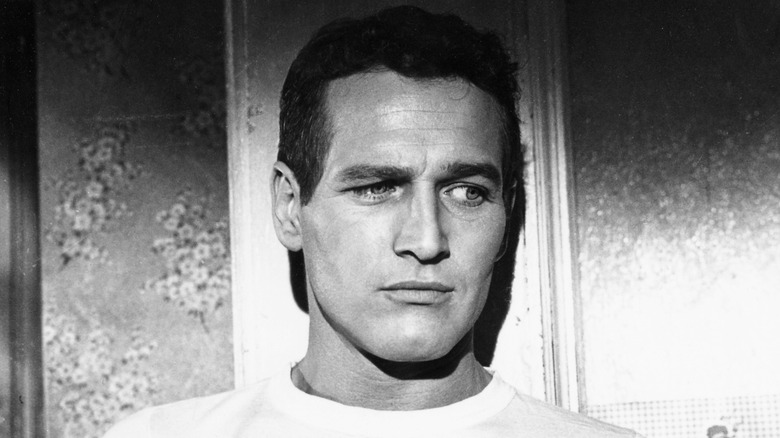
Paul Newman rose to prominence on Broadway and the silver screen in the 1950s, and he remained active in the industry until his death in 2008. Over the course of his career, he nabbed multiple prestigious awards including one Oscar, often making headlines alongside his second and last wife, actor Joanne Woodward.
In the '60s, Newman was cast in a total of 18 feature films — a remarkable feat on its own — seven of which ended up being big earners. Undoubtedly, his most memorable gig from that decade was the revisionist 1969 Western "Butch Cassidy and the Sundance Kid," which grossed $102,308,900 domestically against a $6 million budget, per The Numbers. Helmed by George Roy Hill, it also starred Robert Redford and Katharine Ross and scooped four Oscars. Also worth mentioning is the 1960 epic historical drama movie "Exodus," which nabbed five awards and earned $21,750,000 in the U.S. That decade, he was also in "The Hustler" (1961), "Hud" (1963), "Harper" (1966), "Hombre" (1967), and "Cool Hand Luke" (1967).
1. Doris Day remained America's Sweetheart with eight hits and beyond
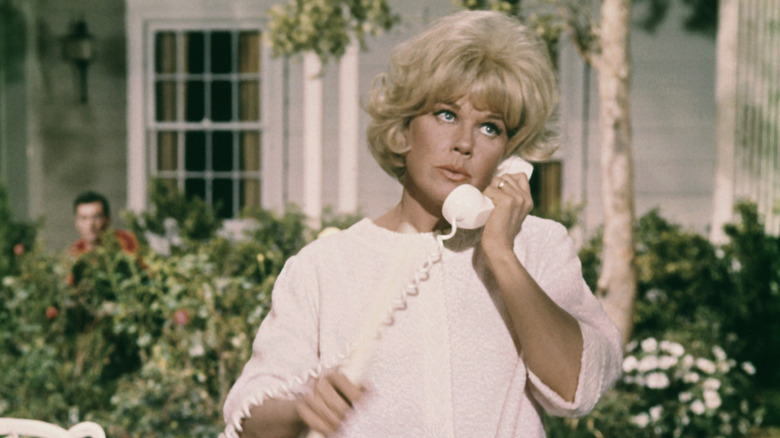
With her wholesome persona, expressive eyes, freckled face, and clear mezzo-soprano voice, Doris Day was a beloved icon from the late 1940s till the early 1970s. Her acting career spanned various genres, from dramas to musicals, comedies, and thrillers, earning her one Oscar nomination and dozens of awards. She was widely regarded as one of the most bankable stars of her time. Plus, she produced more than 650 songs, mainly with Columbia Records.
In the 1960s, Day was voted the top box-office star a whopping four times in the annual Quigley poll featured in the "International Motion Picture Almanac" (via Reel Classics), and she was cast in 15 feature films, many of which were big earners. She even starred in her own acclaimed sitcom, "The Doris Day Show," which aired on CBS from 1968 till 1973. By the time of her death in 2019, Day had a net worth of $200 million, per Celebrity Net Worth. For all these reasons, we've crowned her, America's Sweetheart, as the most successful actor of the '60s.
While each of her movies did not make as much as "Mary Poppins" or the James Bond flicks, Day's cumulative box-office numbers in the 1960s were nothing to sneeze at. That decade, she was in hits like "Please Don't Eat the Daisies," "Midnight Lace," "Lover Come Back," "That Touch of Mink," "The Thrill of It All," "Move Over, Darling," "Send Me No Flowers," and "The Glass Bottom Boat." Per The Numbers, the top earner domestically from that list was "That Touch of Mink" at $17,648,927.
Methodology
To compile this list of top Hollywood stars from the 1960s, we first identified well-established actors who had multiple box-office hits — or features that were both popular and turned a significant profit — during that period and ranked them in descending order accordingly. For those with an equal number of hits during that decade, we also factored in major accomplishments and milestones, whether that be earning prestigious awards or making cinematic history — or both. Household names who were already globally famous in previous decades and continued to remain incredibly relevant throughout the '60s were prioritized.