
Side-By-Side Pics Of The Biggest Western Heartthrobs In Their Heyday And Decades Later
During the Golden Age of Hollywood, the Western dominated the box office. They could be made on the cheap at sprawling California ranches that served as reusable movie sets, and they came with built-in conflict that tapped into questions of national identity. The Sid Richardson Museum, which houses paintings of the American West, wrote, "The cowboys, outlaws, frontier families, and vast open landscapes feel instantly recognizable. But these images do more than tell stories. They shape how generations imagine American history."
The Western was a solid box-office draw for another reason, too: audiences liked seeing swoon-worthy heroes on screen, galloping across picturesque landscapes in an attempt to tame their wild loves. It was such a popular genre, in fact, that many of the biggest heartthrobs of the day dabbled in stories about cowboys, cementing the idea of a Western hero as an all-American man worth not only rooting for, but falling in love with.
Not every Western star was a "heartthrob," of course; you wouldn't find anyone describing the gruff, uber-manly John Wayne that way. There were plenty of other types of Western stars, though, plenty of famous faces that offered a softer, dreamier vision. As they aged — and as the Western itself evolved over the years — some of the biggest Western heartthrobs hung up their spurs and focused on other types of movies. Others made Westerns their enduring legacies, their faces connected forever to the way we think about American history on screen. Read on to get a peek at the biggest Western heartthrobs in their heyday, alongside photos of them several decades later.
Paul Newman starred in 8 Westerns
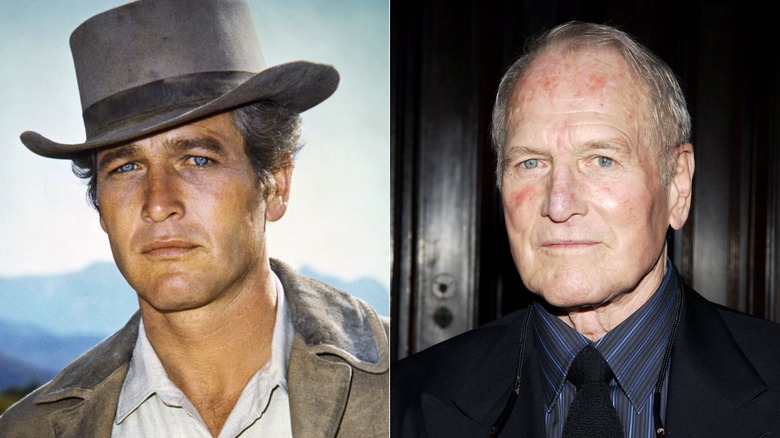
You can't exactly talk about cinematic heartthrobs without mentioning Paul Newman, one of the most famous actors of the 1960s. Lucky for us, he fits the brief; after all, he starred in eight Westerns across his career, transplanting that iconic all-American mid-century face into stories about life on the frontier.
In addition to films like "The Left Handed Gun," "Hombre," "Hud," "Buffalo Bill and the Indians, or Sitting Bull's History Lesson," and "Pocket Money," Newman famously paired up with fellow heartthrob Robert Redford in the 1969 film "Butch Cassidy and the Sundance Kid." The fun-loving outlaws paired vicious knife fights and gun battles with goofy bicycle rides and free-wheeling cliff-jumping displays of joy, cementing Newman's legacy as a Western star for the era. The iconic soundtrack featured the distinctly-modern original song "Raindrops Keep Fallin' On My Head," which won the Academy Award for Best Original Song.
Newman spoke about that movie's legacy years later in a television interview, remarking that he longed for the days when movies were filmed like that, with such a focus on craft. "There's an old saying lying around someplace," he said. "'Nostalgia ain't what it used to be.' But it is. And I'm nostalgic for those days."
Clint Walker made TV Westerns cool on Cheyenne
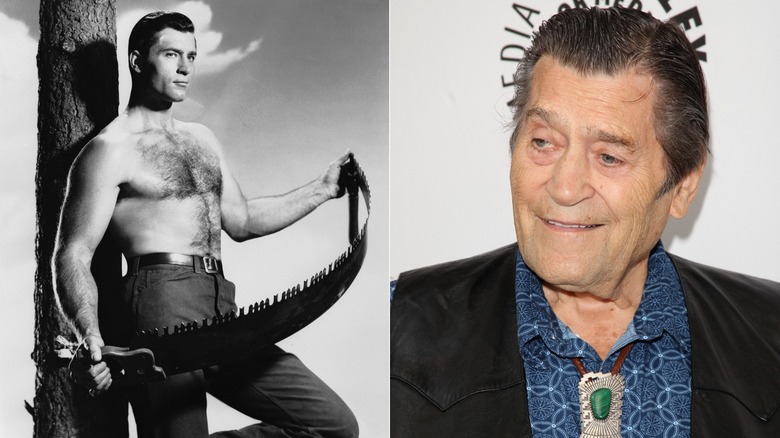
Westerns weren't just a hit on the big screen; as television emerged as a major player in the entertainment industry, TV Westerns proved to be a reliable way to hook an audience a character and give him weekly adventures that kept people tuning in. Later hits included the long-running "Gunsmoke," which featured some of TV's favorite cowboys, but in the 1950s, "Cheyenne" changed the face of television.
It wasn't just because star Clint Walker was a certified hunk, the kind of star who frequently bared his chest in promotional images for the show, like one where he held up a large saw. "Cheyenne" is also often credited as the first hour-long drama on television to last more than a single season.
In a later interview, Walker said the show became difficult for him as it went on. "It'd really become a challenge to me to do the very best job that I could. I didn't want it to seem like a kiddy Western, because I knew the kids would enjoy it anyway, so why not make it for adults as well?" Walker reflected that he'd accomplished his aim and that decades later, he still got positive comments from fans. "Made me feel good," he said, "to know that I was doing something that people enjoyed that much. Made me feel worthwhile."
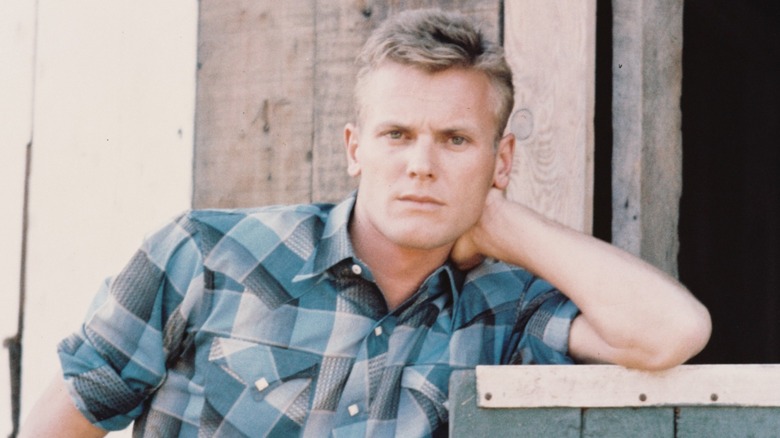
Tab Hunter's real-life love of horses made him a perfect Western star
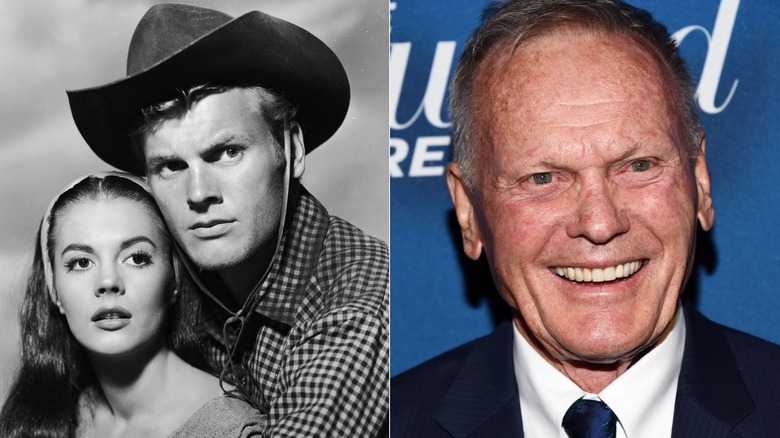
Alongside Robert Wagner, Natalie Wood was part of an iconic celebrity power couple who ruled the 1970s, but in the 1950s she was paired up several times with Tab Hunter. At the height of his career, Hunter was a matinee idol: a kind of blond, blue-eyed leading man meant to get teenagers to buy tickets and fan magazines. Acting ability came second to looks. When Hunter found his way into Westerns, however — starring in movies like "Gunman's Walk," "Track of the Cat," "They Came to Cordura," and "Hostile Guns" — he was able to let his talent shine. After all, in real life, Hunter was a huge fan of horses, a skill he was able to show off on screen better than many of his contemporaries.
In fact, as Hunter later explained to Cowboys & Indians Magazine, he included his real-life horse Swizzlestick as his co-star in several Westerns, including "The Burning Hills," one of his films with Wood. "Swizz turned out to be a better movie horse than she was a show horse," he joked. "I mean, you hit her with the lights and all of that attention went to her head. She was like a glamour girl."
He also worked opposite John Wayne, though they starred together in "The Sea Chase," a movie released in 1955 that wasn't a Western. Hunter, who later came out as gay, told Senses of Cinema that the famously conservative Wayne didn't treat him any differently, even though Confidential Magazine had attempted to out him. "I was frightened at that time. It was very hard," Hunter recalled. "But no one ever confronted me on that." He added, "Well, one or two might have, but it was very seldom that anything was said."
Gary Cooper almost gave up his role in The Westerner
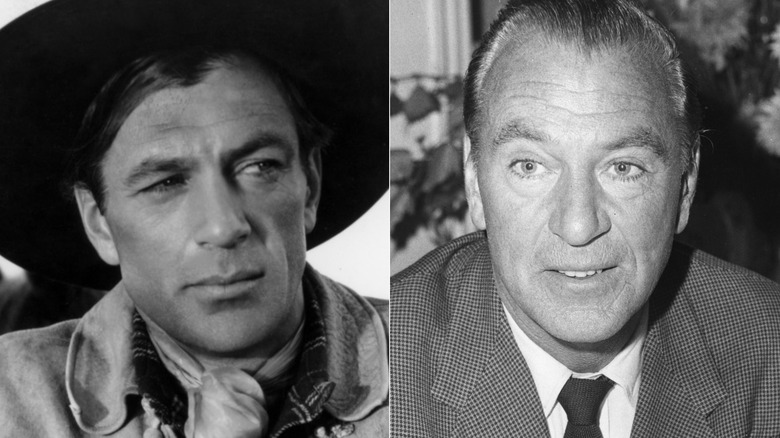
Tall and lanky Gary Cooper seemed to have the kind of silhouette just begging to be sat atop a horse, so most fans wouldn't be surprised to learn that Cooper grew up on a ranch and worked as a cowboy in real life. He starred in several silent Westerns and made the jump to sound, and by the time 1940's aptly titled "The Westerner" rolled around, Cooper wasn't sure he wanted to make what is now considered one of the best Westerns of his career. "I couldn't figure for the life of me why they needed me for this picture," he said, per Turner Classic Movies. The part wasn't big enough, he thought, though he stuck it out.
By 1952, his career had declined somewhat, but Cooper then starred in "High Noon," another defining Western of the genre. He was paired with the significantly younger movie star Grace Kelly, before she became a princess. Even though there were rumors they were having an affair, he spoke about her in the press in a way we might now describe as a very backhanded compliment. According to TCM, he said, "She was trying to learn, you could see that. You can tell if a person really wants to be an actress." Ouch.
Burt Lancaster's Westerns showed the genre the way forward
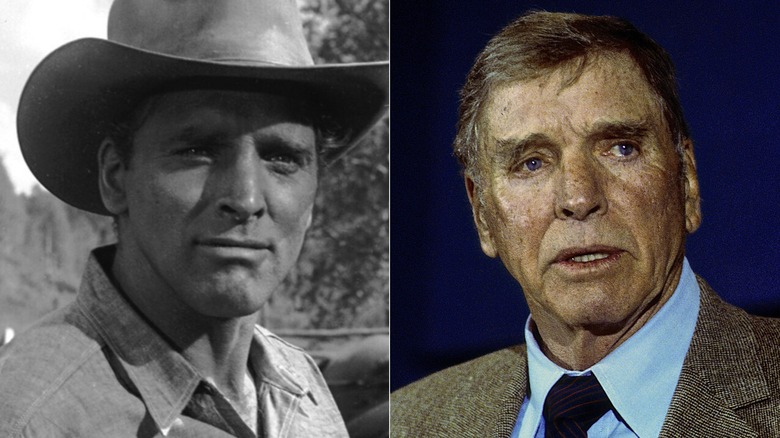
Burt Lancaster, the Oscar-winning star of dramas like "Elmer Gantry" and "From Here to Eternity," was also a leading man in numerous Westerns. After acting in films like "Vera Cruz," "Apache," and "Vengeance Valley," Lancaster contributed two stone-cold classics to the genre. "Gunfight at the OK Corral" came in 1957, dramatizing the infamous incident where a shocking saloon shootout left multiple people dead, and it was swiftly followed by 1960's "The Unforgiven," which co-starred the silver screen icon Audrey Hepburn.
Lancaster's career became so entwined with the Western, in fact, that it almost cost him the job he would eventually come to consider his best work. Luchino Visconti's "The Leopard" was a big costume drama that featured Lancaster as Italian nobility, which was not at all what Visconti had in mind. "They wanted Olivier, but he was too busy," Lancaster told Roger Ebert in 1986. "When I was suggested, Visconti said, 'Oh, no! A cowboy!'"
Decades after "Gunfight at the OK Corral," Lancaster re-teamed with Kirk Douglas for "Tough Guys," a comedic Western that lampooned their previous on-screen personas. He told The New York Times that he and Douglas were frequent co-stars over the years because they'd learned how to work well together. "We have many disagreements about how things ought to be done," he said, "but we always manage to work it out."
In 1993, Kurt Russell became a Western heartthrob for a new era
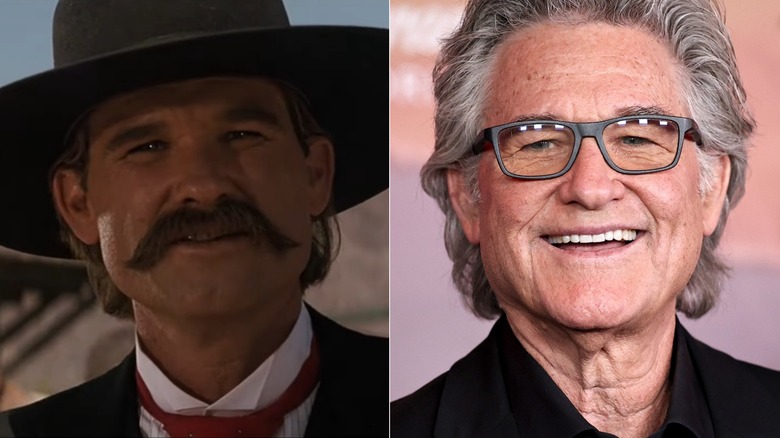
Kurt Russell started acting in Western movies and TV shows all the way back in the 1960s, but his biggest hit in the Western genre hit theaters in 1993. He played Wyatt Earp in "Tombstone," one of many Westerns that depicts the gunfight at the OK Corral. This take, though, featured Russell and Val Kilmer as Western stars for a new generation. The movie also featured "1883" star Sam Elliott, who's starred in quite a few Westerns.
Russell worked behind-the-scenes on "Tombstone," revealing to True West Magazine in 2006 that he essentially directed the movie without putting his name on it. "It was just so painful; it was hard physically to do—I got four hours sleep every night," he said. "And I'm so happy that we got it made." That was the era of Kevin Costner directing himself in "Dances With Wolves" and Clint Eastwood making "Unforgiven," and Russell didn't ever get that same kind of recognition for what he did with "Tombstone."
Surprisingly, overall Russell isn't the biggest fan of his iconic Western. In 2026, he revealed to The Hollywood Reporter that the movie failed to meet his expectations, remarking, "It's considered one of the great Westerns, right? It could have been considered one of the great movies."
Clint Eastwood went from Western star to Oscar-winning director
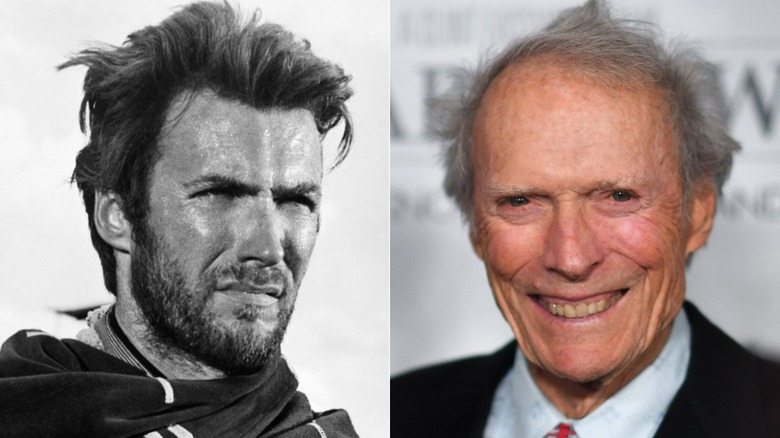
You can't talk about Westerns without talking about Clint Eastwood. The man defined the genre nearly as much as John Wayne did, especially thanks to the string of spaghetti Westerns he made in Italy, several of which were shot by Sergio Leone. Across what is loosely considered a trilogy of films — "Fistful of Dollars," "The Good, The Bad, and The Ugly," and "For A Few Dollars More" — Eastwood played Leone's Man With No Name. He was an outlaw who showed up in town with a scowl and a smolder, and everyone had better watch out. "What struck me most about Clint was his indolent way of moving," Leone later said to the BBC. "It seemed to me Clint closely resembled a cat."
Eastwood would go on to direct a number of Westerns himself, including "The Outlaw Josey Wales" and "High Plains Drifter." In 1991, he released "Unforgiven," an Oscar-winning Western about an aging outlaw who has to reconsider his past sins. Considered a "revisionist Western," the film seemed to also be about Eastwood himself: a man who helped define the Western as a genre, now wondering what he'd done to our understanding of our history. He didn't expect it to become a hit, telling Premiere (via Cinephilia Beyond) in 1993, "I was shocked, because I never try and romance the audience. You've got to forget that there's somebody out there eating popcorn and Milk Duds."
Roy Rogers said he wasn't a trained actor
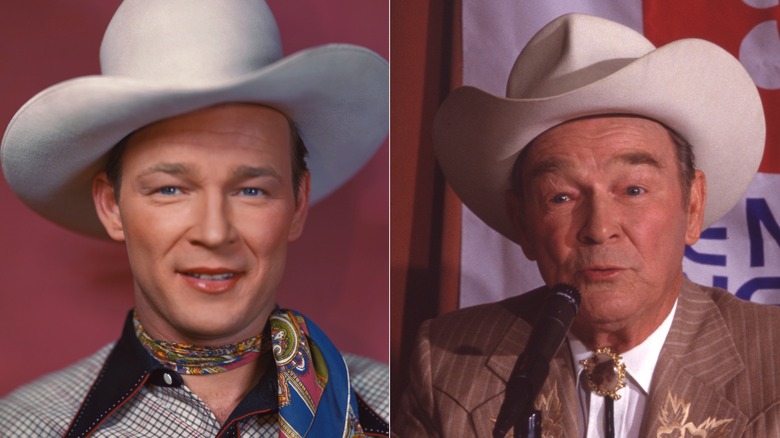
The early days of cinema coincided with the last days of vaudeville and the waning days of radio, and many stars were left in the dust by new forms of entertainment. Roy Rogers, however, was able to make the leap from stage persona to bonafide movie star, bringing his "Singing Cowboy" act to nearly a hundred Westerns across his storied career. They didn't call him "King of the Cowboys" for nothing.
From "My Pal Trigger" and "Lights of Old Santa Fe" to "Days of Jesse James" and "The Carson City Kid," Rogers could be counted on to don a large cowboy hat, show off some saddle tricks atop his trusty steed, and croon a few tunes around a campfire or two. He even took the act to television, starring in "The Roy Rogers Show" for years.
In 1987, CBS 8 visited Rogers at home in Victorville, California, to talk about his life spent yodeling in the movies. "I never had a lesson on anything," he revealed. "No guitar lessons, no acting lessons." In other words, when Rogers showed up on screen, he wasn't pretending to be anyone but himself. "I didn't have to play extra parts or some other character," he recalled. "I just played Roy."
Warren Beatty made his mark on Westerns with only one movie
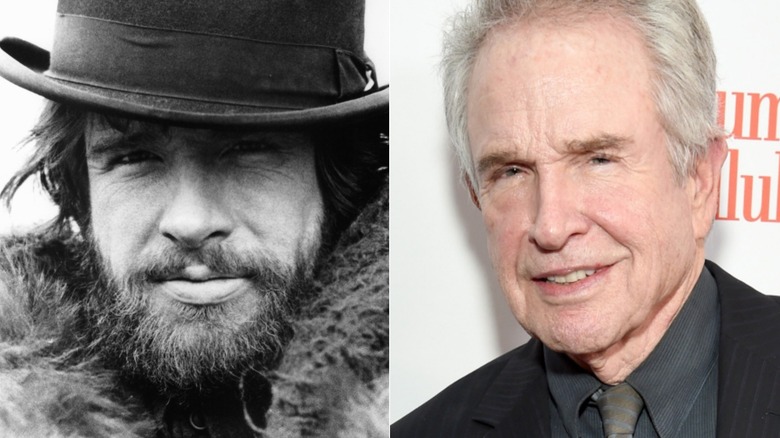
Just like you can't get away with talking about cinematic heartthrobs without mentioning Paul Newman, there's no way around including Warren Beatty on this list, either. Unlike Newman, who made Westerns a central part of his work at the height of his career, Beatty only ever made one film in the genre. That doesn't matter much, though, because "McCabe & Mrs. Miller" would be a standout film in anybody's filmography.
Telling the story of a frontiersman who romances the madam of a brothel (played by Julie Christie), the 1971 Robert Altman film is considered one of the greatest Westerns ever made. At the time, Beatty and Christie were one of the most iconic celebrity couples of the 1970s, and their on-screen team-up proved irresistible; while the movie is credited as a subversive take on the Western that is actually deconstructing the myth that powers so many other movies, it's also an example of two stars with great chemistry who can make anything enjoyable.
Speaking with Roger Ebert, Beatty noted what made "McCabe & Mrs. Miller" stand out: it's all about tone, not just plot. "Altman used his first reel just to establish the atmosphere," Beatty said, meaning: lots of great shots of the heartthrob in flamboyant frontier outfits. He added, "Maybe he should have thrown in a subtitle saying, 'Don't worry, you're not supposed to hear every word or understand much, yet.'"
Rory Calhoun had a criminal past before dominating midcentury Westerns
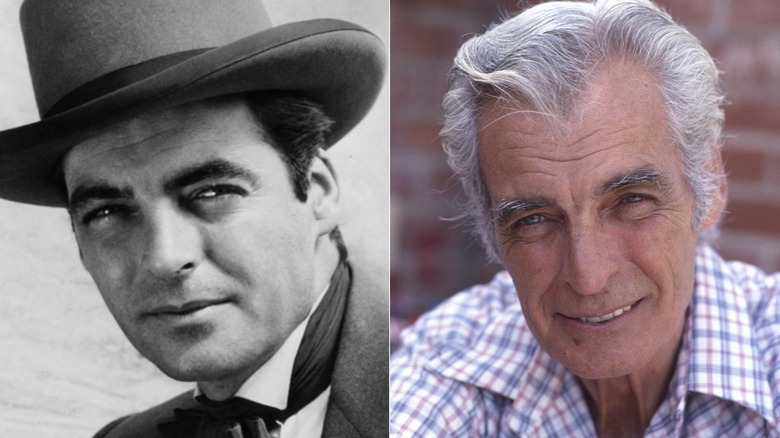
Like several other cinematic cowboys on this list who hit the silver screen as a sort of second act in their lives, Rory Calhoun lived life on the edge before he became a movie star. The lead in dozens of Westerns like "Massacre River," "A Ticket to Tomahawk," "Powder River," and "Yellow Tomahawk," Calhoun's highest-profile Western was probably "River of No Return," which co-starred Hollywood icon Marilyn Monroe.
Calhoun's criminal past was outed in Confidential magazine, which infamously published information about the actor's rap sheet in exchange for keeping quiet about Rock Hudson's sexuality. In his youth, Calhoun had been arrested numerous times, including for fighting. Confidential even spoke with a prison priest who claimed to have known Calhoun as an inmate, and he said he was happy to hear that Calhoun had found a career in the movies. "Goodness emanated from him," the priest said. "His transformation to a respected place in the world is a great personal satisfaction to me."
He told Ray Bennett (via The Cliff Edge) in 1982 that the exposé actually helped his career, solidifying him as a handsome leading man who could also convincingly convey darkness. "That's when the exploitation started," he said. Calhoun recalled people saying, "Get him a picture, let's cash in on this."
Guy Madison was a beefcake Wild Bill on television
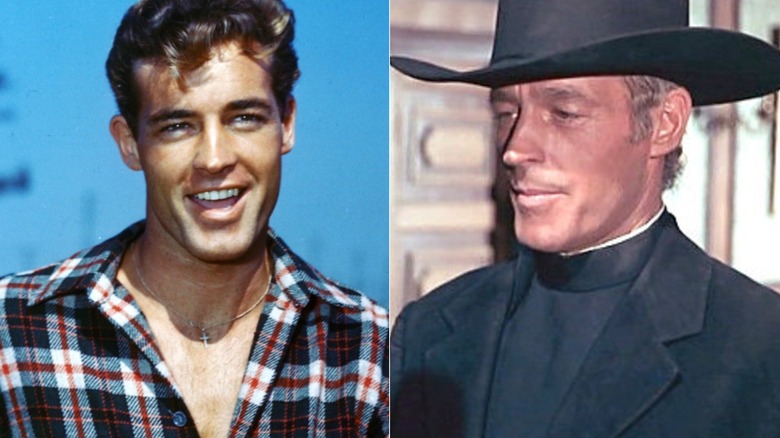
There were lots of matinee idols who lent their good looks to Westerns. Several on this list were even managed by the same agent, Henry Willson. The man had a knack making handsome young stars silver screen idols; after all, he managed the careers of Rock Hudson, Tab Hunter, and Rory Calhoun.
And then there was Guy Madison, born Robert Ozell Moseley. Willson molded him into the picture of mid-century American masculinity, making him a "beefcake." After his first role in a motion picture — a minor part where he only had a few lines — he was met with a sea of fan mail. The acting talent wasn't necessarily there, but audiences didn't seem to mind.
Unlike most of the other men on Willson's roster, Madison found his greatest Western success on television. Throughout the 1950s he starred on "The Adventures of Wild Bill Hickok," a series where he was able to play the same outlaw that many of his contemporaries portrayed on screen. That fame also led him to cinematic Westerns, though most of those were far less-respectable than even the B-movies other actors on this list made meals out of. Madison's cinematic Westerns included "The Charge at Feather River," which is full of gimmicky 3D shots, and "The Beast of Hollow Mountain," about a cattle rancher trying to protect his livestock from hungry dinosaurs. In other words, with Guy Madison, you might not be able to expect a performance for the ages, but you'd certainly have fun.