

11 '70s Sitcom Catchphrases That Boomers & Gen X-Ers Will Never Forget
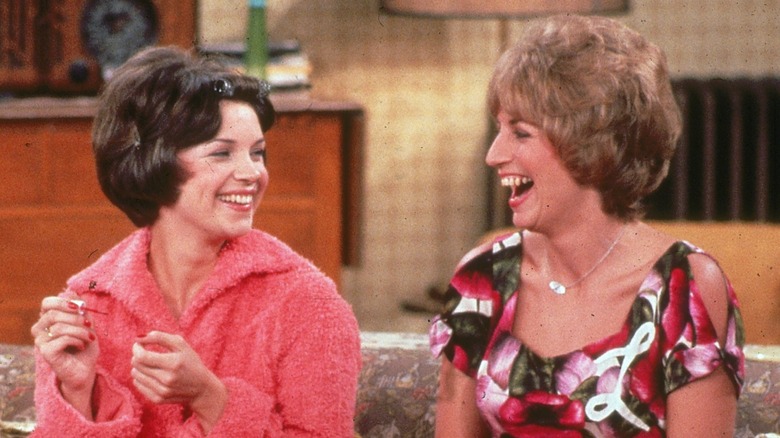
The 1970s were a golden age for television sitcoms. Families gathered around the TV every night, returning at the same time every week, making a routine of watching their favorite characters hang out, crack jokes, swap punchlines, and learn important lessons by the end of the episode. Sure, there was a lot going on in the world, but for half an hour, it was easy enough to forget about everything and just enjoy yourself.
Working on sitcoms back then seems to have been even more enjoyable. Norman Lear, who created iconic shows like "All in the Family," "Maude," "Good Times," and "The Jeffersons," told Entertainment Weekly that the people he collaborated with during his long career were what made it such a success. "We're talking about people who made me laugh to my toes," Lear said. "I'm fond of saying there were places in my body I didn't know could feel laughter."
The cast was so important, he said, because they would make or break a show's success. Part of that meant delivering catchphrases, which really took off that decade. Any show worth its salt contributed a saying of some sort to pop culture, some kind of quippy remark that could be deployed, week after week, for maximum audience laughter. The catchphrases on this list were copied, parodied, spoken as jokes, and eventually repeated by people who'd never seen their source material, just a part of the fabric of the language of pop culture. Read on to be reminded of '70s sitcom catchphrases that Boomers and Gen X-ers will never forget.
'Whatchu talkin' bout, Willis?' — Arnold from 'Diff'rent Strokes'
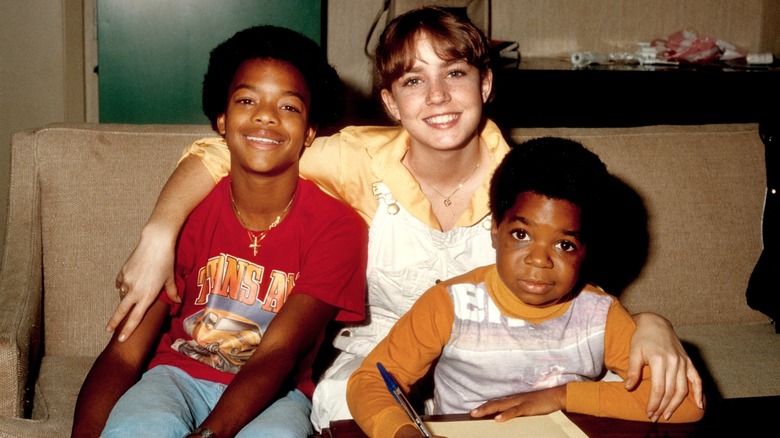
In addition to being a great decade for sitcoms generally, the 1970s were a particularly strong decade for shows centered on Black people. A decade after the Civil Rights movement, television was filled with shows like "The Jeffersons," "Sanford and Son," and "Diff'rent Strokes," a show about rich white people who adopt two Black children. The show explored the cultural diversity of that very modern family, especially drawing laughs from Gary Coleman's performance as Arnold. He would later become one of several "Diff'rent Strokes" actors who tragically passed away, but at the height of the show's success, he was on top of the world.
Coleman was paired on-screen with Todd Bridges as his brother Willis, and the show mined much comedy from the way the two characters talked to one another. Oftentimes, when the older brother would invent some scheme that would determine the plot of the episode, Coleman would look at Bridges quizzically and say, "Whatchu talkin' bout, Willis?"
The line became just as famous as Coleman himself, and in his later years, he resented the fact that his life was tied so closely to the catchphrase. In a documentary called "Gary" (via Entertainment Weekly), Coleman's former girlfriend Anna Gray revealed, "Gary absolutely despised that catchphrase. He called it 'that line' — 'I'm not saying that line!'"
'Kiss my grits!' — Flo from 'Alice'
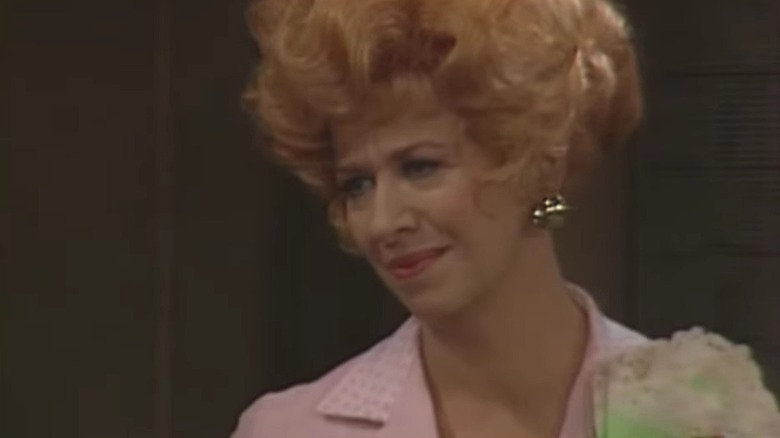
Another trend that dominated television in the 1970s sitcom world was the spinoff. Plenty of shows were so successful that they led to other shows. For example, "Happy Days" led to "Laverne & Shirley," "Mork & Mindy," "Joanie Loves Chachi," and more. But there were also a number of sitcoms that decade that were based on movies. "M*A*S*H" is probably the most well-known, but there was also "Alice," a sitcom that was improbably based on the Martin Scorsese film "Alice Doesn't Live Here Anymore."
The film starred Ellen Burstyn in the title role; on television, Alice was played by Linda Lavin, a star we sadly lost in 2024. Alice is a diner waitress who once dreamed of heading to Hollywood to be famous; instead, she slings milkshakes and breakfast with her quirky co-workers, including Polly Holliday's character Flo. A no-nonsense, tough-talking waitress with a strong Southern accent, Flo served as classic comic relief on the show. Anytime someone would tell her something she didn't want to hear, Flo would shoot back, "Kiss my grits!"
Though the line became iconic, Holliday wasn't too sure what all the fuss was about. "When the writers gave it to me, I said, 'What is this supposed to mean? Why am I saying that?'" she recalled in an interview (via The Hollywood Reporter). Like Gary Coleman, Holliday didn't like spouting her catchphrase on demand ... but she found a gracious way to let fans down. She said, "I usually just smile and say, 'Oh, I'm sure you could do it better.'"
'Ayyy!' - Fonzie from Happy Days
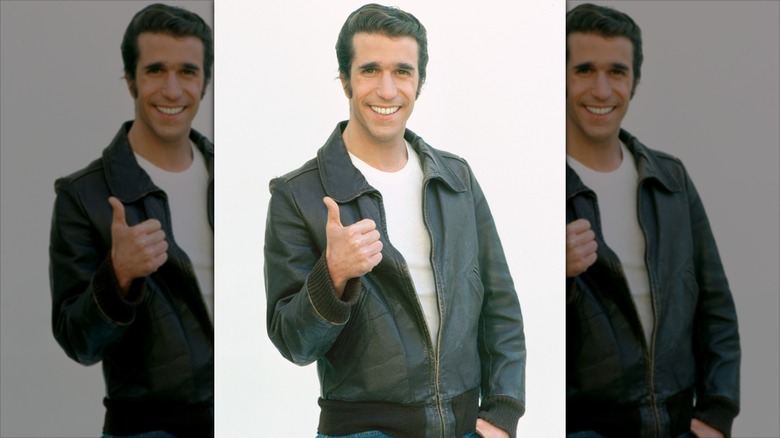
While there are plenty of catchphrases on this list that depend on rhymes, unexpected word choices, and performance style, Henry Winkler's iconic, oft-repeated line from "Happy Days" is more of a ... sound? He played Arthur Fonzarelli, also known as Fonzie, also known as the Fonz; he was the 1950s-set show's too-cool, leather jacket-wearing greaser character. In addition to his slick, smooth-talking ways and his love of flicking out his comb and fixing his hair, Fonzie would flash his friends a thumbs-up and exclaim, "Ayyy!"
"My character was a tough guy who rode a motorcycle, wore a leather jacket, and had a very soft heart," Winkler explained to NPR. That was the thing about the Fonz; even though he was handsome and charismatic and a bit of a rebel, his "Ayyy!" was often just a simple sound because he was genuinely excited to see his pals.
The catchphrase was just one of many things that made "Happy Days" such a success. In fact, there was one controversial decision that nearly ended "Happy Days" before it got off the ground, but thankfully the show and character stuck around long enough to give us another crucial television concept: jumping the shark.
'Stifle yourself, Edith.' - Archie from All in the Family
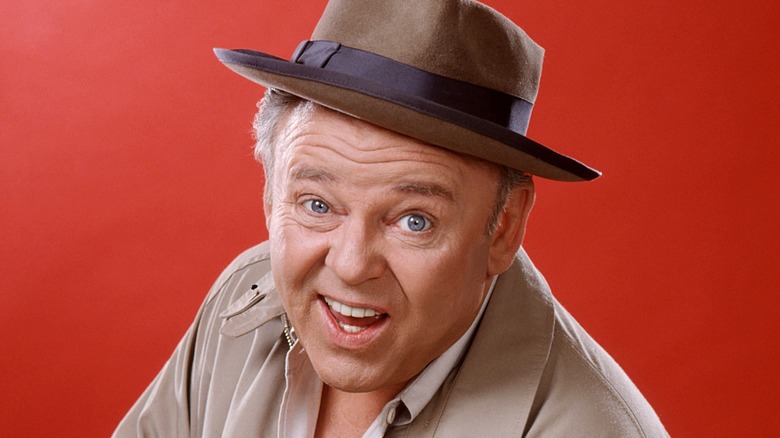
While we now think of "All in the Family" as a classic sitcom that aired decades ago, the show was very much ahead of its time. The series centered on Archie Bunker (Carroll O'Connor), a bigoted man who nevertheless has a lot of love for his family. Through his dismissive, boorish attitude, he and the Bunker family often learn important lessons about caring for people who are different ... even if Archie tended to forget what he'd learned by the time the next episode aired, as sitcom characters often do.
"All in the Family" was so ahead of its time, in fact, that early episodes aired with what we would now call a trigger warning. "It seeks to throw a humorous spotlight on our frailties, prejudices, and concerns," CBS wrote at the start of each episode (via Parade). "By making them a source of laughter, we hope to show just how absurd they are." One of those prejudices was Archie's misogyny, often directed at his wife Edith (Jean Stapleton), whom he often called a "dingbat." Their relationship dynamic even came with a catchphrase: "Stifle yourself, Edith."
Creator Norman Lear told The Hollywood Reporter that he was particularly proud of a two-part episode in which Edith lost and then regained her faith. The episode showed how important she was to the family, Lear said. "For all her qualities, running around the room, getting him anything he wanted and everything else," he explained, "she was a strong woman whose strength came from her faith."
'Hi, guys!' — Ted from The Mary Tyler Moore Show
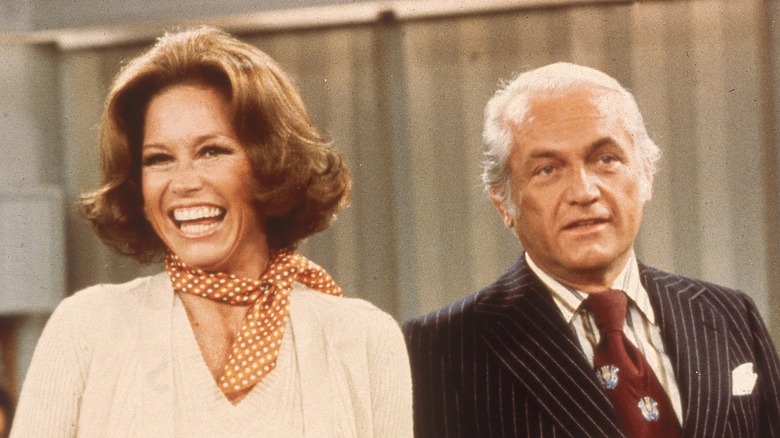
That entire decade of pop culture wouldn't have been the same without "The Mary Tyler Moore Show," which aired from 1970 to 1977. The beloved comedian starred as Mary Richards, a news producer, and the show was a workplace comedy that involved a cast of characters who seemed to really love spending time together. Moore starred with Betty White, Ed Asner, Valerie Harper, and a number of other regulars, including Ted Knight.
Like Moore, Knight played a character named after himself. Ted Baxter was the news show's anchorman, and he played it with a bluster that foreshadowed Will Ferrell's Ron Burgundy. For the most part, though, Ted was just sort of clueless. Whenever he'd walk up to a conversation that was already in progress, he'd greet the group by saying, "Hi, guys!"
Knight became so associated with the phrase that he released an album in 1975 under that title. In addition to covers of songs like "Itsy Bitsy Teeny Weeny Yellow Polka Dot Bikini," Knight also sang a song called "I'm in Love With Barbara Walters," choosing a real-life newswoman to pair with his TV character. Knight embraced "Hi, guys!" so fully, in fact, that his gravestone says, "Bye guy."
'Dyn-o-Mite!' — J.J. from Good Times
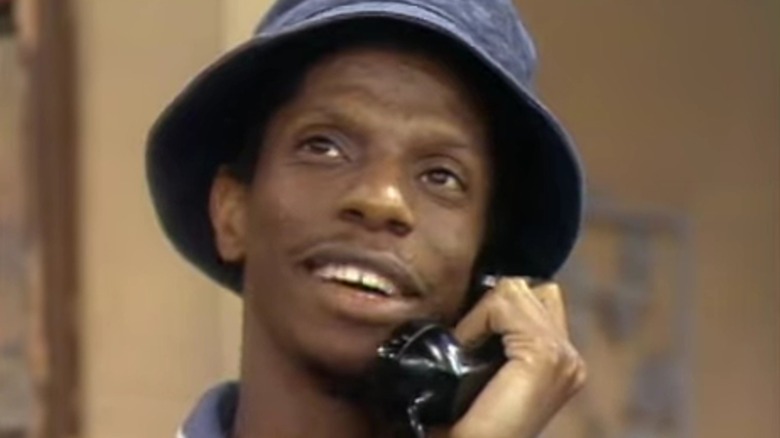
Norman Lear's sitcom "Good Times" followed a Black family living in the projects in Chicago, focusing on the fun the family managed to have together despite their circumstances. Jimmie Walker played J.J., one of the family's sons, who was an artist. (Fun fact: the cast of "Good Times" also included Janet Jackson!) J.J. thought he was a bit of a playboy, and he came with a catchphrase to match how hip he thought he was. Upon seeing something he liked, J.J. would exclaim, "Dyn-o-Mite!"
At first, Walker wasn't really sure the catchphrase would catch on. "I said, 'Come on man, people are not stupid enough to buy into a guy just standing there saying dyn-o-mite,'" he told CNN decades later, recalling the first time director John Rich told him it would show up in every episode. "He said, 'Yes they are.' Even though Norman Lear didn't like it, John Rich proved to be a prophet."
Walker went on to embrace his catchphrase, even using it as the title for his memoir. "Dyn-o-Mite!" also became a slogan for a series of Medicare commercials that tapped Walker in the early 2020s, reminding original viewers of the classic '70s sitcom that they might now be old enough to start thinking about retirement.
'Up your nose with a rubber hose!' — Vinnie Barbarino from Welcome Back, Kotter
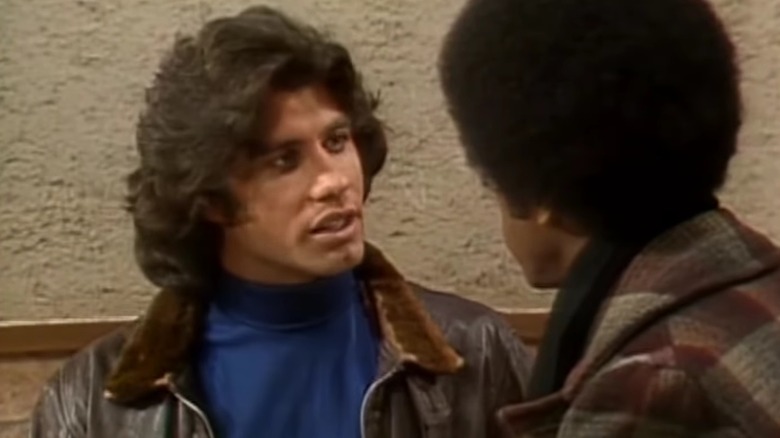
Though the 1970s were a long time ago, there are plenty of iconic '70s sitcom stars who are still acting today. They might not be who you expect, however. Several '70s sitcom stars went on to much greater fame that far surpassed their initial television stardom. That includes John Travolta, who spent the back half of the decade as the breakout star of "Welcome Back, Kotter."
Gabe Kaplan played the titular character, a teacher who teaches at his old high school. Travolta's character Vinnie Barbarino, is a popular kid who can't help but annoy everyone around him. When Vinnie got into an argument, he often insulted people by saying something rhyming and unforgettable. Iconically, he frequently fell back on, "Up your nose with a rubber hose!"
Though that catchphrase seems silly nowadays, it was considered extreme for television at the time. In an interview with USA Today, Kaplan recalled that executives made them change it up. "We had to say, 'Up your nose with a garden hose,'" he revealed, "because they thought a garden hose was less threatening." Thankfully, they backed off, and the show was able to cement itself in pop culture history.
'Sit on it.' — Richie from Happy Days
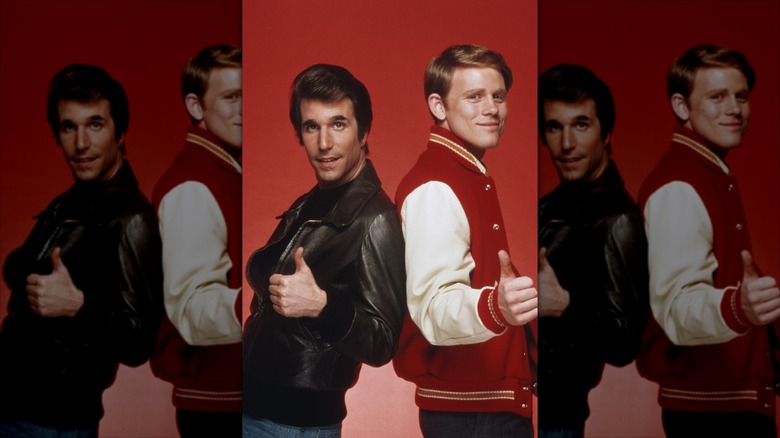
While the Fonz's oft-exclaimed "Ayyy!" is probably the "Happy Days" line referenced most often these days, Henry Winkler wasn't the only actor who was given a catchphrase to work with. In fact, one of the show's other biggest lines of dialogue made its way around the cast, which included "The Andy Griffith Show" star Ron Howard. The best comedy comes from conflict, and on "Happy Days," characters had an idiosyncratic way of telling someone off. When things came to a head, a character often said, "Sit on it!"
There's some debate among "Happy Days" writers about who, exactly, invented the catchphrase. When Bob Brunner died in 2012, his obituary in Variety credited him with it. Mark Rothman told Television Academy that he was the one who said it first, although he acknowledged that Lowell Ganz also claimed to have come up with it, and that Ganz might've been correct. "Whichever mouth it came out of," Rothman recalled, "we instantaneously knew it was the catchphrase, and that it would work."
No matter who first told someone to sit on it, it seems that many, many fans have said it to the actors over the years. Anson Williams, who played Potsie, told Aron Geml that he didn't mind hearing it still, even though it was originally an insult. "I can handle it!" he said. "It's really nice, you know? People are great."
'Schlemiel! Schlimazel! Hasenpfeffer Incorporated!' — from Laverne & Shirley
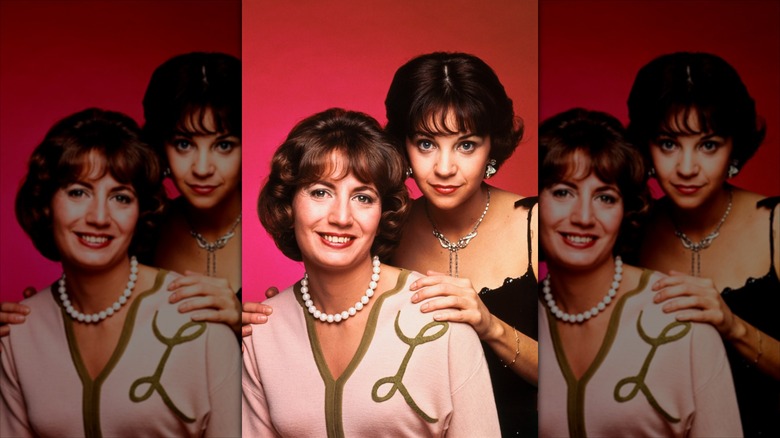
While most of the catchphrases on this list came from dialogue spoken by the characters on their respective sitcoms, the standout line from "Laverne & Shirley" actually came from the show's theme song. The "Happy Days" spinoff followed Penny Marshall and Cindy Williams as the titular characters, friends of the Fonz who work as bottle-cappers at a brewery. In the show's opening moments, the theme song would play; based on a hopscotch chant for children, the opening culminated in a nonsensical joint exclamation that took the country by storm: "Schlemiel! Schlimazel! Hasenpfeffer Incorporated!"
In an interview with Television Academy, Marshall said that she taught Williams the chant just before they filmed the opening credits, basing it on a genuine chant she would perform while she walked to school as a child. When Marshall claimed that she had no idea what it meant, Williams chimed in. "A schlemiel is someone who falls from a building," she said, "and a schlimazel ... is the person they land on. It's like, dumb and dumber."
Marshall waited a beat, and then asked, "But what does Hasenpfeffer mean?" Williams shrugged and answered her longtime friend. "Rabbit," she said. "Don't ask. It's 'rabbit,' it's in German." Confused? So are they! The joyful power of "Schlemiel! Schlimazel! Hasenpfeffer Incorporated!" is that you can shout it out and let silly things like "meaning" fall away.
'God'll get you for that!' — Maude from Maude
The decade before Bea Arthur and Rue McClanahan made sitcom history as half of the "Golden Girls" cast, they starred together on a show called "Maude." Arthur played the titular character, a woman in the upstate New York town of Tuckahoe whose open-mindedness often brushed up against the conservatism of her friends, family, and neighbors. The show was crafted by Norman Lear, the man behind "All in the Family," and this was, in fact, a spinoff of that show; Maude was Edith Bunker's cousin. Like "All in the Family," "Maude" tackled tough topics that were unusual to see on television at the time.
In addition to being an empowered woman, Maude was sort of sassy. She liked to call out the self-righteousness of the small-minded people around her, so when she saw an opportunity to tease someone for their hypocrisy, she'd often deadpan, "God'll get you for that!"
Many of the actors on this list found their lives defined by the phrases that other people wrote for them, but not Arthur. In an interview with Television Academy, she exclaimed, "Well, I came with that! That was part of my life. ... Norman heard it and loved it, so we used it constantly." Arthur couldn't recall where it came from initially, but she insisted she was the one to bring it to set. "It seems to me I'd always said it all my life, when someone told a bad joke or something," she said.
'Hi, Bob.' — from The Bob Newhart Show
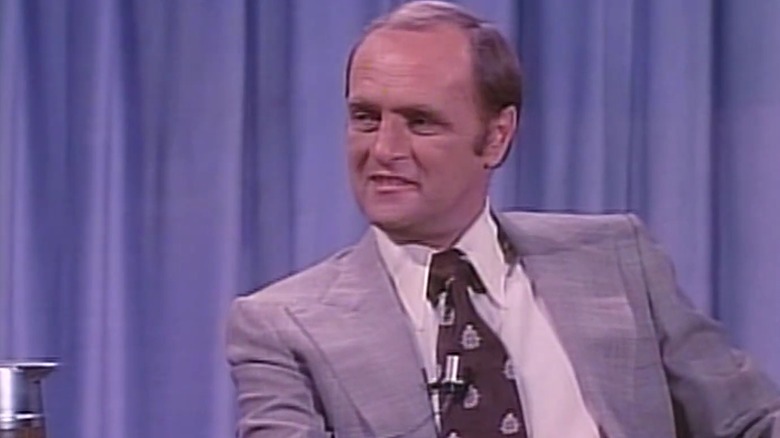
While many catchphrases on this list come from shows that were spinoffs of other sitcoms, it feels fitting to end on a catchphrase that seems like it might have spun off all its own from another one on this list. On "The Bob Newhart Show," where the titular comedian played a therapist named Bob Hartley, characters often entered the room, saw him, and said, "Hi, Bob!"
If that sounds like Ted's catchphrase on "The Mary Tyler Moore Show" —"Hi, guys!" — there's a chance it wasn't a coincidence. After all, beloved comedian Mary Tyler Moore herself was involved in the creation of "The Bob Newhart Show," which launched two years after her own sitcom and was made by her production company, MTM Productions.
The phrase showed up on "The Bob Newhart Show" so often that people turned it into a drinking game; in fact, it is often considered the very first instance of people watching a show together so that everyone drinks when they hear a certain line. "It's unfortunately a drinking game that is played on college campuses all over the country," Newhart told Television Academy. "It's a two-edged sword, because they obviously like the show, or they wouldn't sit and watch it, but I just hope when they play Hi Bob, they don't drive." Fearing that his television show's catchphrase could end in tragedy, Newhart warned the youth of America, "Don't Hi Bob and drive."